
Over 60 percent of american sales professionals say their productivity suffers from outdated data and slow follow-up. Staying ahead in the fast-moving world of sales means using smarter strategies and streamlined tools. When you know how to connect LinkedIn and automate your HubSpot system, you can access real-time prospect insights, cut out repetitive data entry, and keep your team focused on winning deals instead of fighting with information overload.
Quick Summary
| Takeaway | Explanation |
|---|---|
| 1. Integrate LinkedIn for Real-Time Insights | Connect HubSpot with LinkedIn to gain immediate access to professional data and enhance lead management efficiency. |
| 2. Automate Data Entry to Boost Productivity | Implement smart data capture strategies in HubSpot to reduce manual tasks and free up valuable time for your team. |
| 3. Utilize Workflow Automation for Follow-Up | Create automated workflows to ensure timely and personalized engagement with leads, improving response rates and conversions. |
| 4. Maintain Up-to-Date CRM Records | Regularly synchronize LinkedIn and HubSpot to keep contact details current and avoid chasing outdated information. |
| 5. Prevent Duplicates with CRM Visibility | Establish clear protocols for contact management to avoid duplicate entries and ensure team members access accurate data. |
1. Leverage LinkedIn Integration for Instant Prospect Insights
Unlocking powerful prospect insights begins with seamless integration between your CRM and professional networking platforms. By connecting HubSpot with LinkedIn, sales professionals can transform their prospecting workflow and gain unprecedented access to real-time professional data.
The magic happens through strategic LinkedIn CRM synchronization, which enables automatic activity logging and contact information updates. According to HubSpot Academy, this integration allows sales teams to access real-time LinkedIn insights directly within their HubSpot environment, dramatically enhancing productivity and lead management efficiency.
Key Benefits of LinkedIn Integration:
- Automatic capture of current professional details
- Real-time tracking of prospect job changes and company updates
- Simplified lead research without platform switching
- Enhanced context for personalized outreach
To implement this strategy, first connect your LinkedIn Sales Navigator account with HubSpot. Configure the integration settings to enable automatic data synchronization. This ensures your contact records remain current, reflecting the most recent professional information available.
Pro tip: Prioritize keeping your LinkedIn profile and connections updated. The more comprehensive your professional network, the more valuable the CRM integration becomes. As HubSpot’s webinar highlights, incorporating first-party data significantly improves campaign targeting and lead nurturing effectiveness.
By leveraging LinkedIn integration, you transform scattered professional data into a streamlined, actionable intelligence system that empowers smarter, faster sales engagement.
2. Automate Data Capture to Eliminate Manual Entry
Sales professionals waste countless hours performing repetitive data entry tasks that could easily be automated. By implementing smart data capture strategies in HubSpot, you can reclaim valuable time and significantly improve your team’s overall productivity.
Automation transforms how sales teams manage customer information. According to HubSpot’s developer platform, businesses can identify key CRM events and implement workflows or webhooks that trigger specific actions, ensuring real-time data consistency and responsive system updates.
Key Automation Strategies:
- Create workflow triggers based on specific CRM data changes
- Set up automatic contact record updates
- Develop custom notifications for critical lead activities
- Implement system integration for seamless data transfer
To start automating your data capture process, explore HubSpot’s workflow tools. HubSpot Academy recommends understanding different data entry methods to design effective automation sequences. Begin by mapping out your current manual processes and identifying repetitive tasks that can be streamlined.
For example, you could create a workflow that automatically updates a contact’s status when they interact with a specific email campaign or moves a lead through different pipeline stages based on predefined conditions. This approach not only saves time but also reduces human error and ensures your CRM remains consistently updated.
Pro tip: Start small with automation. Select one or two repetitive tasks and build workflows around them. As you become more comfortable with the system, you can gradually expand your automation strategy to cover more complex sales processes.
3. Streamline Bulk Data Extraction from LinkedIn Searches
Sales professionals know that time is money, and manually collecting prospect data from LinkedIn searches can quickly become a productivity drain. Bulk data extraction transforms this tedious process into a streamlined, efficient workflow that saves hours of manual effort.
HubSpot’s LinkedIn Marketing Course highlights the importance of leveraging tools and integrations to manage data extraction effectively. The key is implementing smart strategies that allow rapid capture of professional insights without getting bogged down in repetitive tasks.
Bulk Data Extraction Strategies:
- Use browser extensions designed for quick profile information capture
- Implement tools that support one click export to CRM systems
- Configure automatic data synchronization between LinkedIn and HubSpot
- Create custom export workflows for search result pages
To maximize efficiency, invest in tools that can extract multiple contact details simultaneously. Look for solutions that integrate directly with your CRM, allowing seamless transfer of professional information. This approach eliminates manual data entry and reduces the potential for human error.
Pro tip: Before conducting bulk extractions, refine your LinkedIn search filters to ensure you are capturing the most relevant professional contacts. Precision in your initial search parameters will dramatically improve the quality of extracted data.
By transforming your approach to prospect research, you can significantly reduce time spent on manual data collection and redirect your energy toward meaningful sales engagement.
4. Keep CRM Records Updated with One-Click Sync
Outdated contact information can be the silent killer of sales productivity. Maintaining accurate CRM records requires a proactive approach that minimizes manual updates and maximizes real-time synchronization.
HubSpot’s LinkedIn CRM Sync lesson reveals how integration between HubSpot and LinkedIn Sales Navigator enables automatic synchronization of contact information and professional activities. This seamless connection ensures your CRM remains a living, breathing repository of current prospect data.
Key Synchronization Strategies:
- Enable automatic profile information updates
- Set up real-time activity tracking
- Configure instant job change notifications
- Implement one click data refresh mechanisms
The magic happens when you connect your LinkedIn Sales Navigator account directly to HubSpot. This integration allows for instantaneous updates whenever a contact changes jobs, updates their profile, or engages in professional activities. No more hunting down email addresses or tracking down current titles.
To maximize effectiveness, regularly review and confirm your sync settings. Ensure that critical fields like email address, job title, and company information are included in your automatic update preferences. This approach transforms your CRM from a static database into a dynamic intelligence platform.
Pro tip: Treat your CRM sync as a strategic asset. The more consistently you maintain accurate data, the more powerful your sales intelligence becomes. One click can save hours of manual research and ensure your team always operates with the most current professional insights.
5. Prevent Duplicate Entries by Sharing CRM Visibility
Duplicate contact records are more than just an annoyance they are a productivity killer that can derail your entire sales strategy. By implementing smart CRM visibility practices, your team can create a unified source of truth that eliminates redundant and conflicting information.
Why Shared Visibility Matters:
- Eliminates accidental duplicate contact creation
- Provides complete visibility across sales teams
- Reduces time wasted on conflicting prospect information
- Improves overall team collaboration and communication
Effective CRM visibility starts with establishing clear protocols for contact management. Configure your HubSpot settings to automatically flag potential duplicate entries based on email addresses, phone numbers, or company names. This proactive approach prevents team members from accidentally creating multiple records for the same prospect.
Implement a centralized contact management system where all team members can see existing records before creating new ones. Use features like record ownership and shared dashboards to ensure everyone has real time access to the most current prospect information.
Pro tip: Create a standardized process for handling potential duplicate entries. Designate a team member to periodically review and merge similar contacts, maintaining data integrity and preventing information fragmentation. Remember that clean data is the foundation of effective sales intelligence.
6. Use Workflow Automation for Faster Lead Follow-Up
In the fast paced world of sales, speed and personalization can make the difference between capturing a lead and losing one forever. Workflow automation transforms how sales teams engage with prospects, turning slow manual processes into lightning fast intelligent interactions.
HubSpot’s Marketing Automation Course demonstrates the power of implementing strategic workflows to streamline daily tasks and improve overall sales efficiency. Automation allows you to create intelligent systems that respond to prospect behaviors in real time.
Workflow Automation Strategies:
- Create triggered email sequences based on prospect actions
- Set up automatic lead scoring and routing
- Design personalized follow-up paths for different prospect segments
- Implement time delayed communication sequences
Start by mapping out your current lead follow-up process. Identify key touchpoints where automated workflows can replace manual intervention. For instance, when a prospect downloads a white paper, your workflow could automatically send a series of targeted emails introducing related resources.
As HubGem’s blog suggests, the goal is creating timely and personalized communication that feels human even when triggered automatically. Configure your workflows to include dynamic content that adapts to each prospect unique characteristics.
Pro tip: Test and refine your automation sequences regularly. What works today might need adjustment tomorrow. Treat your workflows as living systems that continuously evolve with your sales strategy.
7. Track and Analyze Sales Activities for Continuous Growth
Data transforms guesswork into strategy. Without systematic tracking and analysis of sales activities, your team operates blindly, missing critical opportunities for improvement and growth.
Key Performance Tracking Elements:
- Monitor individual and team sales metrics
- Analyze conversion rates across different stages
- Track lead source effectiveness
- Measure response times and engagement levels
Successful sales teams view their CRM as more than a contact repository. It is a strategic intelligence platform that provides granular insights into every aspect of the sales process. Configure custom dashboards in HubSpot to visualize performance metrics that matter most to your organization.
Focus on metrics that drive meaningful change. Don’t just collect data track the right data. This means understanding which activities directly correlate with revenue generation. Look beyond surface level numbers like total calls made and dig into quality indicators such as meeting conversion rates, pipeline velocity, and customer lifetime value.
Pro tip: Schedule monthly review sessions where your team collectively examines performance data. Create a culture of transparency where numbers are viewed as coaching tools rather than judgment mechanisms. The goal is continuous learning and incremental improvement.
Below is a comprehensive table summarizing strategies for enhancing CRM efficiency and sales productivity through LinkedIn integration and data automation.
| Strategy | Implementation | Expected Benefits |
|---|---|---|
| LinkedIn Integration | Connect LinkedIn Sales Navigator to HubSpot for automatic data sync. | Real-time insights, enhanced lead management. |
| Automate Data Capture | Use HubSpot workflows to automate data entry and updates. | Increased productivity, reduced errors. |
| Bulk Data Extraction | Utilize tools for rapid data transfer from LinkedIn to CRM. | Saves time, reduces manual effort. |
| One-Click Sync | Enable automatic updates for real-time accuracy. | Maintains current CRM data. |
| Prevent Duplicates | Share CRM visibility to avoid redundant entries. | Unified data, improved collaboration. |
| Workflow Automation | Trigger actions based on prospect behaviors and CRM changes. | Faster lead follow-up, personalized outreach. |
| Track Sales Activities | Monitor sales metrics with custom dashboards. | Continuous performance growth, strategic insights. |
Boost Your HubSpot CRM Success with Smarter LinkedIn Integration
The article highlights common sales pain points such as tedious manual data entry, outdated prospect information, and duplicate CRM records that slow your momentum. If you want to stop wasting time switching between HubSpot and LinkedIn or hunting for accurate contact details, embracing seamless integration and automation is the key. LeadLx addresses exactly these challenges by overlaying HubSpot data directly onto LinkedIn profiles and enabling instant extraction and one-click syncing of contact and company info. This means more accurate, real-time CRM updates and less time lost on repetitive tasks.
Take your sales workflow to the next level with features focused on:
- Automated capture and update of LinkedIn contact details
- Bulk data extraction from LinkedIn search results
- Prevention of duplicate entries through shared CRM visibility
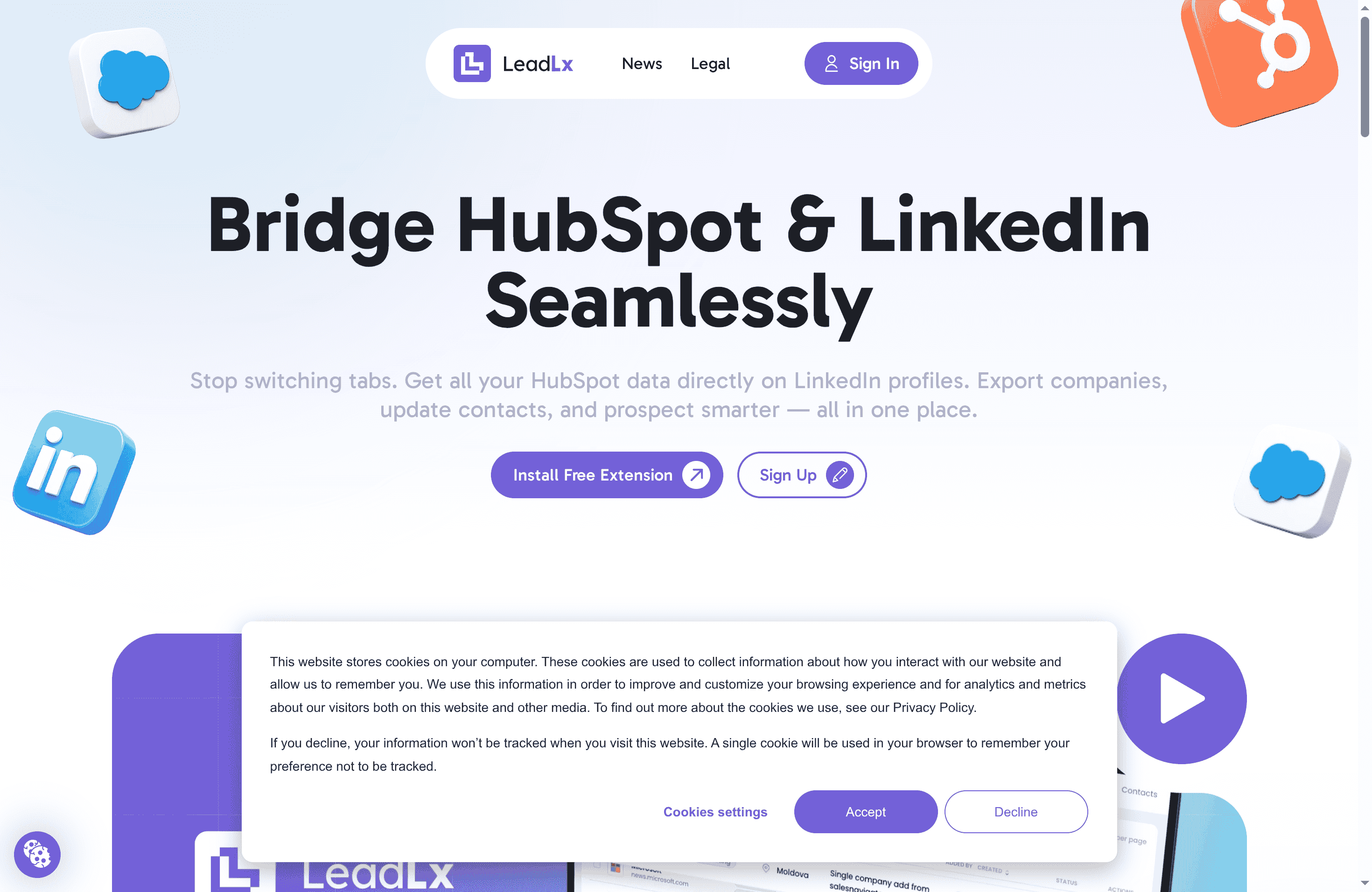
Ready to reclaim 10 hours every week and boost your team’s productivity? Discover how LeadLx can streamline your HubSpot prospecting and data management today. Visit LeadLx to learn more and experience smarter CRM integration that turns essential sales tips into daily wins.
Frequently Asked Questions
How can I set up LinkedIn integration with HubSpot for better prospect insights?
To set up LinkedIn integration with HubSpot, first, connect your LinkedIn Sales Navigator account to HubSpot. This allows for automatic updates of contact information and activity logs, enhancing your prospecting efficiency and providing real-time professional data.
What are some effective automation strategies to reduce manual data entry in HubSpot?
Implement automation strategies by creating workflows that trigger updates based on specific changes in your CRM data. For instance, set workflows to automatically update contact records when prospects engage with your emails, helping you save time and resources.
How do I perform bulk data extraction from LinkedIn to improve my prospecting process?
Utilize browser extensions or tools designed for bulk data extraction from LinkedIn. Set up these tools to capture multiple contact details simultaneously and seamlessly integrate them into your CRM, allowing for efficient prospect research without manual data collection.
What steps should I take to keep my CRM records updated with real-time synchronization?
To maintain updated CRM records, enable automatic profile updates and configure instant notifications for job changes within your LinkedIn integration. Regularly review the sync settings to ensure critical contact fields are always current.
How can I prevent duplicate entries in my CRM?
Prevent duplicate entries by implementing visibility protocols that allow team members to see existing records before creating new ones. Use features that automatically flag potential duplicates based on shared identifiers like email addresses or phone numbers.
What metrics should I track in HubSpot for sales performance analysis?
Focus on key metrics like individual and team sales performance, conversion rates, and lead source effectiveness. Analyze these metrics regularly to identify areas for improvement and adjust your strategies accordingly to drive higher revenue.