
Most American sales teams rely on real-time insights to gain a competitive edge, and experts estimate that over 80 percent of B2B professionals use digital networking platforms for prospecting. Understanding LinkedIn activity tracking is no longer optional in a crowded marketplace where every connection could lead to a key deal. This guide uncovers how analyzing engagement patterns can help American professionals build relationships, streamline outreach, and identify genuine business opportunities faster than ever.
Key Takeaways
| Point | Details |
|---|---|
| LinkedIn Activity Tracking Importance | Monitoring LinkedIn activity provides vital insights into networking interactions and prospect behaviors, enabling more targeted sales strategies. |
| Diverse Engagement Data | Sales teams should focus on various types of engagement data, including direct interactions and content metrics, to identify high-potential leads. |
| CRM Integration Benefits | Integrating LinkedIn with CRM systems enhances lead qualification and streamlines data management, improving overall sales efficiency. |
| Risk Management Strategies | Awareness of data privacy and technical integration challenges is crucial; implementing strict policies can mitigate potential issues. |
Defining LinkedIn Activity Tracking and Its Purpose
LinkedIn activity tracking represents a strategic approach for sales professionals to monitor and analyze professional networking interactions. At its core, this process involves systematically capturing and examining digital engagement signals that provide insights into prospect behavior, communication patterns, and potential sales opportunities.
The fundamental purpose of tracking LinkedIn activity centers on understanding connection dynamics and transforming passive networking into actionable intelligence. LinkedIn’s personalized content tracking demonstrates how activity data can reveal nuanced professional relationships and engagement trends. Sales teams leverage these insights to identify warm leads, recognize meaningful interactions, and develop more targeted outreach strategies.
Professional activity tracking encompasses multiple dimensions beyond simple interaction monitoring. Key elements typically include:
- Post engagement rates
- Comment and reaction patterns
- Connection growth and network expansion
- Profile view statistics
- Content interaction frequencies
By comprehensively analyzing these metrics, sales professionals can develop a more sophisticated understanding of their network’s composition and potential opportunities. The data transforms abstract networking efforts into measurable, strategic intelligence that drives more informed decision making.
Pro Tip – Strategic Tracking: Focus on quality interaction metrics rather than raw numbers, prioritizing meaningful professional connections that demonstrate genuine potential for future business relationships.
Types of LinkedIn Engagement Data to Monitor
Sales professionals must understand the diverse landscape of LinkedIn engagement data to effectively track and leverage professional networking interactions. LinkedIn engagement encompasses multiple content types, including text updates, images, videos, documents, links, and company updates, each offering unique insights into prospect behavior and potential business opportunities.
The primary categories of LinkedIn engagement data that sales teams should monitor include:
- Direct Interactions
- Profile views
- Connection requests
- InMail responses
- Comments on posts
- Direct message exchanges
- Content Engagement Metrics
- Post likes
- Shares
- Reaction types
- Comment quality and frequency
- Content download rates
Beyond traditional interaction tracking, modern sales strategies leverage advanced engagement analytics that provide deeper understanding of professional networks. These metrics help sales professionals identify warm leads, understand communication preferences, and develop more targeted outreach strategies. By analyzing interaction patterns, teams can discern not just who is engaging, but how and why potential prospects are interacting.
Advanced tracking goes beyond surface-level metrics, integrating principles similar to scholarly impact measurement through online interactions. This approach transforms raw engagement data into strategic intelligence, allowing sales teams to prioritize high-potential connections and personalize their communication approaches.

Pro Tip – Strategic Engagement: Develop a systematic scoring system that weights different engagement types, helping your team quickly identify and prioritize the most promising prospect interactions.
How CRM Integration Enhances Sales Prospecting
CRM integration transforms LinkedIn networking from scattered interactions into a strategic, data-driven approach for sales professionals. Social media analytics provides critical insights that enable teams to convert digital connections into meaningful business opportunities by systematically capturing and analyzing professional engagement data.
The integration process delivers multiple strategic advantages:
- Centralized Data Management
- Automatic contact information sync
- Real-time profile updates
- Elimination of manual data entry
- Reduced risk of duplicate records
- Enhanced Lead Qualification
- Comprehensive interaction history
- Behavioral tracking across platforms
- Predictive engagement scoring
- Unified communication context
Advanced graph neural network technologies are revolutionizing how sales teams unify user, content, and activity data within CRM systems. These sophisticated integration strategies allow professionals to develop more nuanced understanding of prospect interactions, transforming raw digital signals into actionable intelligence that drives targeted outreach and relationship building.
By bridging LinkedIn’s networking capabilities with robust CRM infrastructure, sales teams can create a more holistic view of their professional ecosystem. This integrated approach enables precise targeting, personalized communication, and strategic relationship management that goes far beyond traditional prospecting methods.
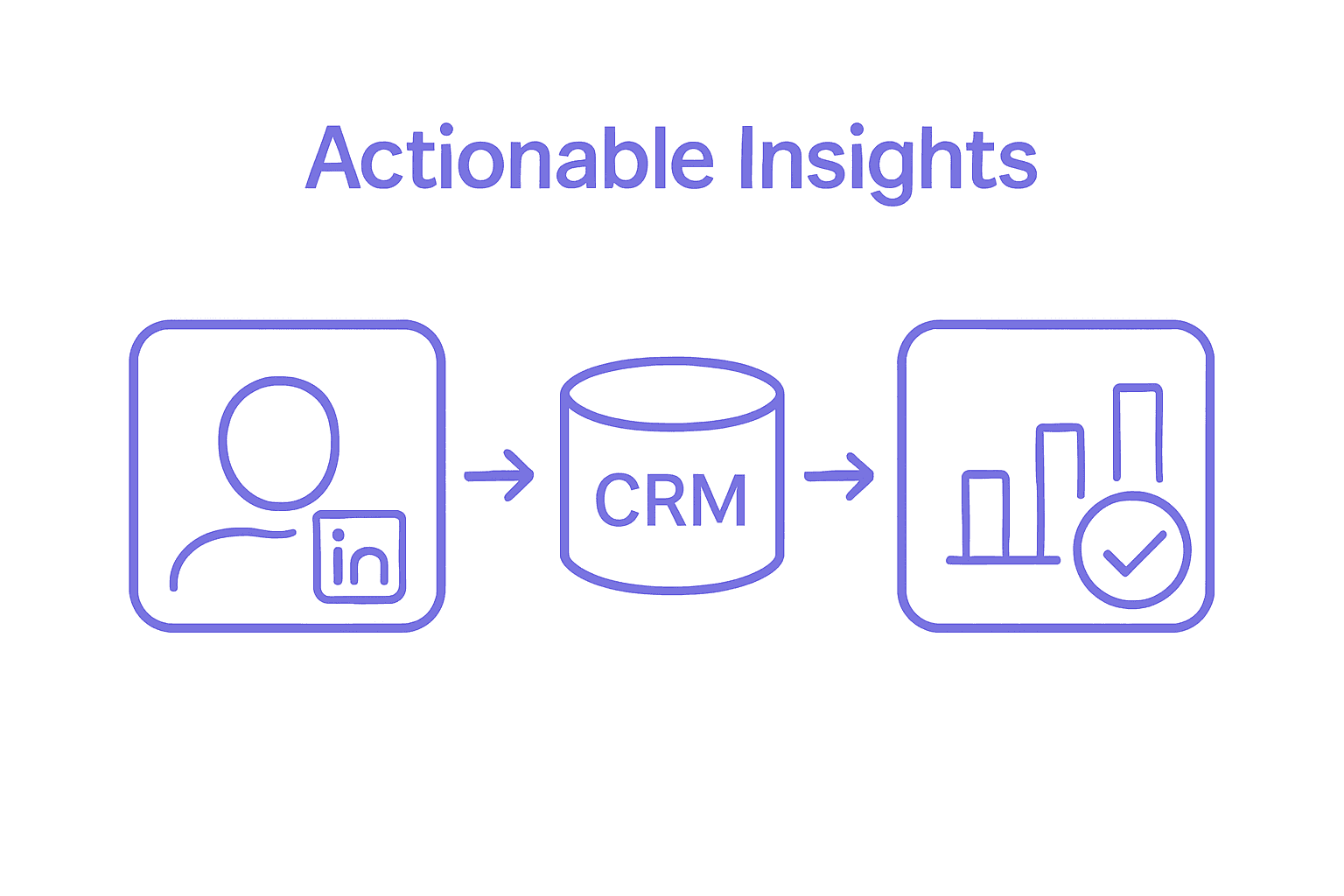
Here’s a summary of how CRM integration enhances LinkedIn-driven sales prospecting:
| Integration Benefit | Description | Business Impact |
|---|---|---|
| Centralized Data Management | Combines contact and engagement data | Improves data reliability and speed |
| Enhanced Lead Qualification | Tracks all interactions in one view | Enables more accurate prioritization |
| Predictive Engagement | Scores leads based on behavior | Increases conversion rates |
| Real-Time Sync | Automates profile and activity updates | Reduces manual errors and delays |
Pro Tip – Strategic Integration: Configure automatic data synchronization between your LinkedIn activity and CRM platform to minimize manual tracking and maximize real-time insight generation.
Streamlining Data Management and Team Collaboration
Professional social networking platforms have transformed how sales teams manage data and collaborate across complex organizational structures. By centralizing communication and information sharing, these digital ecosystems enable unprecedented levels of team coordination and strategic intelligence gathering.
Effective data management and team collaboration strategies involve several critical components:
- Centralized Information Repositories
- Single source of contact records
- Synchronized interaction histories
- Real-time data updates
- Comprehensive activity tracking
- Cross-Team Communication Channels
- Shared prospect insights
- Transparent engagement records
- Collaborative lead scoring
- Unified communication protocols
LinkedIn’s professional networking capabilities provide powerful infrastructure for breaking down traditional information silos. Sales teams can now create dynamic, interconnected knowledge networks that allow instantaneous sharing of critical prospect intelligence, reducing redundant communication and accelerating decision-making processes.
Modern sales organizations recognize that collaborative data management is not just about technology, but about creating a unified approach to relationship building. By implementing integrated systems that capture, analyze, and distribute professional interaction data, teams can develop more sophisticated, responsive engagement strategies that adapt quickly to changing market dynamics.
Pro Tip – Collaborative Intelligence: Establish regular cross-team data review sessions to ensure your entire sales organization maintains a consistent, up-to-date understanding of your collective networking efforts.
Risks, Challenges, and Avoiding Common Pitfalls
Tracking LinkedIn activity for sales teams involves navigating complex data management challenges that require strategic awareness and proactive mitigation. Social media analytics presents nuanced challenges in accurately interpreting unstructured data while maintaining professional boundaries and ethical standards.
Key risks and potential pitfalls include:
- Data Privacy Concerns
- Unauthorized contact information collection
- Potential GDPR and privacy regulation violations
- Inappropriate use of personal networking data
- Potential legal compliance issues
- Technical Integration Challenges
- Incomplete data synchronization
- Inconsistent data quality across platforms
- Potential system compatibility problems
- Risk of duplicate or conflicting records
Analytical metrics can present interpretation challenges that might lead sales teams to draw incorrect conclusions about prospect engagement. Sophisticated teams must develop robust validation processes that go beyond surface-level interaction counts, focusing instead on meaningful relationship indicators and genuine engagement potential.
Successful navigation of these challenges requires a comprehensive approach that balances technological capabilities with ethical considerations. Sales professionals must implement rigorous data governance frameworks, maintain transparent communication practices, and continuously refine their analytics strategies to ensure accurate, responsible prospect tracking.
Use this quick reference to understand risks and how to address them:
| Risk Area | Challenge Example | Mitigation Approach |
|---|---|---|
| Data Privacy | Inadvertently storing personal data | Implement strict privacy policies |
| Integration | Sync failures between LinkedIn and CRM | Use robust, compatible integration tools |
| Analytics Bias | Misinterpreting engagement signals | Validate with multiple data sources |
| Compliance | Violating data regulations (e.g., GDPR) | Provide ongoing training and oversight |
Pro Tip – Risk Management: Develop a comprehensive data usage policy that clearly defines acceptable practices for LinkedIn activity tracking, ensuring your team remains compliant and professional.
Maximize Your Sales Team’s Success by Tracking LinkedIn Activity with LeadLx
Sales teams face the challenge of turning complex LinkedIn engagement data into clear, actionable insights while avoiding manual data entry and poor integration. The article highlights the need for strategic LinkedIn activity tracking paired with efficient CRM integration to enhance lead qualification, prevent duplicate records, and streamline collaboration. If you aim to optimize your prospecting workflow, eliminate repetitive tasks, and fully leverage LinkedIn engagement signals like profile views, connection requests, and content interaction metrics, LeadLx offers a tailored solution.
LeadLx is designed to overlay HubSpot and Salesforce data directly onto LinkedIn profiles, allowing your team to instantly extract contact and company information without switching tabs. This powerful browser extension automates data syncing and bulk extraction, turning raw LinkedIn activity into precise CRM updates. You can reduce hours spent on manual processes by approximately 10 hours per week and improve data accuracy across your sales organization. Discover how to transform passive networking into competitive advantage with intelligent, real-time LinkedIn integration.
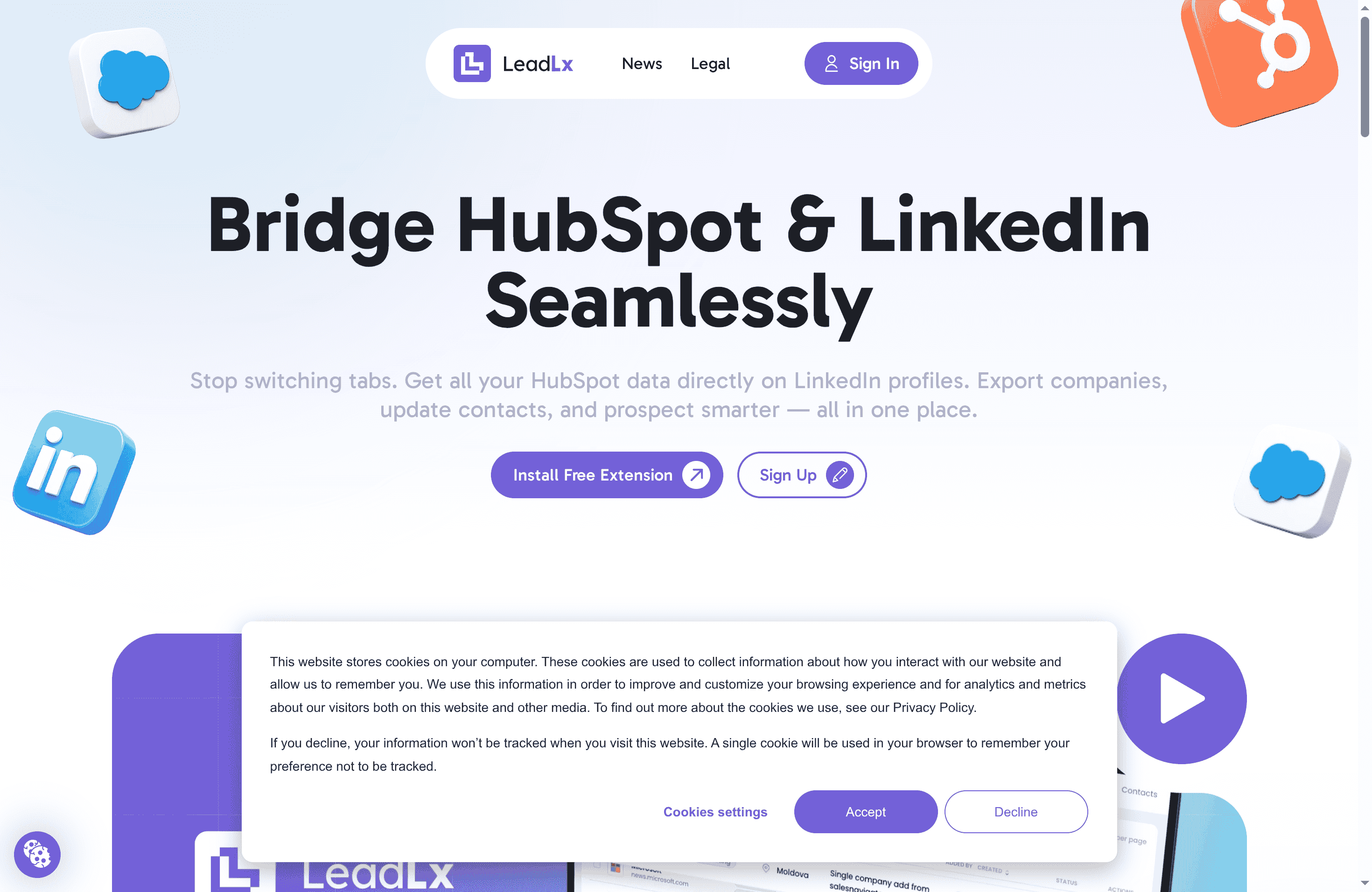
Take control of your LinkedIn activity tracking and CRM integration today by visiting LeadLx. Experience how seamless data synchronization and enriched prospect insights empower your sales team to prioritize meaningful connections and accelerate conversions. Your next opportunity awaits—streamline your LinkedIn-driven sales efforts now with LeadLx and master your professional network.
Frequently Asked Questions
Why is it important for sales teams to track LinkedIn activity?
Tracking LinkedIn activity is essential for sales teams as it helps them understand connection dynamics, identify warm leads, and develop targeted outreach strategies. By analyzing engagement signals, sales professionals can turn passive networking into actionable intelligence.
What types of LinkedIn engagement data should sales teams monitor?
Sales teams should monitor various types of engagement data, including direct interactions like profile views, connection requests, InMail responses, and comments on posts, as well as content engagement metrics such as post likes, shares, and comment quality.
How does CRM integration enhance the tracking of LinkedIn activity for sales professionals?
CRM integration enhances tracking by centralizing data management, automating contact information sync, and offering real-time updates on profiles and interactions. This integration enables better lead qualification and a comprehensive view of prospect engagement.
What are some common risks and challenges of tracking LinkedIn activity?
Common risks include data privacy concerns, technical integration challenges, and the potential for misinterpreting engagement signals. To mitigate these challenges, teams should develop robust data governance frameworks and validation processes.