
Most American sales teams now spend nearly 65 percent of their time on administrative tasks instead of actual selling. With competition on the rise, every minute spent updating records or juggling contact details limits the opportunity for real conversations. Smart integration between LinkedIn and CRM systems is changing the game by cutting out manual data entry, reducing errors, and empowering sales teams to focus where it matters most—building strong client relationships and closing deals.
Quick Summary
| Key Message | Explanation |
|---|---|
| 1. Automate Lead Capture | Use CRM integration with LinkedIn to streamline lead capture and reduce manual data entry, saving time and increasing efficiency. |
| 2. Centralize Contact Information | Automatically sync LinkedIn contacts into your CRM for accurate and up-to-date client profiles, enhancing outreach strategies. |
| 3. Reduce Errors with Automation | Implement automated data capture to eliminate human errors in contact information, ensuring reliable data for sales strategies. |
| 4. Enhance Team Collaboration | Leverage shared CRM visibility to improve communication and coordination among sales team members, fostering a cohesive work environment. |
| 5. Gain Real-Time Insights | Utilize integrated platforms for real-time data to develop targeted outreach strategies based on accurate prospect behavior and engagement patterns. |
1. Streamline Lead Capture and Prospecting Processes
Capturing leads and managing prospects efficiently has become a critical challenge for modern sales teams. By leveraging CRM integration with LinkedIn, sales professionals can dramatically reduce manual data entry and accelerate their prospecting workflow.
The power of this integration lies in its ability to automatically sync contact information and communication history directly into your customer relationship management system. When you view a LinkedIn profile, key details can be instantly transferred without repetitive data input. This means your team spends less time on administrative tasks and more time building meaningful relationships.
Importing LinkedIn data into your CRM transforms how sales teams track potential clients. Instead of juggling multiple platforms and manually copying information, you can create comprehensive lead profiles with a single click. This approach not only saves time but also ensures data accuracy and completeness.
Sales teams can set up automated workflows that capture profile information, track interaction history, and even log communication attempts seamlessly. The result is a more organized and strategic approach to prospecting that eliminates information silos and reduces human error.
Pro tip: Configure your CRM integration to automatically flag and prioritize high potential leads based on profile completeness and engagement metrics to optimize your prospecting strategy.
2. Sync LinkedIn Contacts Directly Into CRM
Automatic contact synchronization between LinkedIn and your CRM system represents a game changing strategy for sales professionals seeking maximum efficiency. Gone are the days of manual data entry and fragmented contact management.
The integration process allows sales teams to match LinkedIn profiles directly to CRM leads and accounts, creating a seamless workflow that eliminates duplicate work. By connecting these platforms, you transform how contact information is captured and maintained across your sales ecosystem.
When LinkedIn profile data automatically populates your CRM records, you gain instant access to comprehensive contact details including professional backgrounds, current roles, and company information. This real time synchronization ensures your sales team always works with the most current and accurate contact intelligence.
Implementing this integration dramatically reduces administrative overhead. Sales representatives can focus on building relationships and pursuing opportunities instead of spending hours manually transferring contact information between different platforms. The automated sync creates a single source of truth for your entire sales organization.
Key benefits include reduced data entry time, improved data accuracy, and enhanced visibility into potential client networks. By centralizing contact information, your team can develop more targeted and personalized outreach strategies.
Pro tip: Configure your CRM integration to create automatic alerts when key contacts change roles or companies to maintain proactive relationship management.
3. Eliminate Manual Data Entry and Reduce Errors
Manual data entry represents a significant productivity drain for sales teams, consuming precious hours and introducing numerous opportunities for human error. Integrated CRM and LinkedIn solutions offer a powerful alternative to this time consuming process.
By implementing automated data capture technologies, sales professionals can dramatically reduce the time spent transferring contact information across platforms. Instead of manually typing details from LinkedIn profiles into CRM systems, users can instantly extract and sync accurate contact information with a single click.
The precision of automated data synchronization eliminates common human errors such as misspelled names, incorrect job titles, or outdated contact details. Advanced integration tools can cross reference multiple data sources to ensure the highest level of accuracy and completeness in your contact records.
Sales teams benefit from a centralized information repository that maintains consistent and up to date contact profiles. This approach not only saves time but also provides a more reliable foundation for relationship building and strategic outreach. Automated systems can continuously update contact information as professionals change roles or companies.
Implementing these technologies transforms data management from a tedious administrative task into a streamlined, intelligent process. Your sales team can redirect energy from repetitive data entry toward high value activities like relationship cultivation and strategic planning.
Pro tip: Configure your CRM integration to automatically flag and validate contact information changes, ensuring your database remains accurate without requiring manual intervention.
4. Improve Team Collaboration with Shared CRM Visibility
Effective team collaboration begins with transparent information sharing. When sales teams leverage integrated CRM systems, they create a unified platform where critical customer insights become universally accessible.
Shared CRM visibility transforms how organizations approach customer relationship management by centralizing customer information and sales insights into one comprehensive system. Each team member gains real time access to contact histories, interaction logs, and communication records without endless email chains or manual updates.
This collaborative approach eliminates information silos that traditionally fragment sales teams. Sales representatives can instantly see previous interactions, understand customer communication history, and develop more strategic engagement approaches. A global view of customer relationships allows for smoother handoffs between team members and more coordinated outreach strategies.
Improved visibility also enables managers to track team performance more effectively. They can monitor individual and collective progress, identify potential bottlenecks, and provide targeted coaching based on comprehensive data insights. This transparency creates accountability and promotes a culture of continuous improvement.
By breaking down communication barriers, shared CRM platforms create a more cohesive sales ecosystem. Team members can add notes, tag colleagues, and collaborate seamlessly without losing critical context or duplicating effort.
Pro tip: Establish clear guidelines for CRM data entry and encourage team members to update contact records immediately after interactions to maintain system accuracy and reliability.
5. Gain Real-Time Insights for Smarter Outreach
Sales professionals who leverage data driven insights have a significant competitive advantage in modern business environments. Integrated CRM and LinkedIn platforms transform how teams understand and engage with potential customers.
By accessing accurate intent data through strategic platform integration, sales teams can develop highly targeted outreach strategies. Real time insights reveal critical information about prospect behavior, professional transitions, and engagement patterns that traditional methods could never capture.
These intelligent systems provide comprehensive snapshots of potential clients that go far beyond basic contact information. Sales representatives can now track job changes, understand company dynamics, and identify optimal communication moments with unprecedented precision. This approach eliminates guesswork and transforms cold outreach into strategic relationship building.
Advanced integration technologies analyze multiple data points to generate actionable intelligence. Machine learning algorithms can predict optimal contact times, suggest personalized communication approaches, and highlight high potential prospects based on complex behavioral indicators.
By combining LinkedIn professional network data with CRM historical interaction records, sales teams create a powerful intelligence engine. This comprehensive view allows for nuanced understanding of each prospect’s professional context, enabling more authentic and relevant engagement strategies.
Pro tip: Configure your CRM integration to set automatic alerts for key prospect activities like job promotions or company changes to trigger timely and contextually relevant outreach.
6. Enhance Data Accuracy with Automatic Updates
Data integrity is the backbone of effective sales strategies. Automatic updates through integrated CRM systems eliminate the persistent challenge of maintaining current and accurate contact information.
By matching LinkedIn profiles directly to CRM records, sales teams can ensure their database reflects real time professional changes. This dynamic synchronization captures job transitions, company updates, and contact details instantaneously.
Traditional contact management required manual updates that were time consuming and prone to human error. Automated systems now continuously validate and refresh information across platforms. When a professional changes roles or companies, your CRM reflects these shifts automatically without any intervention from your team.
The technology behind these updates uses sophisticated algorithms that cross reference multiple data sources. This means your contact records become more than static information repositories. They transform into living documents that adapt and evolve with your professional network.
Sales teams gain significant advantages through this approach. Reduced administrative overhead combines with increased data reliability to create a more efficient prospecting environment. Representatives can trust that their contact information represents the most current professional landscape.
Pro tip: Enable notification settings in your CRM integration to receive alerts about significant contact changes, allowing for immediate strategic adjustments to your outreach approach.
7. Save Time with One-Click CRM Record Updates
Modern sales professionals understand that every minute counts in building successful client relationships. One click CRM record updates represent a revolutionary approach to eliminating administrative overhead and maximizing productivity.
CRM Sync technologies offer advanced features like Auto-Save and Activity Writeback, allowing sales representatives to capture critical interaction details instantaneously. Instead of manually logging conversations or transferring contact information, users can now update entire customer records with a single action.
The traditional process of documenting sales interactions involved multiple steps. Representatives would need to switch between platforms, copy information, and manually input data into separate systems. One click updates collapse this entire workflow into a seamless, instantaneous process.
These intelligent systems capture comprehensive interaction details including communication timestamps, conversation notes, and contact information. By automating record keeping, sales teams dramatically reduce the administrative burden and minimize the potential for human error.
Automated updates also create a more comprehensive and accurate historical record of customer interactions. This means better tracking, improved team collaboration, and more strategic relationship management across the entire sales organization.
Pro tip: Configure your CRM integration to prioritize critical interaction data fields during one click updates to ensure the most important information is always captured first.
Below is a comprehensive table summarizing the strategies and benefits of integrating CRM with LinkedIn for sales teams as discussed in the article.
| Strategy/Tool | Key Actions & Features | Benefits/Outcomes |
|---|---|---|
| Streamline Lead Capture | CRM integration with LinkedIn for automatic data syncing | Reduces manual entry, accelerates workflow, and enhances data accuracy |
| Automatic Contact Sync | Sync LinkedIn profiles to CRM leads and accounts | Eliminates duplicate work, improves contact management efficiency |
| Eliminate Manual Data Entry | Use automated data capture technologies | Reduces errors, saves time, ensures comprehensive records |
| Enhance Collaboration | Centralize data in shared CRM systems | Improves team coordination, enhances strategic planning |
| Gain Real-Time Insights | Access strategic platform integration data | Allows targeted outreach and strategic relationship building |
| Enhance Data Accuracy | Utilize automatic updates for real-time data | Keeps contact information current and reliable |
| Save Time with One-Click Updates | Use CRM Sync technologies | Streamlines record keeping, reduces administrative burden |
Unlock Sales Efficiency by Integrating CRM and LinkedIn
The article highlights critical challenges like manual data entry, fragmented contact management, and lack of real-time insights that frequently disrupt sales teams’ workflows. If your goal is to eliminate repetitive tasks, improve data accuracy, and boost team collaboration through seamless CRM integration, then LeadLx offers the precise solution you need. Imagine accessing HubSpot or Salesforce data directly on LinkedIn profiles, extracting contact and company information instantly, and updating CRM records with just one click. This reduces the time spent on administrative tasks by up to 10 hours per week while ensuring your data stays accurate and up to date.
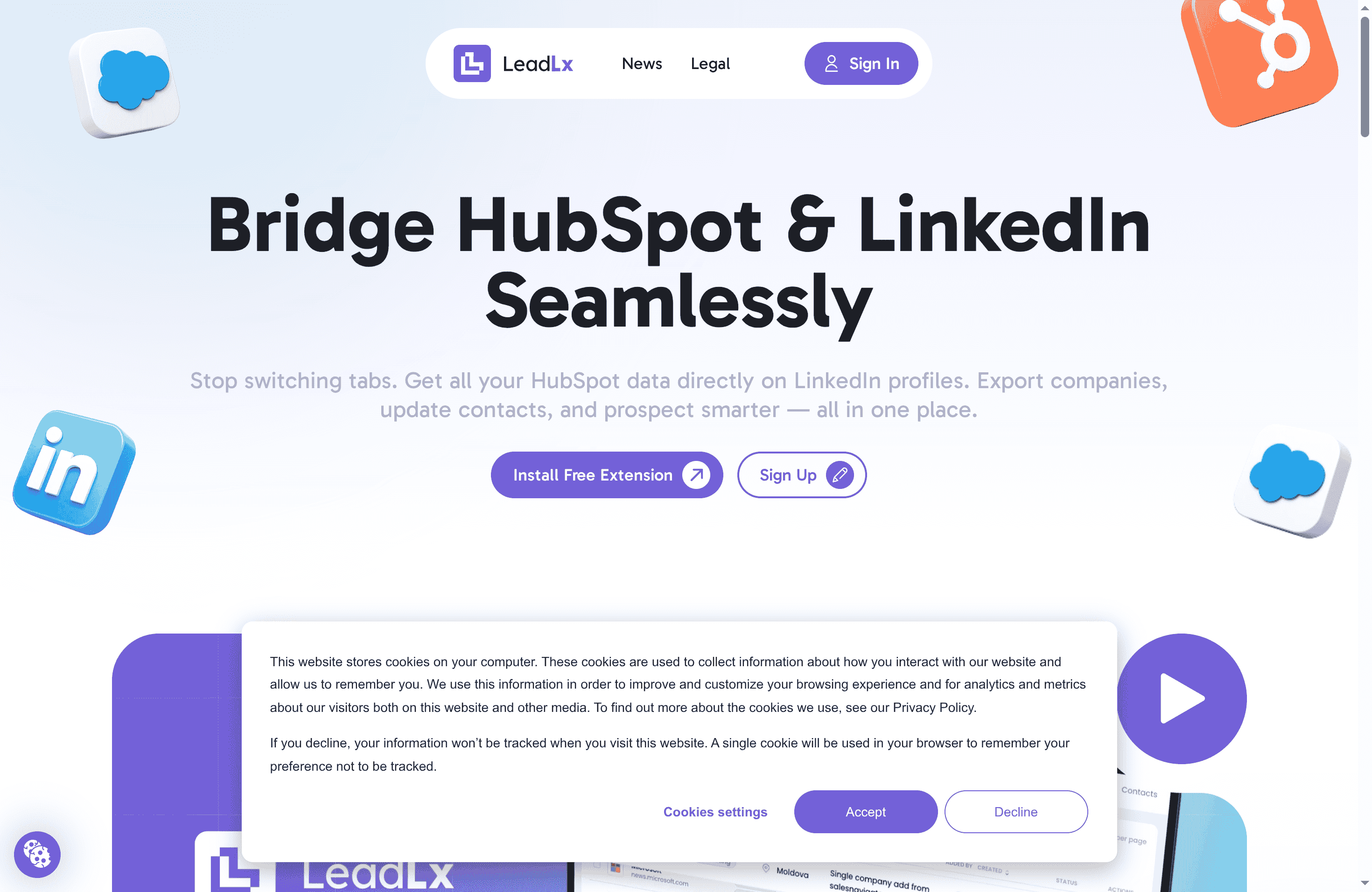
Take control of your prospecting process today and transform how your sales and marketing teams engage with leads. Visit LeadLx now to experience the power of integrated CRM and LinkedIn workflows. Streamline your outreach, prevent duplicate entries through shared CRM visibility, and start closing deals faster.
Frequently Asked Questions
How can CRM and LinkedIn integration help my sales team save time?
Integrating CRM with LinkedIn automates data entry, allowing your sales team to update contact information and logs with a single click. Start using automated synchronization to reduce administrative tasks by at least 50%, freeing up your team to focus on relationship building.
What are the benefits of real-time updates between LinkedIn and our CRM?
Real-time updates ensure your sales team has access to the most current contact information, including job changes and company updates. Implement automatic alerts for significant changes, enabling your team to act promptly and improve outreach effectiveness.
How does shared CRM visibility enhance team collaboration?
Shared CRM visibility allows all team members to access customer insights and interaction histories, fostering better collaboration. Encourage your team to update records immediately after interactions to maintain a unified view of client relationships.
What strategies can we use to prioritize high-potential leads from LinkedIn data?
You can configure your CRM to automatically flag and prioritize leads based on engagement metrics and profile completeness. Begin by setting up these automated alerts to boost your lead conversion rate significantly within a few weeks.
How can our sales team benefit from automatic data validation in CRM?
Automatic data validation helps maintain accurate and updated contact records, minimizing errors in your CRM database. Turn on validation settings in your integration to ensure that information is consistently refreshed, leading to better decision-making and outreach strategies.
What steps can I take to implement one-click updates for CRM records?
To implement one-click updates, ensure that your CRM is set to capture critical interaction details automatically during conversations. Start this process by configuring the system to prioritize essential fields, making it easy for your sales team to maintain accurate customer records.