
More than 60 percent of American sales professionals say manual data entry slows down their LinkedIn prospecting efforts. With rising competition across North American markets, finding and connecting with qualified leads is more challenging than ever. This article explains how digital prospecting methods combined with CRM integrations can help HubSpot and Salesforce users reach the right prospects faster, increase conversion rates, and end tedious manual tasks.
Key Takeaways
| Point | Details |
| Digital Prospecting Embraces Technology | Modern sales rely on digital prospecting, integrating data analytics and CRM tools for precise targeting and engagement. |
| Variety of Methods Enhances Outreach | Effective strategies include social media outreach, content marketing, email marketing, and predictive analytics to generate leads. |
| CRM Integration Improves Efficiency | Integrating LinkedIn with CRM systems automates data capture and enhances lead tracking, allowing for personalized strategies. |
| Navigating Compliance is Essential | Sales teams must understand data privacy regulations and ethical practices to ensure sustainable and responsible digital prospecting. |
Defining Digital Prospecting in Sales
Digital prospecting represents a transformative approach to sales lead generation that leverages technology and strategic insights to identify and engage potential customers. Unlike traditional cold calling methods, digital prospecting integrates advanced data analytics, social media platforms, and customer relationship management (CRM) tools to create more targeted, efficient outreach strategies. Modern sales approaches now depend on systematic digital prospecting techniques that enable professionals to connect with high-potential leads more precisely than ever before.
At its core, digital prospecting involves using online platforms, data analysis tools, and strategic intelligence to systematically research, identify, and qualify potential sales opportunities. Sales professionals utilize platforms like LinkedIn, specialized software, and CRM systems to gather comprehensive information about potential clients, understand their business needs, and develop personalized engagement strategies. The process goes beyond simple contact gathering – it requires understanding behavioral patterns, organizational structures, and potential pain points that make a prospect an ideal candidate for a company’s products or services.
The strategic implementation of digital prospecting involves multiple key components. These include targeted market segmentation, psychological insights into buyer behavior, predictive analytics, and automated outreach capabilities. Relationship marketing principles now drive sophisticated digital prospecting frameworks that transform how sales teams approach potential customers. By leveraging technology, sales professionals can now create more meaningful, data-driven connections that increase conversion rates and reduce time-consuming manual prospecting efforts.
Pro Tip: Precision Targeting Strategy: Develop a detailed ideal customer profile before beginning digital prospecting, focusing on specific industries, job titles, and organizational characteristics to maximize your lead generation efficiency.
Types of Digital Prospecting Methods
Digital prospecting encompasses a diverse range of strategic methods that enable sales professionals to identify, engage, and convert potential customers through advanced technological approaches. Contemporary digital prospecting strategies blend multiple channels and techniques to create comprehensive lead generation frameworks, moving far beyond traditional single-channel outreach methods.
The primary digital prospecting methods include social media outreach, content marketing, email marketing, and predictive analytics-driven approaches. Social media prospecting, particularly on platforms like LinkedIn, allows professionals to directly connect with decision-makers, research organizational structures, and develop targeted engagement strategies. Content marketing methods involve creating valuable, industry-specific resources that attract potential leads by demonstrating expertise and addressing specific business challenges. Email marketing techniques leverage segmentation and personalization to deliver precisely targeted communications that resonate with specific audience segments.

Advanced digital prospecting also incorporates sophisticated technologies like marketing automation, customer relationship management (CRM) systems, and predictive analytics tools. These technologies enable sales teams to systematically categorize and prioritize potential leads using complex behavioral and demographic data while maintaining a high degree of personalization. Multichannel strategies have become increasingly important, allowing sales professionals to create integrated approaches that combine social media interactions, targeted email campaigns, personalized content, and strategic follow-up mechanisms.
Here’s how digital prospecting methods differ in their approach and outcomes:
| Method | Main Approach | Business Impact | Optimal Use Case |
|---|---|---|---|
| Social Media Outreach | Direct engagement via posts | Fast connection with decision-makers | Building professional networks |
| Content Marketing | Sharing expert resources | Generates inbound leads | Establishing industry authority |
| Email Marketing | Personalized communications | High response rates with targeting | Nurturing qualified prospects |
| Predictive Analytics | Data-driven targeting | Efficient lead prioritization | Scaling outreach intelligently |
Pro Tip: Integrated Approach Strategy: Design a holistic digital prospecting workflow that combines at least three different digital channels, ensuring consistent messaging and tracking mechanisms across your outreach efforts.
How LinkedIn and CRM Integration Works
CRM integration with LinkedIn represents a sophisticated technological approach that transforms how sales professionals capture, manage, and leverage professional networking data. Sophisticated integration methods bridge the gap between social networking platforms and customer relationship management systems, enabling seamless data transfer and enhanced lead tracking capabilities.
The integration process typically involves multiple mechanisms, including native platform connections, browser extensions, and specialized third-party tools. Sales teams can synchronize LinkedIn profile information directly into their CRM systems, capturing critical details such as professional titles, company affiliations, contact information, and recent professional activities. This automated data capture eliminates manual entry, reduces human error, and provides real-time insights into potential leads’ professional backgrounds and organizational contexts.
Advanced CRM integration strategies go beyond simple contact information transfer. Modern solutions enable complex workflow automation, allowing sales professionals to track interaction histories, set automated follow-up reminders, and create personalized engagement strategies based on comprehensive professional profiles. These integrations provide robust data enrichment capabilities, automatically updating contact records with current job roles, company changes, and professional network expansions. By leveraging these technological capabilities, sales teams can develop more targeted, intelligent prospecting approaches that significantly improve lead conversion potential.
Pro Tip: Integration Optimization Strategy: Configure your CRM integration to automatically flag high-potential leads based on predefined criteria like job title, company size, and recent professional activity, enabling more focused and efficient prospecting efforts.
Key Features and Benefits for Teams
LinkedIn prospecting offers sales teams a powerful set of strategic tools designed to transform professional networking into measurable business opportunities. Advanced search capabilities and networking features enable systematic approach to professional relationship development, providing unprecedented insights into potential client ecosystems.
Key features for sales teams include comprehensive professional profile analysis, targeted search functionality, and intelligent connection strategies. These tools allow teams to identify decision-makers within specific industries, track professional movements, and develop nuanced engagement approaches. Advanced filtering options enable precise targeting based on job titles, company sizes, geographical locations, and professional interests. Sales professionals can efficiently map organizational hierarchies, understand potential leads’ career trajectories, and develop personalized outreach strategies that demonstrate genuine understanding of their professional contexts.
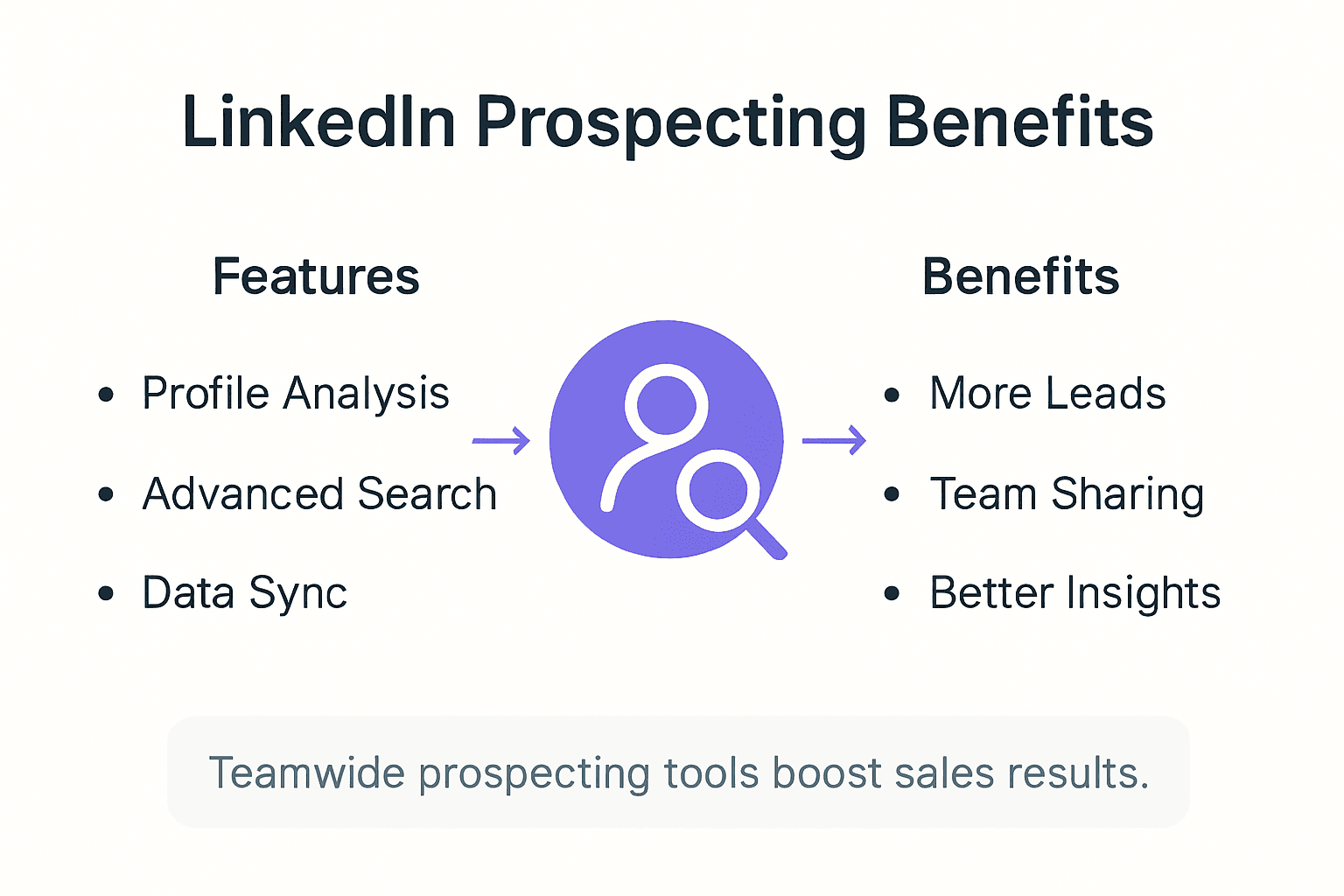
The collaborative benefits of LinkedIn prospecting extend beyond individual performance metrics. Team-wide access to synchronized professional networking data creates a shared intelligence platform where sales representatives can collectively track interactions, share insights, and develop coordinated engagement strategies. This approach transforms individual networking efforts into a cohesive, strategic organizational asset. By centralizing professional networking intelligence, teams can reduce redundant communications, improve lead qualification processes, and create more sophisticated, data-driven sales approaches that leverage collective organizational knowledge.
The table below summarizes key features of LinkedIn prospecting and the resulting benefits for sales teams:
| Feature | Description | Team Benefit |
|---|---|---|
| Advanced Search | Precisely targets prospects | Increased lead quality |
| Profile Analysis | Assesses business needs | Better tailored outreach |
| Collaborative Data Sharing | Centralizes prospect info | Streamlined team coordination |
| Engagement Tracking | Monitors interactions | Improved conversion strategies |
Pro Tip: Collaborative Intelligence Strategy: Establish a weekly team meeting to review and discuss collective LinkedIn prospecting insights, ensuring that knowledge gained from individual interactions is systematically shared and integrated into broader sales strategies.
Risks, Compliance, and Common Challenges
Digital prospecting involves complex legal and ethical considerations that sales professionals must carefully navigate to maintain professional integrity and avoid potential penalties. Comprehensive understanding of data privacy regulations and platform-specific compliance requirements is crucial for sustainable lead generation strategies, particularly when utilizing professional networking platforms like LinkedIn.
Key compliance challenges include navigating strict data protection regulations, respecting individual privacy rights, and adhering to platform-specific usage guidelines. Sales teams must obtain explicit consent for data collection, maintain transparent communication about data usage, and implement robust data management protocols. These requirements extend beyond simple legal checkbox exercises, demanding sophisticated approaches to contact management that prioritize individual privacy while maintaining effective prospecting capabilities. Organizations must develop clear internal policies that define acceptable boundaries for digital outreach, ensuring that automated tools and connection strategies remain within legal and ethical frameworks.
Technological and algorithmic risks present additional challenges for digital prospecting efforts. LinkedIn and other professional networking platforms enforce specific limitations on connection requests, messaging frequency, and automated interactions, which can potentially restrict sales teams’ outreach capabilities. These platform constraints require nuanced, personalized engagement strategies that demonstrate genuine professional interest rather than relying on mass communication techniques. Sales professionals must continuously adapt their approaches, balancing technological efficiency with authentic, relationship-driven communication methods that respect both platform guidelines and individual professional boundaries.
Pro Tip: Compliance Protection Strategy: Develop a comprehensive internal training program that educates sales team members about data privacy regulations, platform-specific guidelines, and ethical digital prospecting practices, updating the curriculum quarterly to reflect evolving technological and legal landscapes.
Streamline Your Digital Prospecting with LeadLx
Digital prospecting, especially on LinkedIn, demands precision targeting and seamless data management to convert high-potential leads efficiently. The article highlights challenges like managing CRM integrations, manual data entry, and coordinating team efforts while navigating platform compliance. These pain points often lead to lost time, duplicated efforts, and missed opportunities in lead generation.
LeadLx addresses these challenges head-on by integrating LinkedIn directly with CRM systems like HubSpot and Salesforce. Our browser extension overlays CRM data onto LinkedIn profiles, enabling instant contact and company information extraction without switching tabs. This automation reduces manual tasks by up to 10 hours weekly and ensures data accuracy across your team. With features like bulk data extraction and one-click CRM updates, LeadLx transforms digital prospecting into a streamlined, collaborative process that empowers your sales and marketing teams to act smarter and faster.
Ready to elevate your LinkedIn lead generation and embrace the future of digital prospecting Explore how LeadLx can save you time and improve your outreach efficiency today.
Start optimizing your prospecting workflow now by visiting LeadLx and discover how our solutions integrate with your CRM tools to make every connection count.
Frequently Asked Questions
What is digital prospecting in sales?
Digital prospecting is a modern approach to lead generation that utilizes technology, data analytics, and online platforms to identify and engage potential customers more effectively than traditional methods.
How can LinkedIn be used for digital prospecting?
LinkedIn can be used for digital prospecting by enabling sales professionals to connect with decision-makers, conduct comprehensive research, and develop personalized engagement strategies through its advanced search functionalities and professional networking features.
What are some effective digital prospecting methods?
Effective digital prospecting methods include social media outreach, content marketing, email marketing, and utilizing predictive analytics to target and engage high-quality leads based on data-driven insights.
What are the key benefits of CRM integration with LinkedIn for sales teams?
CRM integration with LinkedIn streamlines the process of capturing and managing lead information, enhances lead tracking capabilities, and allows for automated workflows, which collectively improve sales efficiency and lead conversion rates.
Recommended
- The Essential Guide to Why Sales Teams Use LinkedIn
- Prospecting Process Optimization: Boost Sales Efficiency Fast
- Time-Saving Prospecting Methods for Efficient Lead Capture
- Outbound Prospecting Explained: Complete Expert Overview
- LinkedIn Marketing – seo analytic
- Commentions | What to do instead of buying linkedin connections (100% Smarter & Effective)