
Over 60 percent of American enterprise teams report that inaccurate CRM data leads to lost sales opportunities every year. For sales and marketing professionals managing large B2B targets, finding and connecting with the right decision-makers can drain time and energy. Strategic LinkedIn prospecting, combined with seamless CRM integration, now gives business leaders a smarter way to engage high-value prospects while keeping their information accurate and actionable.
Key Takeaways
| Point | Details |
|---|---|
| Strategic Engagement | Enterprise prospecting focuses on building meaningful relationships with high-value prospects rather than relying on volume-based lead generation. |
| Multi-Channel Approach | Successful prospecting requires a combination of digital and traditional strategies tailored to specific industries and audiences. |
| Data Integration | Implementing advanced workflow automation and CRM integration is crucial for maintaining accurate prospect information and optimizing sales processes. |
| Compliance Awareness | Sales teams must navigate legal considerations and data privacy regulations to ensure ethical prospect engagement and mitigate risks. |
Defining Enterprise Prospecting in B2B Sales
Enterprise prospecting represents a sophisticated strategic approach for identifying and engaging high-value business prospects through systematic, data-driven methodologies. Unlike traditional sales outreach, enterprise prospecting focuses on targeted research and personalized engagement with key decision-makers in large organizations.
At its core, enterprise prospecting involves comprehensive targeting strategies that leverage advanced data intelligence and multi-channel communication techniques. Sales teams now utilize sophisticated approaches including account-based marketing (ABM), intent data analysis, and precision targeting to connect with potential enterprise clients. The goal shifts from volume-based lead generation to developing meaningful, strategic relationships with organizations that represent substantial revenue potential.
Successful enterprise prospecting requires a nuanced understanding of complex organizational structures, buyer personas, and technological integration. Modern sales professionals must navigate intricate decision-making hierarchies, demonstrating deep industry knowledge and delivering highly customized value propositions. This approach demands robust research capabilities, advanced communication skills, and a strategic mindset focused on long-term relationship building rather than transactional interactions.
Pro tip: Develop a comprehensive ideal customer profile (ICP) that includes detailed firmographic and technographic data to streamline your enterprise prospecting efforts and improve targeting precision.
Types of Enterprise Prospecting Approaches
Enterprise prospecting encompasses a diverse array of strategic methodologies designed to identify, engage, and convert high-potential business opportunities. Modern sales organizations leverage multiple approaches to create comprehensive prospecting frameworks that maximize their potential for meaningful client interactions.
Sales teams typically employ comprehensive prospecting methods that span digital and traditional channels. These approaches include targeted strategies such as social selling on LinkedIn, strategic cold calling, personalized email outreach, content-driven discovery, professional networking events, referral programs, and sophisticated multi-channel communication cadences. Each method requires careful customization based on specific industry dynamics, target audience characteristics, and organizational objectives.
Successful enterprise prospecting demands a nuanced, multichannel approach that integrates data-driven insights with human relationship-building skills. Advanced techniques now emphasize personalization, leveraging technology and intent data to craft highly targeted engagement strategies. Sales professionals must seamlessly blend digital intelligence with authentic interpersonal communication, creating value-driven interactions that transcend traditional transactional selling models.
Pro tip: Develop a dynamic prospecting strategy that rotates between different approaches, continuously measuring and optimizing each channel’s performance to maintain maximum engagement and conversion potential.
Here’s a comparison of key enterprise prospecting approaches and their strategic benefits:
| Approach | Main Channel | Strength | Business Impact |
|---|---|---|---|
| Social Selling | Builds credibility and networks | Increases trust and referrals | |
| Personalized Email | Highly targeted messaging | Drives appointments | |
| Content-Driven Discovery | Blogs, Webinars | Showcases expertise | Generates inbound leads |
| Cold Calling | Phone | Direct real-time conversations | Nurtures urgent opportunities |
Core Features and Workflow Integration
Workflow integration represents a critical transformation in enterprise prospecting, enabling sales teams to streamline complex processes and maximize technological capabilities. Modern sales organizations require sophisticated systems that seamlessly connect disparate data sources and automate critical interaction points throughout the customer engagement lifecycle.

Enterprise sales teams now leverage advanced workflow automation systems that provide real-time data synchronization, intelligent lead routing, and automated multi-channel communication strategies. These integrated platforms enable precise tracking of prospect interactions, automatic follow-up scheduling, and dynamic segmentation based on behavioral triggers and engagement metrics. The result is a more responsive, data-driven approach that reduces manual administrative tasks while increasing overall sales productivity.
Artificial intelligence and machine learning are rapidly transforming workflow integration capabilities, introducing predictive analytics that dramatically enhance decision-making processes. Sales teams can now access sophisticated tools that automatically score leads, predict conversion probabilities, and recommend optimal engagement strategies. This technological evolution allows professionals to focus on high-value relationship-building activities while automated systems handle complex background processing and strategic data management.
Pro tip: Implement a comprehensive workflow integration strategy that prioritizes data consistency, automates repetitive tasks, and creates clear communication channels between your sales, marketing, and customer success teams.
The following table summarizes essential features of workflow integration in enterprise sales:
| Feature | Description | Benefit |
|---|---|---|
| Real-Time Data Sync | Keeps prospect info updated automatically | Reduces data errors |
| Lead Scoring Automation | Ranks prospects using AI/ML | Prioritizes high-value leads |
| Automated Multi-Channel Cadence | Orchestrates email, calls, and messages | Ensures consistent outreach |
| Behavioral Tracking | Monitors engagement and interactions | Refines targeting strategies |
LinkedIn Prospecting With Integrated CRM Tools
LinkedIn prospecting represents a sophisticated approach to B2B sales that leverages professional networking platforms to identify, engage, and convert high-potential business opportunities. Modern sales professionals recognize LinkedIn as more than just a networking site, but a powerful strategic tool for targeted relationship building and intelligent lead generation.
Sales teams can dramatically enhance their prospecting effectiveness by understanding strategic CRM integration that seamlessly connects LinkedIn data with existing customer relationship management systems. This integration allows for real-time contact information synchronization, automatic lead capture, and comprehensive tracking of prospect interactions across multiple touchpoints. By eliminating manual data entry and reducing administrative overhead, sales professionals can focus on building meaningful professional relationships and developing strategic engagement strategies.
The most successful LinkedIn prospecting approaches combine advanced technological capabilities with personalized human interaction. Integrated CRM tools enable sales teams to leverage sophisticated filtering mechanisms, track engagement history, and develop nuanced communication strategies tailored to specific prospect profiles. These systems provide unprecedented visibility into potential client networks, allowing for more intelligent outreach, precise targeting, and data-driven decision-making that significantly improves conversion potential.
Pro tip: Create a standardized workflow for LinkedIn prospecting that includes automated lead capture, immediate CRM synchronization, and clear follow-up protocols to maximize efficiency and consistency in your sales process.
Risks, Challenges, and Compliance Issues
Enterprise sales prospecting involves complex navigational challenges that extend far beyond traditional sales methodologies. Modern organizations must carefully balance aggressive lead generation strategies with stringent legal and ethical considerations, creating a nuanced landscape of potential risks and strategic opportunities.
Sales teams face increasingly complex obstacles, as emerging research highlights critical prospecting challenges including prolonged sales cycles, heightened buyer indecision, and intricate multi-stakeholder decision processes. These challenges are compounded by increasing regulatory scrutiny around data privacy, requiring sales professionals to develop sophisticated approaches that prioritize compliance, transparency, and personalized engagement. Organizations must implement robust data protection protocols, ensure explicit consent for communication, and maintain meticulous records of prospect interactions to mitigate potential legal vulnerabilities.
Technological complexity introduces additional layers of risk management, particularly around data integration, security, and ethical use of professional networking platforms. Sales teams must navigate intricate compliance requirements across different jurisdictions, understanding variations in data protection regulations, consent mechanisms, and professional communication standards. This demands not just technological sophistication, but a comprehensive understanding of evolving legal frameworks that govern digital sales engagement strategies.
Pro tip: Develop a comprehensive compliance checklist that addresses data privacy regulations, includes explicit consent tracking mechanisms, and provides clear guidelines for ethical prospect engagement across all communication channels.
Best Practices for Accurate Data and Collaboration
Accurate data management represents a critical foundation for successful enterprise prospecting, enabling sales teams to make informed decisions and develop targeted engagement strategies. Modern organizations recognize that data quality directly impacts overall sales performance, customer relationships, and strategic planning effectiveness.
Sales teams can enhance their data management capabilities by implementing comprehensive data enrichment strategies that emphasize structured information collection, robust governance frameworks, and sophisticated quality control mechanisms. These approaches involve multi-source data integration, establishing clear user access controls, implementing role-based permissions, and developing systematic processes for continuous data validation and lifecycle management. By creating a holistic approach to data management, organizations can significantly improve lead conversion rates while maintaining high standards of information accuracy and compliance.
Technological integration plays a pivotal role in maintaining data integrity across complex sales ecosystems. Advanced CRM platforms and collaborative tools now offer sophisticated features that enable real-time data synchronization, automated deduplication, and intelligent tracking of prospect interactions. Sales professionals must develop a proactive approach to data maintenance, treating information as a dynamic asset that requires constant refinement, verification, and strategic alignment with organizational objectives.
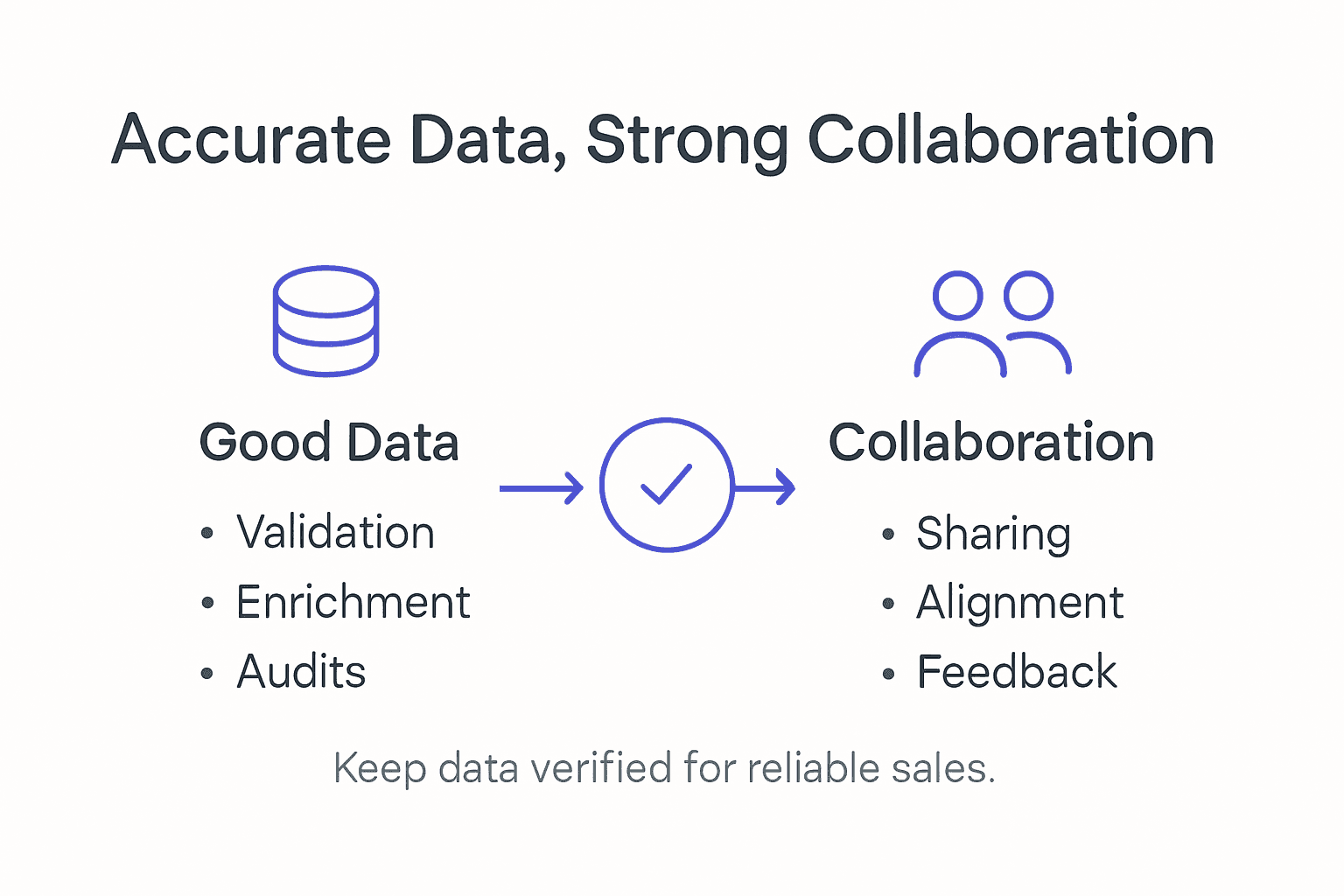
Pro tip: Create a standardized data validation protocol that includes regular audit cycles, cross-referencing multiple sources, and establishing clear accountability for data quality across your sales and marketing teams.
Accelerate Your Enterprise Prospecting with LeadLx
Enterprise prospecting demands precision, seamless CRM integration, and time-saving workflows to conquer complex sales challenges highlighted in the article “Enterprise Prospecting: Transforming LinkedIn Sales.” If you are struggling with repetitive manual tasks, inaccurate data, or inefficient LinkedIn outreach, these pain points can slow down your ability to connect with key decision-makers and stall your sales pipeline. LeadLx offers a powerful solution by overlaying HubSpot and Salesforce data directly on LinkedIn profiles, enabling instant contact extraction and one-click CRM updates that keep your information accurate and accessible.
By using LeadLx, your sales and marketing teams gain a competitive edge through automated data capture, bulk extraction from search results, and enhanced team collaboration that prevents duplicate entries and drives better prospecting. Discover how you can reduce hours spent on tedious manual work and focus on what matters most: building strategic relationships and closing deals.
Elevate your enterprise prospecting strategy with a streamlined workflow today. Explore how LeadLx integrates LinkedIn with CRM tools to transform your sales efforts at LeadLx and learn more on our landing page. Take control now to unlock efficiency and accuracy in your LinkedIn prospecting activities.
Ready to eliminate prospecting roadblocks and maximize your LinkedIn sales potential? Visit LeadLx today and start transforming your sales workflow with smart CRM integration and automation.
Frequently Asked Questions
What is enterprise prospecting in B2B sales?
Enterprise prospecting is a strategic approach focused on identifying and engaging high-value business prospects through data-driven methodologies, aiming for personalized interactions with key decision-makers in large organizations.
How does LinkedIn play a role in enterprise prospecting?
LinkedIn serves as a powerful platform for identifying and engaging prospects by allowing sales teams to build professional relationships and gain insights into potential clients through targeted networking strategies.
What are some best practices for effective LinkedIn prospecting?
Best practices for LinkedIn prospecting include creating a standardized workflow that incorporates automated lead capture, real-time CRM synchronization, and clear follow-up protocols to maximize efficiency in the sales process.
How can workflow integration improve enterprise prospecting efforts?
Workflow integration enhances enterprise prospecting by streamlining processes, enabling real-time data updates, automating lead scoring, and facilitating consistent communication, which collectively increase overall sales productivity.