
Chasing prospects across LinkedIn while juggling endless CRM updates can leave even the most diligent sales and marketing professionals feeling stretched. For those relying on platforms like HubSpot or Salesforce, tapping into AI-driven company insights has become essential for boosting prospecting efficiency and minimizing repetitive manual entry. This guide breaks down how structured data sources and smart integrations can help you recognize genuine opportunities faster and engage decision-makers with precision.
Key Takeaways
| Point | Details |
|---|---|
| Company Insights Enhance Sales | Strategic intelligence turns raw data into actionable insights for sales teams, improving prospecting and engagement. |
| Diverse Data Sources Are Essential | Utilizing both external and internal sources creates a comprehensive view of potential clients and their needs. |
| AI Integration Streamlines Workflows | AI-driven insights within CRM platforms allow for real-time updates and proactive engagement, enhancing decision-making. |
| Avoid Data Pitfalls | Focus on consistent data collection and interpretation to prevent misleading insights and optimize sales strategies. |
Defining Company Insights for Sales Teams
Company insights represent strategic intelligence that transforms raw business data into actionable information for sales professionals. These insights go beyond basic contact details, providing deep contextual understanding about potential clients, their organizational structure, recent developments, and potential opportunities. By leveraging AI-driven data analysis, sales teams can gain comprehensive perspectives that dramatically enhance their prospecting and engagement strategies.
At its core, company insights aggregate and synthesize multiple data points from various sources, including social media profiles, corporate websites, financial reports, news articles, and interaction histories. This comprehensive approach allows sales professionals to develop nuanced understanding of target organizations well before initial contact. The goal is not just collecting information, but transforming that data into strategic knowledge that enables more personalized, targeted communication.

The most sophisticated company insights platforms integrate multiple dimensions of intelligence. These typically include organizational hierarchies, recent leadership changes, financial performance indicators, technological infrastructure, growth trajectories, and potential pain points. By presenting this information in a structured, digestible format, sales teams can quickly identify the most promising prospects and craft precisely tailored engagement strategies. Modern insights platforms utilize machine learning algorithms to continuously refine and update their intelligence, ensuring that sales professionals always have access to the most current and relevant information.
Pro tip: Develop a systematic approach to consuming company insights by creating a standardized template that helps you quickly assess and prioritize potential opportunities.
Types of Company Insights Data Sources
Company insights data sources are complex ecosystems of information that span multiple platforms and channels. Sales intelligence technologies aggregate data from diverse sources, creating a comprehensive view of potential business opportunities. These sources typically include public databases, social media platforms, corporate websites, financial reporting systems, and technological tracking platforms that provide granular details about organizational structures, market positioning, and potential business needs.
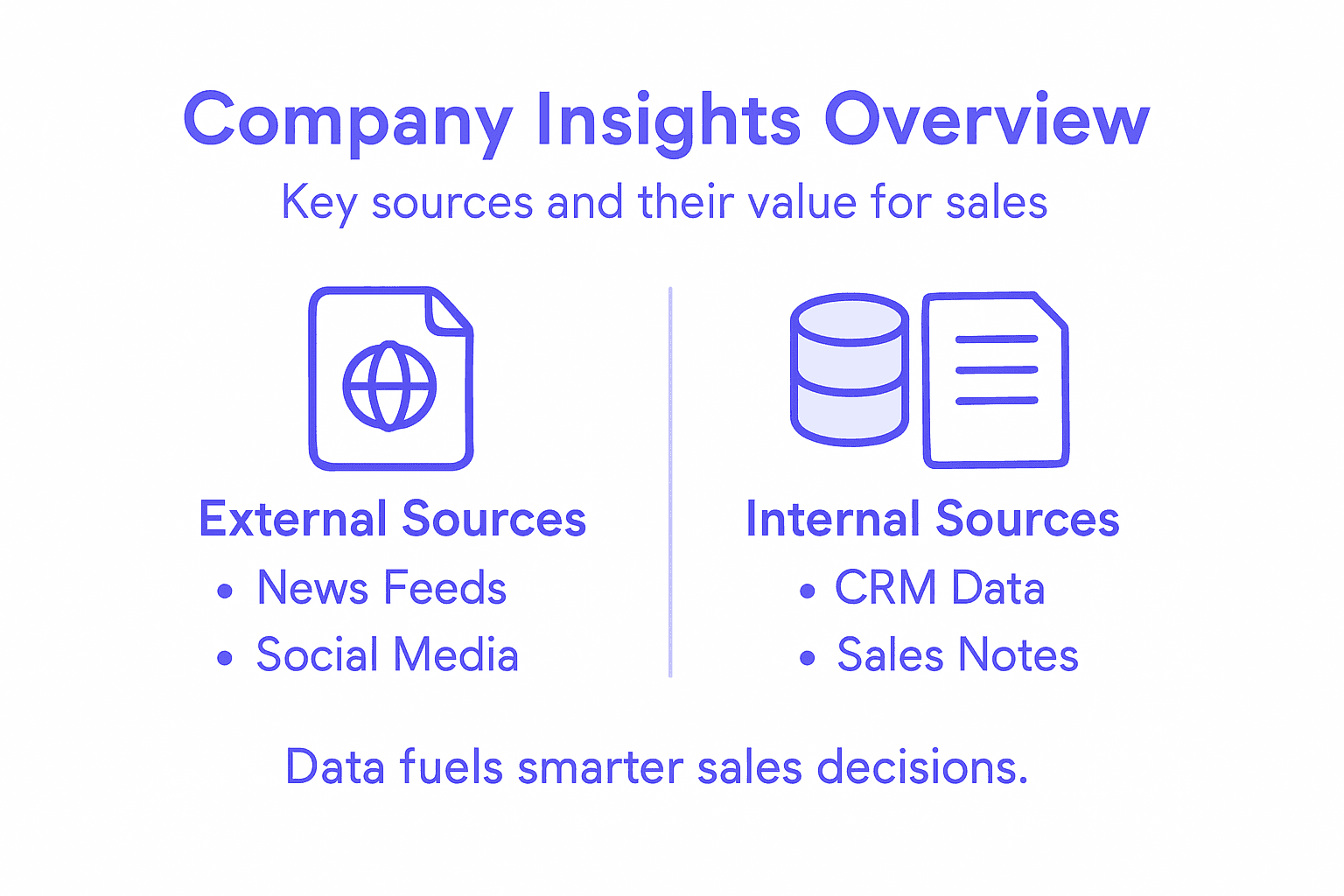
The primary categories of company insights data sources can be broadly classified into external and internal channels. External sources include publicly available information like industry reports, press releases, social media activity, professional networking sites, and regulatory filings. Internal sources encompass customer relationship management (CRM) systems, historical sales interaction records, marketing automation platforms, customer feedback repositories, and proprietary company databases. Comprehensive data collection allows sales teams to construct detailed profiles that reveal not just basic contact information, but nuanced insights about organizational dynamics, technological infrastructure, and potential growth opportunities.
Each data source contributes unique dimensions to the overall intelligence framework. Professional networking platforms provide career trajectory and leadership information, financial databases offer performance metrics, technological tracking services reveal infrastructure investments, and customer interaction logs provide behavioral insights. By synthesizing these disparate data points, sales professionals can develop sophisticated, contextually rich understanding of potential client organizations, enabling more strategic and personalized engagement approaches.
Here’s a summary of common company insights sources and the unique value they offer:
| Data Source Type | Typical Examples | Unique Value Provided |
|---|---|---|
| External | Industry reports, social media | Market trends, public sentiment |
| Internal | CRM records, sales logs | Customer history, engagement patterns |
| Financial | Financial statements, stock reports | Performance metrics, risk assessment |
| Technological | Tech trackers, IT profiles | Infrastructure insights, software usage |
| Networking | Professional platforms, press releases | Leadership changes, company updates |
Pro tip: Create a standardized scoring system that evaluates the reliability and recency of different data sources to ensure your company insights remain accurate and actionable.
How Company Insights Streamline Prospecting
Company insights revolutionize the prospecting process by transforming traditional sales approaches into data-driven strategies. Sales intelligence tools enable teams to micro-target prospects by surfacing critical information about market dynamics, buying signals, and competitive landscapes. These advanced platforms analyze millions of data points in real-time, allowing sales professionals to prioritize leads with unprecedented precision and develop highly personalized engagement strategies.
The streamlining effect of company insights manifests in multiple dimensions of the sales workflow. By providing comprehensive contextual information about potential clients, these tools dramatically reduce the time and effort traditionally spent on manual research. Sales teams can now quickly identify decision-makers, understand organizational structures, assess financial health, and recognize specific pain points that make their solutions compelling. This granular intelligence transforms prospecting from a scattershot approach to a surgical, targeted methodology that increases conversion rates and reduces wasted effort.
Technological advancements have made company insights more sophisticated and accessible than ever before. Machine learning algorithms continuously refine data collection processes, integrating information from social media, professional networks, financial databases, and industry reports. This multi-source approach creates a holistic view of potential clients, enabling sales professionals to craft messages that resonate on multiple levels. By understanding not just demographic information, but also organizational culture, recent achievements, and strategic challenges, sales teams can develop approach strategies that feel genuinely personalized and relevant.
Pro tip: Develop a weighted scoring system that ranks potential prospects based on multiple company insight dimensions, allowing you to focus energy on the most promising opportunities.
Integrating Insights With CRM Platforms
Integrating company insights directly into CRM platforms represents a transformative approach to sales intelligence. AI-driven real-time insights enable sales teams to access comprehensive customer information without switching between multiple applications. This seamless integration allows professionals to capture, analyze, and act on critical data within their existing workflow, dramatically reducing administrative overhead and improving decision-making capabilities.
The integration process involves embedding advanced analytics and intelligence features directly into the CRM environment. These features typically include intelligent lead scoring, customer behavior tracking, engagement analytics, and predictive recommendations that help sales teams prioritize and personalize their outreach. By consolidating data from multiple sources into a single platform, organizations can create a more holistic view of potential and existing customer relationships, enabling more strategic and nuanced communication approaches.
Modern CRM integration goes beyond simple data collection, transforming raw information into actionable intelligence. Machine learning algorithms continuously analyze interaction histories, communication patterns, and organizational dynamics to generate sophisticated insights. Sales teams can now receive contextual recommendations about the best time to contact a prospect, potential conversation topics, and likely conversion paths. This level of granular intelligence empowers sales professionals to move from reactive communication strategies to proactive, highly targeted engagement models that significantly improve conversion rates and customer satisfaction.
Below is a comparison of CRM integration methods and their impact on sales processes:
| Integration Method | Key Feature | Business Impact |
|---|---|---|
| Basic Import | Manual data entry | Prone to errors, slow updates |
| Automated Sync | Scheduled data refresh | Reduced admin workload, fresher data |
| Real-Time AI Insights | Contextual recommendations | Proactive outreach, better targeting |
Pro tip: Configure your CRM insights dashboard to prioritize the most meaningful metrics for your specific sales process, ensuring you focus on the most impactful intelligence.
Avoiding Common Pitfalls With Company Insights
Navigating company insights effectively requires understanding the most prevalent challenges that can derail data-driven sales strategies. Standardized data reporting remains one of the most critical factors in maintaining insight quality. Organizations frequently stumble by allowing inconsistent data collection methods, which create fragmented and unreliable intelligence that undermines decision-making processes. Without a structured framework, sales teams risk generating insights that are more noise than signal, leading to misguided strategies and wasted resources.
One fundamental mistake is treating raw data as meaningful insights without proper interpretation and context. Sophisticated analysis goes beyond simply collecting numbers and requires deep understanding of qualitative factors. Sales teams must invest in advanced analytics tools that can transform complex data points into actionable intelligence. This means looking beyond surface-level metrics and understanding the nuanced stories behind the numbers, including cultural context, organizational dynamics, and underlying market trends that raw data alone cannot reveal.
Technological limitations and human biases also pose significant challenges in company insights development. Many organizations fall into the trap of over-relying on quantitative metrics while neglecting critical qualitative feedback from sales professionals who have direct customer interactions. Machine learning and artificial intelligence can provide powerful analytical capabilities, but they cannot replace the nuanced understanding that experienced sales teams bring to data interpretation. The most effective insights emerge from a balanced approach that combines technological sophistication with human intuition and real-world experience.
Pro tip: Create a cross-functional team that includes data analysts, sales professionals, and technology experts to regularly audit and refine your company insights collection and interpretation processes.
Unlock the Power of Precise Company Insights to Boost Your Sales Performance
The article highlights key challenges sales teams face such as spending too much time gathering fragmented company data and struggling with inconsistent information that weakens prospecting efforts. If you want to overcome these pain points by accessing real-time, accurate company and contact details seamlessly during your LinkedIn outreach, LeadLx offers an innovative solution. Our SaaS platform integrates your LinkedIn prospecting directly with CRM tools like HubSpot and Salesforce, eliminating the need to switch tabs and manually update records. This streamlines your workflow by providing instant extraction and bulk data capture from LinkedIn profiles, helping you avoid duplicate entries and save valuable hours every week.
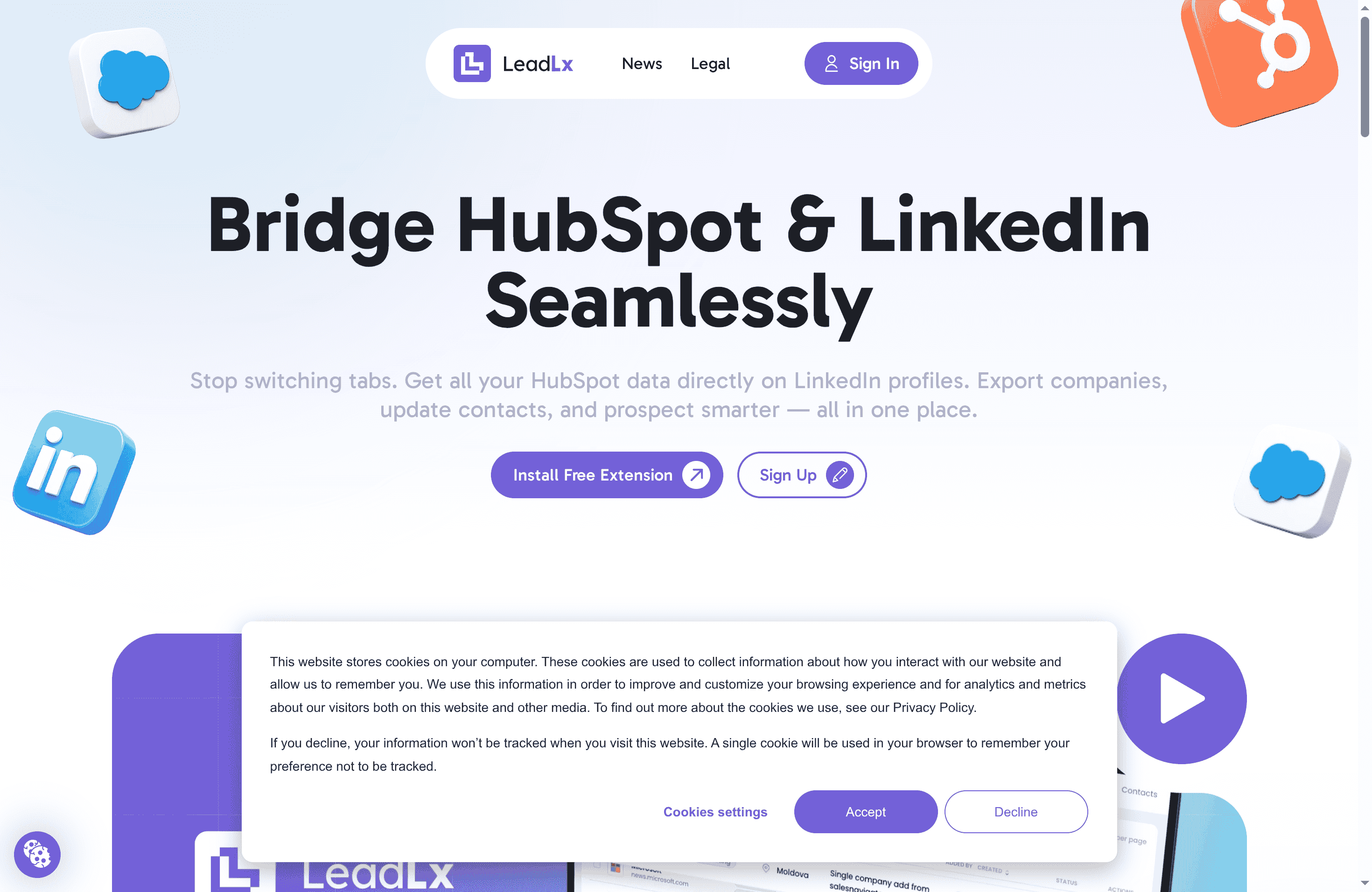
Ready to transform scattered company insights into actionable intelligence without wasting time? Visit LeadLx today and experience how our browser extension overlays HubSpot and Salesforce data onto LinkedIn profiles so you can prioritize high-value leads with confidence. Seamless integration, improved data accuracy, and effortless CRM updates await you. Start optimizing your prospecting process now and turn insights into more closed deals!
Frequently Asked Questions
What are company insights?
Company insights are strategic intelligence that transforms raw business data into actionable information for sales professionals, providing a contextual understanding of potential clients and their needs.
Why are company insights important for sales teams?
Company insights help sales teams streamline prospecting, allowing them to identify promising leads and tailor their communication strategies to increase engagement and conversion rates.
How do company insights improve prospecting strategies?
By integrating data from multiple sources and offering comprehensive contextual information about potential clients, company insights enable sales teams to prioritize leads effectively and develop personalized engagement approaches.
What data sources are typically used for generating company insights?
Common data sources for company insights include external reports, social media activity, internal CRM records, financial statements, and networking platforms, all contributing to a holistic view of potential business opportunities.