
Over 55 percent of American sales teams struggle to consistently generate high-quality leads in today’s market. With prospects more informed and selective than ever, effective sales prospecting has become a key challenge for professionals aiming to grow their pipeline and drive real results. Discover how modern approaches not only help identify ideal candidates but also build the authentic connections necessary for long-term sales success.
Key Takeaways
| Point | Details |
|---|---|
| Sales Prospecting | It’s the crucial phase of identifying potential customers who could benefit from your offerings, emphasizing systematic engagement with qualified prospects. |
| Multi-Channel Approach | Successful sales require combining various methods such as social media, email, and networking to establish meaningful connections with potential leads. |
| CRM Integration | Integrating CRM enhances prospecting by consolidating data and tracking interactions, which leads to improved lead management and engagement. |
| Avoid Common Mistakes | Sales professionals should personalize communication and maintain consistent follow-up to prevent low response rates and missed opportunities. |
Defining Sales Prospecting in Modern Sales
Sales prospecting represents the critical initial phase of the sales process where professionals actively seek and identify potential customers who might benefit from their products or services. Personal selling involves direct interaction between sales representatives and potential buyers, focusing on understanding and addressing specific customer needs through strategic communication.
At its core, sales prospecting is about systematically discovering and engaging with qualified prospects who have the highest probability of converting into actual customers. A qualified prospect meets specific criteria demonstrating their potential to make a purchase, typically evaluated through frameworks like BANT (Budget, Authority, Need, Timing). Modern sales teams leverage advanced technological tools and data-driven strategies to streamline this process, moving beyond traditional cold calling techniques.
Successful sales prospecting in today’s competitive landscape requires a multi-channel approach. Professionals must combine digital research, social media engagement, networking platforms like LinkedIn, targeted email outreach, and personalized communication strategies. The goal is not just identifying potential leads, but establishing meaningful connections that demonstrate genuine understanding of a prospect’s business challenges and potential solutions.
Pro Tip: Precision Targeting: Develop a detailed ideal customer profile before beginning prospecting, focusing on specific industries, company sizes, and decision-maker roles to maximize your outreach efficiency and conversion potential.
Types of Sales Prospecting Approaches
Sales professionals utilize a diverse range of prospecting approaches to identify and engage potential customers. Outbound prospecting techniques encompass several strategic methods designed to reach out and connect with potential leads across multiple channels. These approaches are not one-size-fits-all but require nuanced understanding and targeted execution.
The primary types of sales prospecting approaches include:
- Cold Calling: Traditional direct phone outreach to potential customers, requiring strong communication skills and resilience
- Email Prospecting: Targeted email campaigns designed to introduce products or services and initiate conversations
- Social Selling: Leveraging social media platforms like LinkedIn to build professional networks and identify potential leads
- Referral Prospecting: Utilizing existing customer networks and professional connections to generate new business opportunities
- Event and Networking Prospecting: Engaging potential customers through industry conferences, trade shows, and professional meetups
Digital transformation has significantly expanded the prospecting landscape, enabling sales teams to use sophisticated data analytics, predictive modeling, and automated outreach tools. Modern sales professionals now combine multiple approaches, creating integrated strategies that maximize engagement potential and improve conversion rates.
Here is a summary comparing major sales prospecting approaches and their key strengths:
| Prospecting Method | Ideal Use Case | Distinct Strength |
|---|---|---|
| Cold Calling | Immediate outreach needed | Direct, fast feedback |
| Email Prospecting | Nurturing multiple leads | Scalable, customizable |
| Social Selling | Relationship-driven industries | Builds trust, warm engagement |
| Referral Prospecting | Networking-heavy environments | High trust, better conversion |
| Event/Networking | Industry or B2B sales | In-person connection |
Pro Tip: Strategic Channel Blending: Develop a multi-channel prospecting approach that combines at least three different techniques, tracking performance metrics for each to continuously refine and optimize your outreach strategy.
How CRM Integration Enhances Prospecting
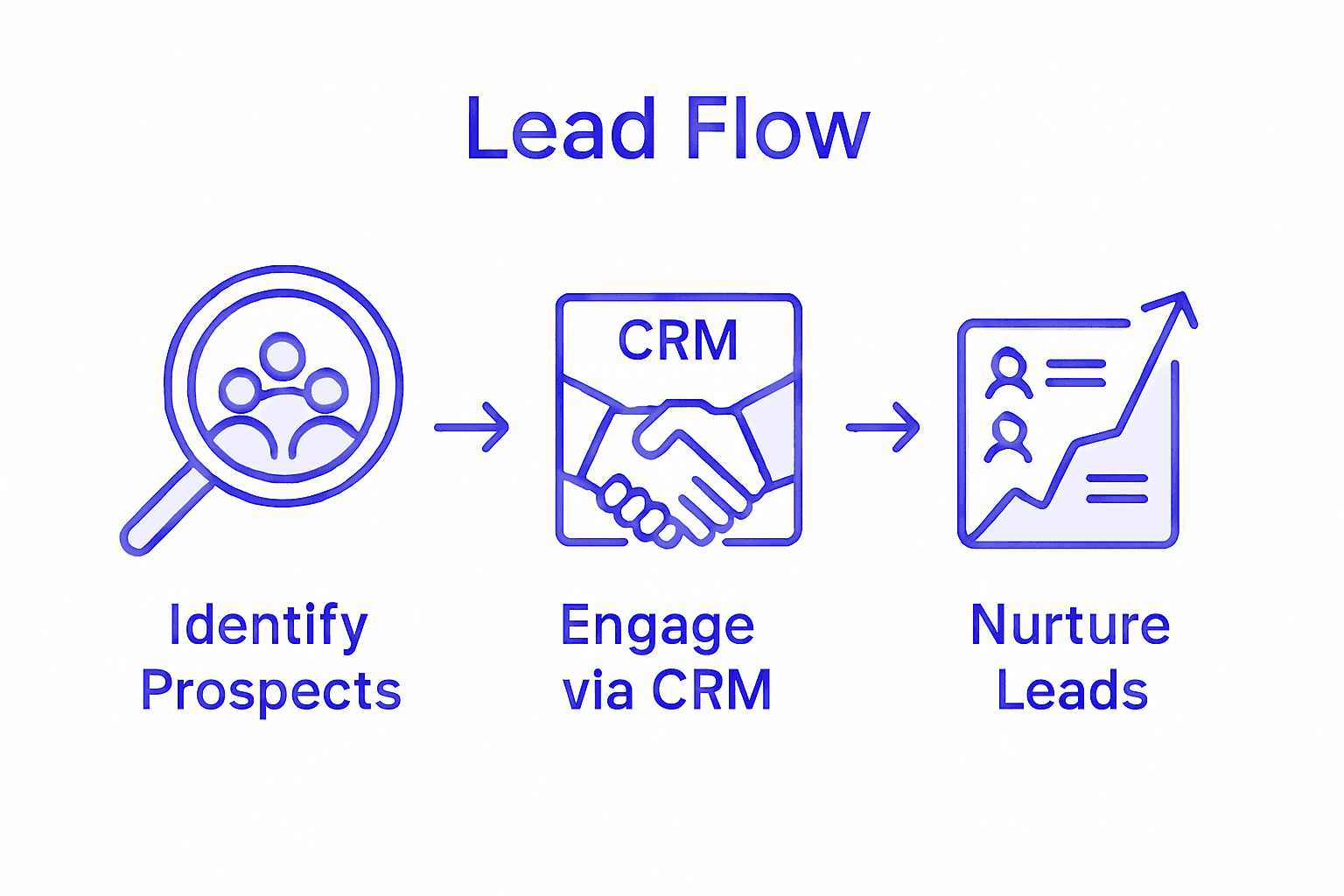
CRM integration transforms sales prospecting by creating a centralized intelligence hub that dramatically improves lead management and engagement strategies. Modern sales teams leverage these integrated systems to track, analyze, and optimize every interaction with potential customers, turning raw data into actionable insights that drive meaningful connections.
The core benefits of CRM integration in sales prospecting include:
- Comprehensive Contact Management: Consolidating all prospect information in one accessible platform
- Interaction Tracking: Documenting every touchpoint, email, call, and communication history
- Performance Analytics: Measuring engagement rates, conversion potential, and outreach effectiveness
- Automated Follow-up Scheduling: Ensuring timely and consistent communication with potential leads
- Data-Driven Decision Making: Utilizing predictive analytics to prioritize and target high-potential prospects
Sales methodologies become significantly more powerful when supported by robust CRM integration. By providing a unified platform that bridges sales and marketing efforts, these systems enable teams to develop more sophisticated, personalized outreach strategies that adapt in real-time based on prospect interactions and behavioral data.

Pro Tip: Strategic Data Mapping: Regularly audit and update your CRM integration settings to ensure seamless data flow between prospecting channels, eliminating manual entry and maximizing system intelligence.
Key Steps in Successful Lead Generation
Successful lead generation requires a strategic, multi-dimensional approach that combines systematic research, targeted outreach, and relationship-building techniques. Modern sales professionals must develop a nuanced strategy that goes beyond traditional prospecting methods, leveraging technology and interpersonal skills to identify and engage potential customers effectively.
Key steps in successful lead generation include:
- Ideal Customer Profile Development: Creating a detailed blueprint of target prospects
- Multi-Channel Engagement: Utilizing social media, email, phone, and networking platforms
- Continuous Research: Maintaining updated intelligence about potential client industries and challenges
- Personalized Communication: Crafting tailored messages that address specific prospect needs
- Performance Tracking: Implementing robust metrics to measure and improve outreach effectiveness
Effective lead generation strategies demand a balanced combination of outbound and inbound techniques. Sales teams must seamlessly integrate proactive outreach methods like cold calling with sophisticated inbound strategies such as content marketing, creating a comprehensive approach that attracts and converts high-potential prospects.
Pro Tip: Prospect Prioritization: Develop a scoring system that ranks potential leads based on engagement level, industry fit, and potential revenue impact, allowing your team to focus energy on the most promising opportunities.
Common Prospecting Mistakes to Avoid
Sales professionals frequently encounter critical prospecting pitfalls that can significantly undermine their lead generation efforts. Understanding and proactively addressing these common mistakes can transform an ineffective outreach strategy into a robust, results-driven approach that consistently generates high-quality leads.
The most prevalent prospecting mistakes include:
- Generic Messaging: Sending templated, non-personalized communication
- Inconsistent Follow-up: Failing to maintain regular and strategic contact with potential leads
- Neglecting Social Platforms: Underutilizing professional networking sites for relationship building
- Lack of Research: Approaching prospects without understanding their specific business context
- Overselling: Pushing products instead of solving potential customer problems
Effective prospecting requires a balanced and adaptive strategy that continuously analyzes performance data and refines outreach techniques. Successful sales teams recognize that prospecting is not a one-size-fits-all process but a dynamic approach that demands ongoing learning, adjustment, and personalization.
The following table highlights common prospecting mistakes and how they negatively impact sales efforts:
| Mistake | Impact on Sales Process | Best Prevention Practice |
|---|---|---|
| Generic Messaging | Low response rates | Personalize all communication |
| Inconsistent Follow-up | Missed opportunities, lost leads | Schedule and track interactions |
| Neglecting Social | Weaker pipeline, missed trends | Engage actively on key channels |
| Lack of Research | Reduced prospect relevance | Research every potential lead |
| Overselling | Damages trust, early drop-off | Focus on problem-solving |
Pro Tip: Mistake Mitigation: Conduct a monthly audit of your prospecting activities, reviewing conversion rates, response metrics, and communication strategies to systematically eliminate ineffective approaches and optimize your lead generation process.
Transform Your Sales Prospecting with Seamless CRM Integration
Sales prospecting demands precision, personalization, and efficient management of prospect data — challenges expertly outlined in the article “Sales Prospecting Explained Streamlining CRM Outreach.” If you are spending too much time switching between LinkedIn and your CRM or struggling with inconsistent data and manual entry errors, these pain points slow down your ability to prioritize and engage the right leads effectively. The article highlights the value of CRM integration to automate follow-ups track interactions and harness data-driven insights, all critical for modern sales success.
LeadLx is designed specifically to address these challenges by integrating LinkedIn with leading CRM platforms like HubSpot and Salesforce. With features such as instant contact capture one-click CRM updates and bulk data extraction from LinkedIn search results LeadLx eliminates repetitive tasks that consume over 10 hours per week. This means your team can focus on what matters most building meaningful connections and closing deals instead of administrative work. Discover how to enhance your lead generation workflow with proven technology that supports the sales methodologies explained in this article especially refined prospect prioritization and multi-channel engagement.
Ready to reduce manual tasks improve data accuracy and boost your prospecting efficiency instantly? Explore how LeadLx can transform your sales approach today.
Explore LeadLx solutions and elevate your outreach strategy.
Take the next step to streamline your prospecting and CRM outreach at LeadLx now and start saving time while closing more deals.
Frequently Asked Questions
What is sales prospecting?
Sales prospecting is the initial phase of the sales process where professionals search for and identify potential customers who may benefit from their products or services.
How can CRM integration enhance sales prospecting?
CRM integration creates a centralized hub for managing leads, tracking interactions, and optimizing outreach strategies, which improves engagement and conversion rates.
What are some effective types of sales prospecting approaches?
Effective types of sales prospecting include cold calling, email prospecting, social selling, referral prospecting, and event/networking prospecting.
What common mistakes should I avoid in sales prospecting?
Common mistakes include using generic messaging, inconsistent follow-up, neglecting research, and overselling. Avoiding these can enhance your lead generation efforts.