
More than 60 percent of American sales teams say manual data entry slows their LinkedIn lead generation process. For sales and marketing professionals using HubSpot or Salesforce, inefficient workflows mean wasted time and missed opportunities. Understanding how modern lead generation strategies work can help you engage higher-quality prospects faster while minimizing repetitive tasks, giving your team a competitive edge in today’s market.
Key Takeaways
| Point | Details |
|---|---|
| Evolving Lead Generation | Modern lead generation integrates digital strategies, moving beyond traditional methods to attract potential customers. |
| Inbound vs. Outbound Approaches | Inbound focuses on attracting prospects through valuable content, while outbound involves direct outreach strategies. |
| Utilization of LinkedIn and CRM | LinkedIn and CRM systems enhance lead generation by facilitating targeted outreach and efficient lead tracking. |
| Avoiding Common Pitfalls | It’s essential to prioritize lead quality over quantity and align messaging with customer needs to optimize conversion rates. |
Defining Lead Generation in Modern Sales
Lead generation represents the strategic process of attracting and identifying potential customers who might be interested in a company’s products or services. At its core, lead generation involves capturing consumer interest through targeted marketing and sales techniques that transform anonymous prospects into actionable sales opportunities.
In modern sales ecosystems, lead generation has evolved far beyond traditional cold calling and mass advertising. Today’s approach integrates sophisticated digital strategies, leveraging channels like social media, content marketing, email campaigns, and targeted online advertising. Sales professionals now use advanced technologies and data analytics to identify, qualify, and prioritize potential customers more precisely than ever before.
The fundamental goal of lead generation remains consistent: connecting businesses with potential buyers who have demonstrated some level of interest or need. This process typically involves creating valuable content, developing engaging marketing campaigns, and implementing systematic approaches to track and nurture potential customer relationships. Lead scoring has become a critical technique, allowing sales teams to assign numerical values to leads based on their likelihood of converting, thus enabling more efficient resource allocation.
Pro tip: Integrate data-driven lead scoring methods into your prospecting workflow to prioritize high-potential leads and maximize your sales team’s efficiency.
Types of Lead Generation: Inbound vs. Outbound
Lead generation strategies fundamentally divide into two primary approaches: inbound and outbound methods. Comparing lead generation methods reveals distinctive characteristics that define how businesses attract and engage potential customers. Inbound lead generation focuses on creating magnetic content and experiences that naturally draw prospects toward a company, while outbound tactics involve proactively reaching out to potential clients.
Inbound lead generation operates on the principle of attraction rather than interruption. This approach leverages content marketing, search engine optimization (SEO), social media engagement, and valuable digital resources like blogs, whitepapers, and webinars. By providing genuinely helpful information, businesses build trust and credibility, allowing potential customers to discover solutions organically. The key is creating content that addresses specific pain points, answers critical questions, and demonstrates expertise without being overtly sales-focused.
Conversely, outbound lead generation takes a more direct, proactive approach. This method includes traditional techniques like cold calling, email marketing, paid advertising, and direct mail campaigns. Outbound strategies are typically more interruptive, pushing messages directly to potential customers who might not have actively sought out the information. While often perceived as less sophisticated, outbound tactics can be highly effective when precisely targeted and personalized, especially for businesses with specific, well-defined target markets.
Pro tip: Develop a hybrid lead generation strategy that balances inbound attraction with strategic outbound outreach to maximize your potential customer engagement and conversion rates.
Here’s how inbound and outbound lead generation differ across key factors:
| Factor | Inbound Lead Generation | Outbound Lead Generation |
|---|---|---|
| Approach | Attraction-based | Proactive outreach |
| Engagement Level | Naturally high | Depends on personalization |
| Cost Efficiency | Lower over time | Higher upfront expense |
| Trust Building | Through helpful content | Relies on messaging strategies |
How LinkedIn and CRMs Fuel Lead Generation
LinkedIn and Customer Relationship Management (CRM) systems have become powerful allies in modern lead generation strategies. Leveraging LinkedIn for B2B success has transformed how sales professionals identify, engage, and convert potential customers. These platforms work synergistically to streamline the process of discovering, tracking, and nurturing business opportunities.
LinkedIn serves as a dynamic professional networking platform that enables precise targeting and relationship building. Sales teams can leverage advanced search filters to pinpoint ideal prospects based on industry, job title, company size, and geographic location. By providing rich professional context, LinkedIn allows for more personalized outreach strategies. Professionals can view detailed work histories, shared connections, and recent activities, creating multiple touchpoints for meaningful engagement that goes beyond traditional prospecting methods.

Customer Relationship Management (CRM) systems complement LinkedIn’s networking capabilities by providing robust infrastructure for tracking and managing lead interactions. These platforms enable sales teams to document every conversation, track communication history, set follow-up reminders, and score leads based on their engagement levels. The integration between LinkedIn and CRM platforms creates a seamless workflow where prospect information can be automatically captured, reducing manual data entry and minimizing the potential for human error. This integration ensures that sales professionals have comprehensive, real-time insights into their potential customers’ professional backgrounds and interaction histories.
Pro tip: Configure automatic data synchronization between LinkedIn and your CRM to eliminate manual data entry and ensure your sales team maintains the most current prospect information.
This table summarizes the roles of LinkedIn and CRM systems in modern lead generation:
| Platform | Main Function | Business Impact |
|---|---|---|
| Prospect discovery | Enables targeted, meaningful outreach | |
| CRM System | Relationship tracking | Organizes, scores, and nurtures leads |
Key Steps and Best Practices for Teams
Successful lead generation requires a strategic, collaborative approach that transforms potential contacts into valuable business opportunities. Lead generation fundamentally involves attracting potential customers through systematic processes that align marketing and sales efforts. Modern teams must develop a comprehensive framework that goes beyond simple contact collection and focuses on creating meaningful engagement pathways.
Lead qualification represents a critical stage in the lead generation process. Sales and marketing teams must collaboratively establish clear criteria for identifying high-potential prospects. This involves developing a sophisticated scoring system that evaluates leads across multiple dimensions: demographic information, behavioral signals, engagement levels, and potential purchasing intent. By creating shared definitions for Marketing Qualified Leads (MQLs), Sales Qualified Leads (SQLs), and Product Qualified Leads (PQLs), organizations can ensure smoother handoffs between departments and more efficient conversion strategies.
Implementing a robust lead nurturing strategy requires consistent communication, strategic content development, and intelligent tracking mechanisms. Teams should focus on creating personalized communication pathways that guide potential customers through their buying journey. This means developing targeted content for each stage of the sales funnel, utilizing marketing automation tools to deliver timely and relevant information, and maintaining a flexible approach that adapts to individual prospect behaviors and preferences. Effective lead generation is not about volume, but about cultivating high-quality relationships that have genuine potential for conversion.
Pro tip: Implement a weekly cross-functional meeting between sales and marketing to review lead quality, refine qualification criteria, and align lead generation strategies.
Common Lead Generation Pitfalls to Avoid
Successful lead generation demands strategic awareness and proactive problem prevention. Common lead generation mistakes can significantly derail marketing and sales efforts, potentially causing substantial revenue loss and missed opportunities. Understanding these pitfalls is crucial for developing a robust, efficient lead acquisition strategy that consistently delivers high-quality prospects.
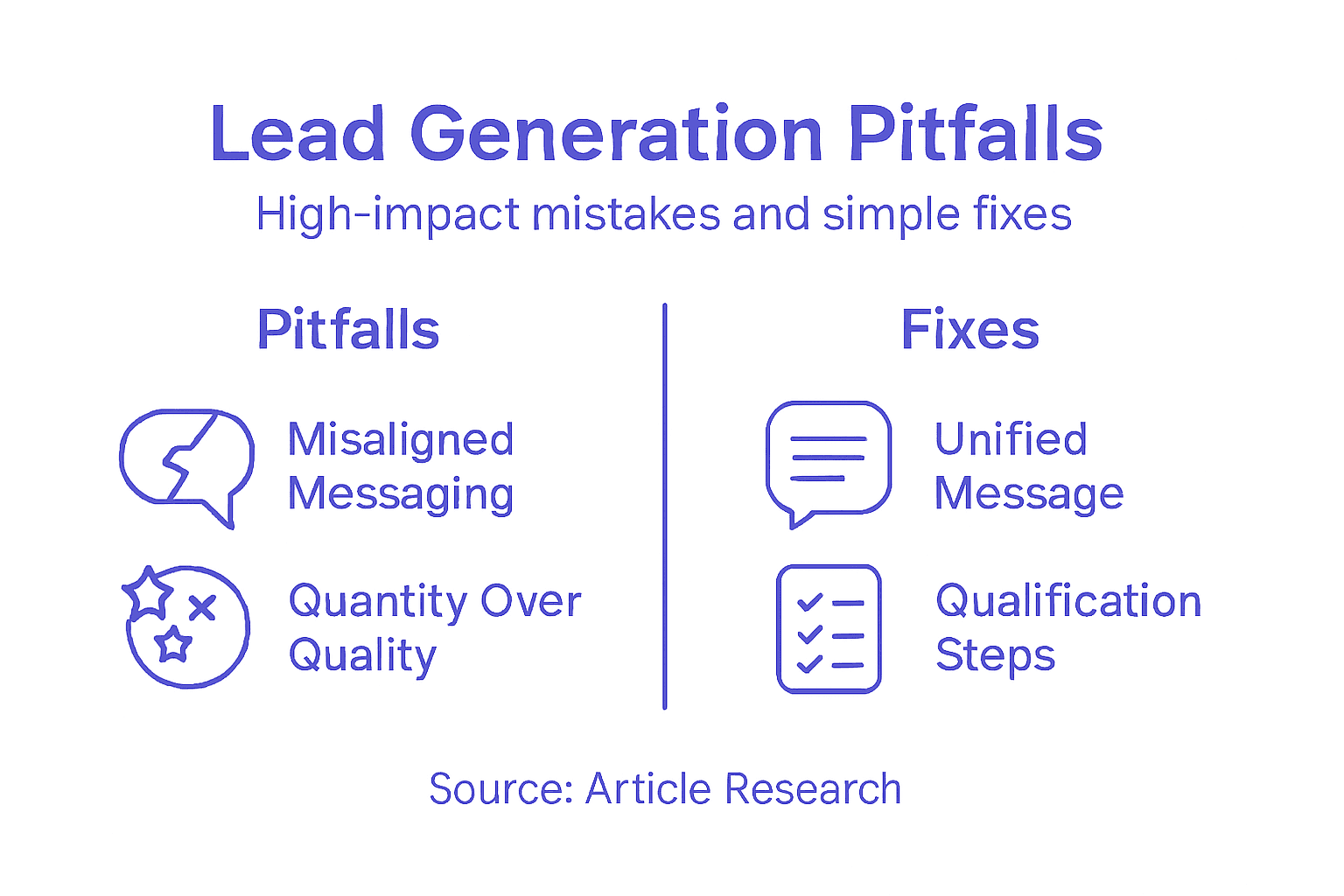
Messaging misalignment represents one of the most critical errors businesses make during lead generation. Companies frequently craft messaging that emphasizes internal business interests rather than addressing genuine customer pain points. This approach creates an immediate disconnect, preventing potential leads from feeling truly understood. Effective lead generation requires deep empathy, requiring teams to develop content and communication strategies that demonstrate an authentic understanding of prospect challenges, goals, and motivations.
Another significant pitfall involves an overemphasis on lead quantity at the expense of lead quality. Many organizations become fixated on generating large volumes of contacts without implementing rigorous qualification processes. This approach leads to inefficient sales cycles, wasted resources, and reduced conversion rates. Successful teams implement sophisticated lead scoring mechanisms that evaluate prospects across multiple dimensions, including demographic data, engagement levels, behavioral signals, and potential purchasing intent. By prioritizing quality over quantity, businesses can focus their energy on nurturing high-potential leads with the greatest likelihood of conversion.
Pro tip: Develop a comprehensive lead qualification framework that assigns weighted scoring criteria, ensuring your team focuses energy on the most promising prospect segments.
Streamline Your Lead Generation with LeadLx
The article highlights the challenges of managing quality leads and aligning sales and marketing teams to focus on high-potential prospects through effective lead qualification and nurturing. If you find yourself overwhelmed by manual data entry, inconsistent CRM updates, or switching between platforms when prospecting on LinkedIn, you are not alone. The pain of repetitive tasks and friction in integrating LinkedIn data into your CRM directly impacts your ability to nurture valuable leads efficiently.
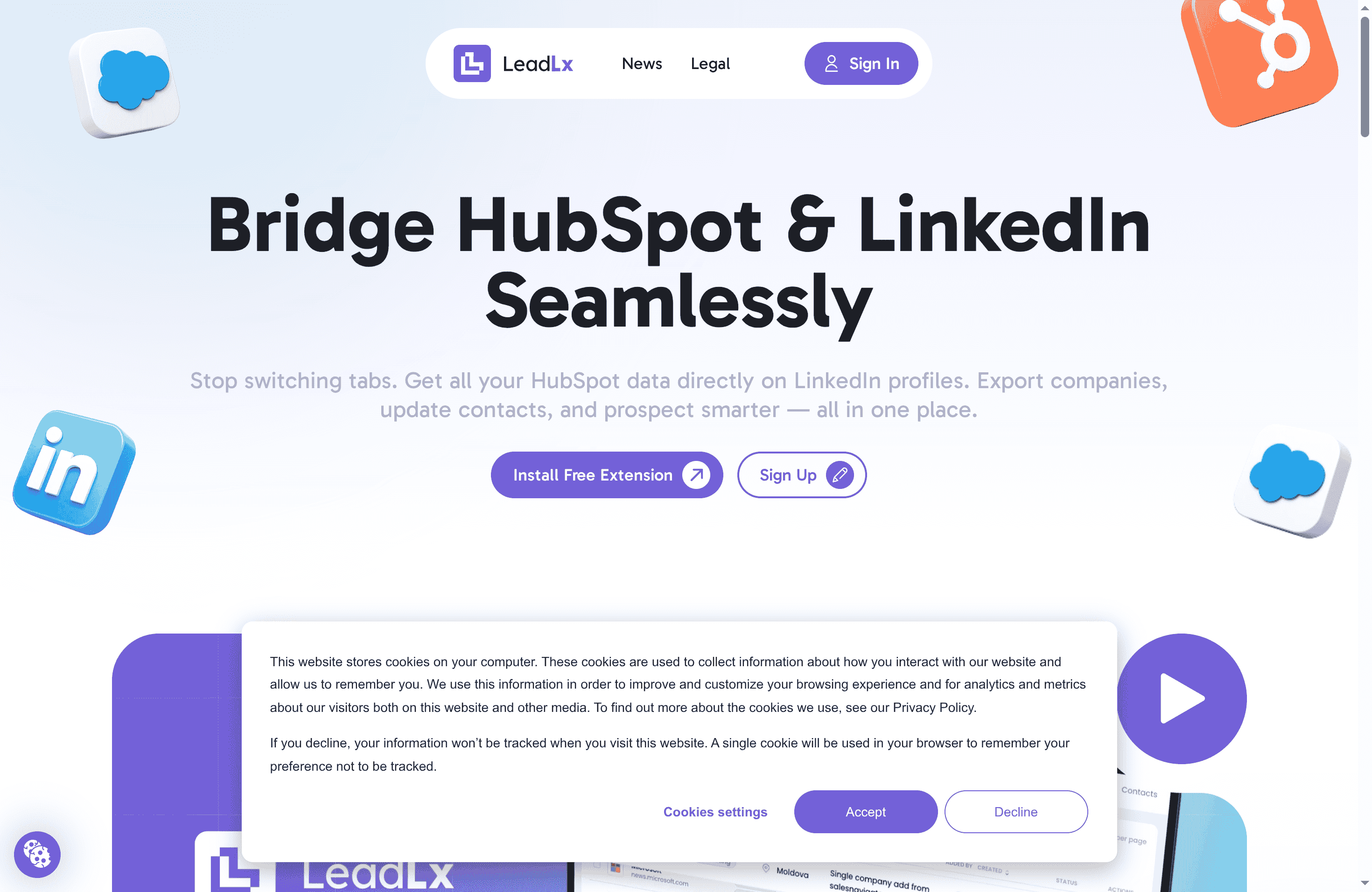
LeadLx is built precisely to address these pain points by integrating LinkedIn with top CRM tools like HubSpot and Salesforce. Our browser extension overlays HubSpot data directly onto LinkedIn profiles enabling instant extraction and one-click updates of contact and company information without tab switching. This seamless connection helps sales and marketing teams save close to 10 hours per week, reduce duplicate entries, and maintain complete visibility across shared CRM records.
Unlock effortless lead management and boost your team’s efficiency today by visiting LeadLx. See how our solutions perfectly complement your lead generation strategy and bring your inbound and outbound efforts closer by uniting LinkedIn prospecting with real-time CRM updates. Take control of your lead pipeline and accelerate conversions now.
Ready to transform your lead generation workflow into a streamlined powerhouse Try LeadLx and experience how integrated prospecting can save you time and deliver quality leads faster. Visit LeadLx to get started and discover tools designed for modern sales teams aiming to dominate their market.
Frequently Asked Questions
What is lead generation?
Lead generation is the strategic process of attracting and identifying potential customers interested in a company’s products or services, turning anonymous prospects into actionable sales opportunities.
How do inbound and outbound lead generation differ?
Inbound lead generation focuses on attracting prospects through valuable content and experiences, while outbound lead generation involves proactive outreach to potential customers through methods like cold calling and direct marketing.
What role do LinkedIn and CRMs play in lead generation?
LinkedIn aids in prospect discovery and targeted outreach, while CRMs help manage lead interactions, track communication history, and score leads based on engagement, streamlining the lead generation process.
What are common pitfalls in lead generation to avoid?
Common pitfalls include messaging misalignment, where companies fail to address customer pain points, and an overemphasis on lead quantity rather than quality, which can lead to inefficient sales cycles and reduced conversion rates.
Recommended
- Welcome to LeadLx: An Innovative Way to Win in Sales – LeadLx
- 7 Top LinkedIn Marketing Ideas for Sales Teams Success
- Outbound Prospecting Explained: Complete Expert Overview
- The Essential Guide to Why Sales Teams Use LinkedIn
- Challenges in Lead Generation – Impact on Small Business Growth | Ibrandmedia
- Lead Generation Explained: Complete Guide For UK SMEs – Bamsh Digital Marketing