
Every American business leader knows how quickly messy contact lists can derail team progress. With nearly 30 percent of company data becoming outdated each year, keeping customer information accurate is a constant challenge. For organizations focused on growth, mastering contact management is the key to building real relationships and driving smarter sales. This guide highlights the strategies that help sales teams organize, optimize, and protect valuable customer data for better results.
Key Takeaways
| Point | Details |
|---|---|
| Effective Contact Management Enhances Sales | A strategic approach to contact management transforms data into actionable insights, improving customer relationships and sales efficiency. |
| CRM Integrations Foster Productivity | Seamless CRM integrations streamline sales workflows, enabling better collaboration and data synchronization across various platforms. |
| Data Hygiene is Crucial | Maintaining accurate data and preventing duplicates are essential to ensure reliable customer insights that support informed decision-making. |
| Collaboration Improves Performance | Enhancing collaboration and adopting shared visibility practices lead to better data accuracy and create competitive advantages in customer engagement. |
Defining Contact Management Best Practices
Contact management is more than just storing names and phone numbers. It represents a strategic approach to organizing, tracking, and nurturing potential and existing customer relationships through systematic data collection and intelligent interaction tracking. At its core, contact management transforms raw information into a powerful sales acceleration tool.
Modern sales teams recognize that effective contact management goes beyond traditional database maintenance. Integrating CRM systems with advanced analytics enables businesses to create a robust ecosystem of computable knowledge assets. This approach reduces manual data entry while dramatically enhancing team situational awareness, allowing sales professionals to make more informed engagement decisions.
Key elements of robust contact management include:
- Comprehensive data collection across multiple touchpoints
- Automated tracking of customer interactions
- Real-time updates and synchronization across platforms
- Intelligent categorization and segmentation of contacts
- Predictive analytics for identifying high-potential leads
The ultimate goal of contact management is transforming disconnected information into actionable insights. By implementing strategic lead nurturing techniques, sales teams can create personalized communication strategies that significantly improve conversion rates and customer relationship quality. Successful contact management turns data into a strategic asset that drives sales efficiency and customer engagement.
Essential CRM Integrations for Sales Teams
CRM integrations represent a transformative approach to streamlining sales workflows and enhancing team productivity. Modern sales organizations recognize that effective CRM integration goes far beyond simple data storage, creating a comprehensive ecosystem that connects multiple business functions and communication channels.
Operational CRM functionalities play a crucial role in empowering sales teams, enabling advanced capabilities like Sales Force Automation (SFA), marketing automation, and customer service coordination. These integrations allow teams to manage complex sales pipelines, track lead interactions, and accelerate deal closure with unprecedented precision.
Key considerations for successful CRM integration include:
- Seamless data synchronization across platforms
- Real-time communication and collaboration tools
- Automated lead scoring and opportunity tracking
- Advanced reporting and analytics capabilities
- Customizable workflow automation
Strategic CRM implementation is essential for businesses operating in dynamic markets. By creating a unified customer information ecosystem, sales teams can drive innovation, improve customer retention, and develop more personalized engagement strategies. The most effective CRM integrations transform raw data into actionable insights, giving sales professionals the competitive edge they need to succeed in today’s fast-paced business environment.
Optimizing LinkedIn and CRM Workflows
Optimizing LinkedIn and CRM workflows represents a critical strategy for modern sales professionals seeking to maximize their efficiency and data management capabilities. By creating seamless connections between professional networking platforms and customer relationship management systems, sales teams can dramatically reduce manual data entry and improve overall productivity.
CRM implementation strategies play a pivotal role in transforming sales team performance. Successful optimization requires comprehensive user training, intelligent system customization, and strategic integration with existing organizational processes. This approach ensures that workflow automation becomes a natural extension of daily sales activities rather than an additional administrative burden.
Key strategies for optimizing LinkedIn and CRM workflows include:
- Automated contact information synchronization
- Real-time data capture and validation
- Intelligent lead scoring and prioritization
- Seamless communication tracking across platforms
- Customizable reporting and analytics dashboards
Customer data quality management remains fundamental to achieving meaningful workflow optimization. By implementing robust data collection and verification processes, sales teams can ensure that every interaction and touchpoint contributes to a more comprehensive understanding of potential and existing customer relationships. The most effective workflows transform disconnected data points into actionable insights, enabling sales professionals to make more informed decisions and develop more personalized engagement strategies.
Preventing Duplicate Entries and Data Errors
Duplicate entries and data errors represent significant challenges for sales teams, undermining the integrity of customer relationship management systems and potentially leading to costly miscommunications. Effective data hygiene is not just a technical requirement but a strategic imperative for maintaining accurate and actionable customer insights.

Autonomous CRM control mechanisms have emerged as a powerful solution for mitigating data quality challenges. By leveraging advanced deep reinforcement learning techniques, organizations can develop intelligent systems that automatically detect, flag, and prevent duplicate entries before they compromise overall data integrity. Intelligent data deduplication goes beyond simple matching algorithms, employing sophisticated contextual analysis to distinguish between genuine duplicates and unique contact variations.
Key strategies for preventing duplicate entries include:
- Implementing real-time data validation checks
- Establishing unique identifier protocols
- Creating centralized data governance frameworks
- Utilizing machine learning pattern recognition
- Developing comprehensive merge and purge processes
Customer data quality management remains fundamental to organizational performance. Proactive data error prevention not only reduces administrative overhead but also enhances the reliability of sales intelligence, enabling teams to make more informed decisions based on clean, consistent, and actionable customer information. The most successful organizations treat data quality as a continuous improvement process, constantly refining their approaches to maintain a single source of truth across all customer interaction platforms.
Enhancing Collaboration and Data Accuracy
Collaboration and data accuracy represent critical foundations for successful sales organizations, transforming disconnected information into strategic competitive advantages. Modern sales teams recognize that effective data sharing and consistent information management go far beyond simple record keeping, creating dynamic ecosystems of shared intelligence.
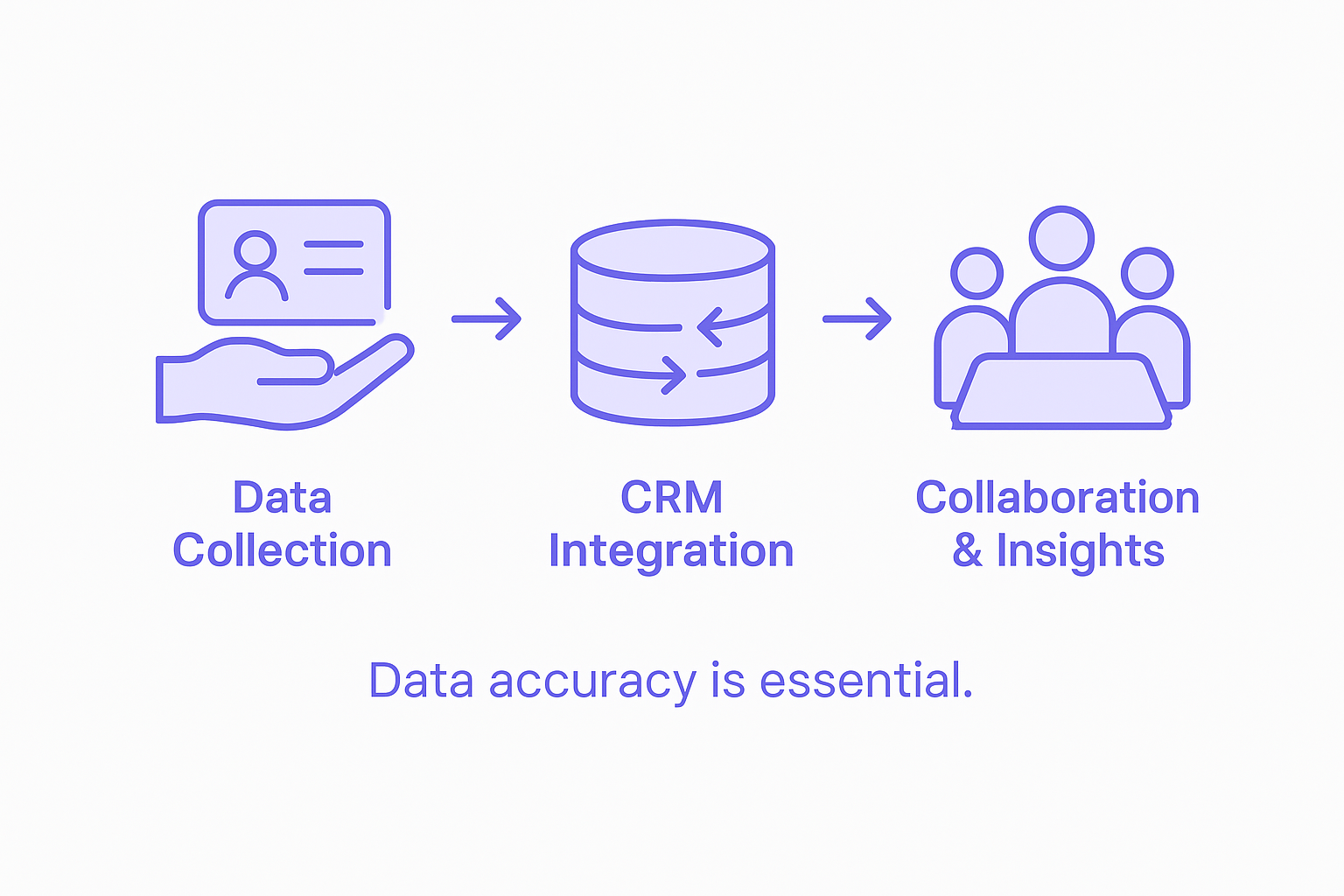
CRM effectiveness through strategic alignment emerges as a powerful approach to enhancing team performance. By carefully integrating CRM practices with broader marketing strategies, organizations can develop collaborative data frameworks that enable seamless information exchange, reduce communication barriers, and create more holistic customer engagement models.
Key strategies for improving collaboration and data accuracy include:
- Implementing real-time data synchronization
- Establishing clear communication protocols
- Creating shared visibility across departments
- Developing standardized data entry guidelines
- Utilizing cross-functional training programs
Omnichannel customer experience management represents the next frontier of collaborative sales intelligence. By breaking down traditional silos and creating integrated information pathways, sales teams can develop more nuanced, responsive approaches to customer engagement. The most successful organizations treat data not as a static resource, but as a dynamic, continuously evolving asset that requires ongoing refinement and strategic alignment.
Transform Your Contact Management and Skyrocket Sales Efficiency
The article highlights key challenges in contact management such as duplicate entries, manual data entry, and disjointed workflows that slow down sales teams. If you are seeking to improve data accuracy, automate contact synchronization, and eliminate repetitive tasks, LeadLx offers the perfect solution to streamline these processes. By integrating LinkedIn directly with popular CRM platforms like HubSpot and Salesforce, LeadLx empowers sales professionals to capture and update contact and company data instantly without switching tabs. This results in saved hours, cleaner CRM records, and enhanced collaboration across teams.
Boost your productivity today with automated data capture, one-click CRM updates, and bulk extraction features that convert raw data into actionable insights. Discover how to eliminate data errors and create unified customer profiles that drive smarter engagement by exploring the innovative tools at LeadLx.
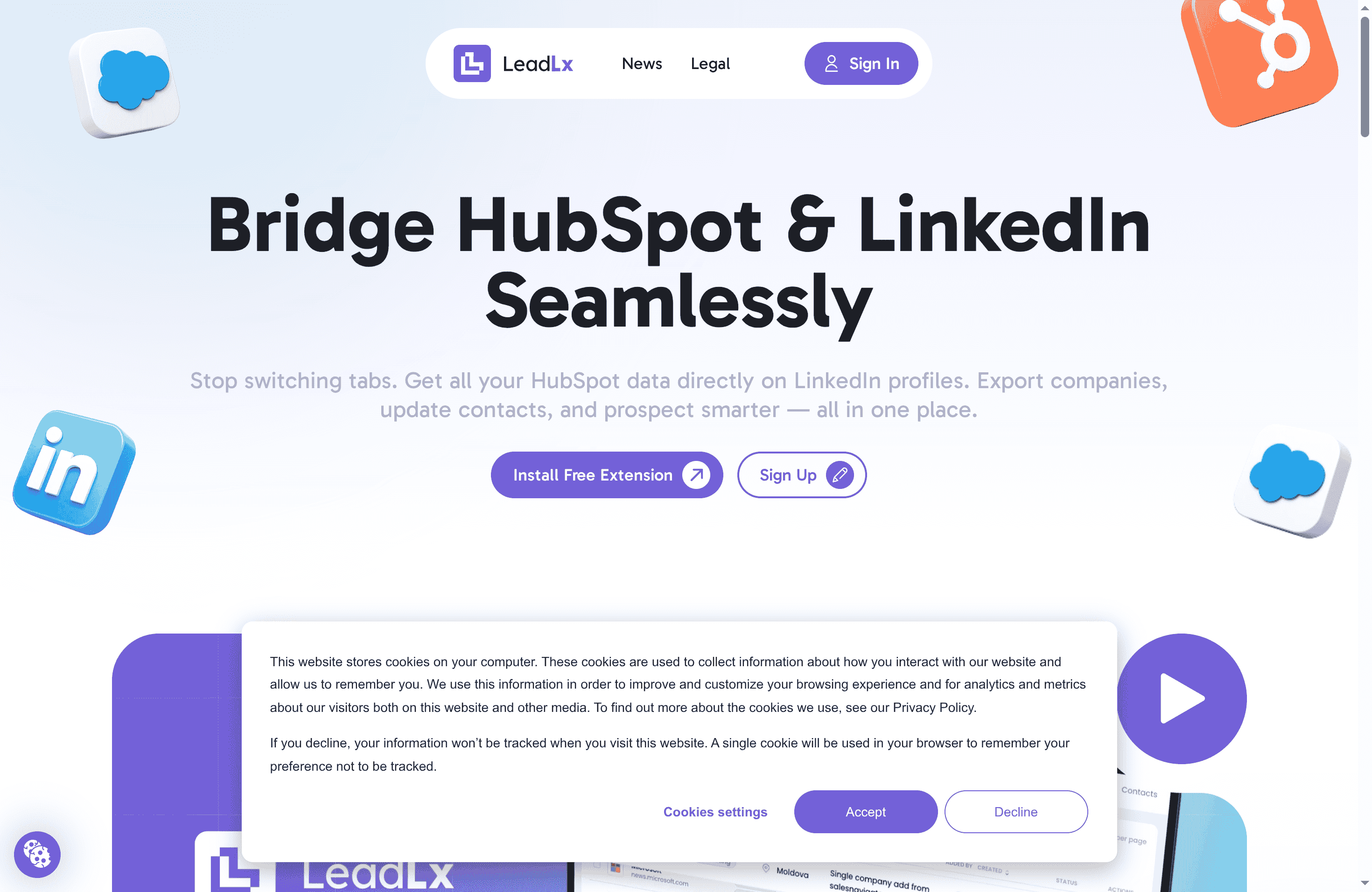
Ready to supercharge your sales workflow and prevent costly duplicate entries? Visit the LeadLx platform now and start saving time while improving data quality and collaboration. Experience the difference that seamless LinkedIn and CRM integration can make for your sales team’s efficiency.
Frequently Asked Questions
What are the key elements of effective contact management?
Key elements of effective contact management include comprehensive data collection across multiple touchpoints, automated tracking of customer interactions, real-time updates, intelligent categorization of contacts, and predictive analytics for identifying high-potential leads.
How can CRM integrations improve sales workflows?
CRM integrations enhance sales workflows by enabling seamless data synchronization, real-time communication, automated lead scoring, and advanced reporting functionalities, allowing sales teams to manage complex sales pipelines more efficiently.
What strategies can optimize LinkedIn and CRM workflows?
You can optimize LinkedIn and CRM workflows by automating contact synchronization, capturing real-time data, employing intelligent lead scoring, tracking communication across platforms, and utilizing customizable reporting dashboards.
How can I prevent duplicate entries in my CRM?
To prevent duplicate entries, implement real-time data validation checks, establish unique identifier protocols, create a centralized data governance framework, and utilize machine learning for detecting duplicates.
Recommended
- Outbound Prospecting Explained: Complete Expert Overview
- Time-Saving Prospecting Methods for Efficient Lead Capture
- Contact Information Management Tutorial for CRM Success
- LeadLx Blog: LinkedIn Outreach, CRM Efficiency & Insights
- Understanding the Importance of Customer Communication – My WordPress
- Lead Management Fundamentals: Complete Guide for SMBs – Go Online Now