
Over 60 percent of American professionals say LinkedIn is their top platform for generating business leads. In a crowded digital world, your profile can either open doors or let big opportunities slip away. This guide unpacks proven techniques that help American sales experts stand out, connect with valuable prospects, and turn every LinkedIn action into real business growth.
Quick Summary
| Takeaway | Explanation |
|---|---|
| 1. Optimize your profile strategically | A compelling LinkedIn profile showcases your expertise, value proposition, and how you can address potential leads’ challenges effectively. |
| 2. Use search filters effectively | Leverage LinkedIn’s search filters to find ideal clients based on location, company size, job title, and industry for precise prospecting. |
| 3. Engage consistently with valuable content | Regularly create and share relevant content to enhance your industry visibility and establish meaningful connections on LinkedIn. |
| 4. Automate personalized follow-ups | Implement intelligent follow-up messaging to maintain engagement with prospects while ensuring personalization and relevance in your communications. |
| 5. Track metrics and adjust strategy | Monitor profile views, connection success rates, and content engagement to inform adjustments in your LinkedIn marketing efforts effectively. |
1. Optimize Your LinkedIn Profile for Lead Generation
Your LinkedIn profile serves as your digital professional billboard, and in the world of sales, it can be a powerful lead generation tool when strategically crafted. Research indicates that professional profile characteristics significantly impact career progression and networking opportunities.
A well-optimized LinkedIn profile goes beyond simply listing your job history. It should tell a compelling narrative about your professional expertise, highlight your unique value proposition, and make it easy for potential leads to understand how you can solve their business challenges.
Key Profile Optimization Strategies:
- Professional Headshot: Use a high-quality, professional photograph that represents your personal brand. Avoid casual or group photos.
- Headline Optimization: Craft a headline that speaks directly to your target audience. Instead of a generic job title, describe the problems you solve.
- Summary Section: Write a powerful summary that reads like a value proposition. Clearly articulate who you help, what problems you solve, and your unique approach.
- Experience Descriptions: Transform traditional job descriptions into storytelling opportunities. Highlight specific achievements, quantify results, and demonstrate your impact.
- Skills and Endorsements: Strategically list skills relevant to your target market. Seek endorsements from colleagues and clients who can validate your expertise.
By implementing these tactics, you transform your LinkedIn profile from a static resume into a dynamic lead generation machine. Your goal is to make potential clients feel like you understand their challenges before they even reach out.
Pro Tip: Update your profile regularly to reflect current achievements, skills, and professional growth. A stale profile can signal a lack of professional momentum.
2. Leverage LinkedIn Search Filters for Targeted Prospects
LinkedIn search filters are powerful tools that transform generic networking into strategic prospecting. Advanced search techniques can dramatically improve the precision of professional expertise identification, helping sales professionals zero in on ideal potential clients with remarkable efficiency.
Critical Search Filter Strategies:
- Location Targeting: Narrow your search to specific geographic regions where your ideal clients operate. This helps concentrate your prospecting efforts on most relevant markets.
- Company Size Filtering: Select company sizes matching your typical customer profile. Small startups might require different approaches compared to enterprise organizations.
- Job Title Precision: Use exact job titles or role categories that represent decision makers. Look beyond generic titles to find specific roles with purchasing authority.
- Industry Segmentation: Filter prospects by specific industries where your solutions provide maximum value. This increases the likelihood of meaningful connections.
- Connection Degree Filtering: Prioritize 1st and 2nd degree connections to maximize introduction potential and reduce cold outreach friction.
Advanced Search Techniques:
Combine multiple filters strategically. For instance, a technology sales professional might search for “Chief Technology Officer” in “Software” industry, located in “San Francisco”, with company size “51-200 employees”.
Pro Tip: Save your most effective search configurations as recurring searches to streamline your prospecting workflow.
Understanding sophisticated search query techniques can transform your LinkedIn prospecting from random networking to precision targeting. Think of search filters as your professional radar system identifying high potential connections with laser-like accuracy.
Remember that effective searching is not just about volume but about finding the right prospects who are most likely to benefit from your solutions.
3. Engage with Content to Increase Visibility
Content engagement on LinkedIn is more than passive scrolling. Strategic content marketing plays a critical role in generating high-quality professional leads, transforming your profile from a static resume to an active networking powerhouse.
Strategic Engagement Approaches:
- Thoughtful Commenting: Go beyond generic responses. Write substantive comments that demonstrate genuine industry knowledge and spark meaningful conversations.
- Original Content Creation: Share insights, industry trends, and professional experiences that showcase your expertise. Mix text posts, articles, and multimedia content to maintain audience interest.
- Consistent Posting Schedule: Develop a regular content rhythm. Aim for 2-3 high-quality posts per week that provide real value to your professional network.
- Interactive Content: Use polls, questions, and discussion prompts that encourage follower participation and increase post visibility.
- Multimedia Diversity: Incorporate infographics, short videos, professional screenshots, and data visualizations to break up text-heavy content.
Engagement Optimization Techniques:
Successful LinkedIn content creators understand that visibility is about quality over quantity. Professional skill representation directly correlates with career opportunities, so each piece of content should strategically highlight your unique professional capabilities.
Pro Tip: Engage within the first hour after posting. Quick, meaningful interactions boost algorithm visibility and encourage further audience engagement.
Remember that authentic, value-driven content attracts the right professional connections. Your goal is not just to be seen, but to be remembered as a thoughtful industry contributor.
4. Integrate LinkedIn with HubSpot or Salesforce CRM
Strategic CRM integration with LinkedIn can transform your sales workflow, turning disconnected data points into a powerful lead generation ecosystem. Modern sales teams need seamless connections between professional networking platforms and customer relationship management systems.
Key Integration Benefits:
- Automatic Contact Synchronization: Instantly transfer LinkedIn profile details directly into your CRM, eliminating manual data entry and reducing human error.
- Real-Time Professional Updates: Capture changes in job titles, companies, and professional status without additional research efforts.
- Enhanced Lead Scoring: Leverage LinkedIn profile information to create more nuanced and accurate lead qualification criteria.
- Unified Communication Tracking: Consolidate LinkedIn interactions and email communications within a single platform for comprehensive prospect engagement history.
- Advanced Prospecting Filters: Utilize sophisticated search and data extraction techniques to identify and prioritize high potential contacts.
Implementation Strategy:
Start by exploring native integration options within HubSpot or Salesforce. Many CRM platforms offer direct LinkedIn connection tools that can automate significant portions of your data management workflow.
Pro Tip: Choose integration tools that provide two-way synchronization to ensure your data remains current and accurate across platforms.
Remember that successful CRM integration is not just about transferring data but creating a unified intelligence system that empowers your sales team to make smarter, faster decisions.
5. Use Browser Extensions for Efficient Data Capture
Advanced browser extensions can transform how sales professionals extract and manage professional data, turning tedious research into a streamlined, automated process. Modern sales teams need tools that capture information instantly without disrupting workflow.
Browser Extension Capabilities:
- One Click Profile Extraction: Instantly capture contact details, job titles, and company information directly from LinkedIn profiles.
- Automatic CRM Sync: Seamlessly transfer captured data into your customer relationship management system without manual reentry.
- Real Time Data Validation: Cross reference and verify professional information using sophisticated natural language processing techniques that enhance data accuracy.
- Bulk Contact Collection: Extract contact information from multiple LinkedIn search results simultaneously, dramatically reducing research time.
- Custom Field Mapping: Configure extensions to populate specific CRM fields automatically, ensuring consistent data standardization.
Implementation Strategy:
Choose browser extensions that integrate smoothly with your existing sales tech stack. Prioritize solutions offering robust security, minimal learning curve, and direct CRM compatibility.
Pro Tip: Test extensions with small prospect lists first to verify data accuracy and workflow compatibility before full team deployment.
The right browser extension does more than save time. It transforms how your sales team discovers, tracks, and engages potential clients by removing friction from the prospecting process.
6. Automate Follow-Ups with Personalized Messages
Advanced natural language processing techniques can transform how sales professionals create targeted follow-up communications, turning generic outreach into precisely tailored interactions. Modern sales teams need intelligent systems that understand context and personalization at scale.
Intelligent Follow-Up Strategies:
- Dynamic Message Templating: Create adaptable message frameworks that automatically adjust based on prospect profile characteristics.
- Expertise Based Segmentation: Develop personalized communication approaches using professional skill and background analysis to increase response rates.
- Behavioral Trigger Automation: Set up message sequences triggered by specific prospect interactions like profile views, content engagement, or connection requests.
- Context Aware Messaging: Incorporate recent professional achievements, shared connections, or mutual interests to demonstrate genuine engagement.
- Multichannel Follow-Up Sequences: Design automated workflows that coordinate messages across LinkedIn, email, and other communication platforms.
Implementation Best Practices:
Focus on creating messages that sound human written not machine generated. The goal is authentic communication that feels personal and relevant.
Pro Tip: Always include a clear value proposition that answers the fundamental question “What is in this for the recipient?”
Remember that automation should enhance human connection not replace it. The most effective follow-ups feel like thoughtful, individualized outreach even when powered by intelligent systems.
7. Track Metrics and Adjust Your LinkedIn Strategy
Understanding professional performance through data-driven insights can transform your LinkedIn marketing approach, turning raw metrics into actionable strategic improvements. Successful sales teams treat their LinkedIn presence as a dynamic system requiring constant refinement.
Key Metrics to Monitor:
- Profile View Rate: Track how many professionals view your profile after interactions or content posts.
- Connection Request Acceptance: Measure the percentage of connection requests accepted and analyze which outreach approaches generate better results.
- Content Engagement Metrics: Monitor likes, comments, and shares to understand which types of content resonate with your target audience.
- InMail Response Rates: Calculate the percentage of direct messages that receive meaningful responses.
- Conversion Tracking: Analyze how LinkedIn interactions translate into actual sales opportunities, tracking leads from initial contact to closed deals.
Strategic Adjustment Framework:
Establish a quarterly review process where you analyze these metrics and make data informed adjustments to your LinkedIn strategy. Look for patterns in what works and systematically eliminate approaches that demonstrate low effectiveness.
Pro Tip: Create a simple dashboard that consolidates these metrics, making it easy to spot trends and make rapid strategic pivots.
Remember that metric tracking is not about achieving perfect scores but understanding the narrative behind the numbers. Your goal is continuous improvement through intelligent observation.
This table summarizes key strategies and techniques for optimizing LinkedIn usage in professional lead generation and client engagement.
| Strategy | Implementation | Expected Results |
|---|---|---|
| Profile Optimization | Use a professional headshot, craft a targeted headline, write a compelling summary, and highlight specific achievements in your experience section. | Transform your profile into a powerful lead generation tool by clearly communicating your value. |
| Leverage Search Filters | Use location, company size, job title, and industry filters for precise targeting. Save effective searches for efficiency. | Increase the likelihood of connecting with high-potential clients. |
| Engage with Content | Create original content, maintain a consistent posting schedule, and use interactive formats to engage your audience. | Enhance profile visibility and attract high-quality professional leads. |
| CRM Integration | Synchronize LinkedIn with CRM systems like HubSpot or Salesforce for automatic contact updates and unified engagement tracking. | Improve lead management and streamline sales processes. |
| Use Browser Extensions | Employ extensions for data capture and CRM synchronization without manual entry. | Efficiently collect and manage prospect information. |
| Automate Follow-Ups | Use personalized message templates and behavioral triggers across channels. | Improve response rates and maintain professional relationships. |
| Track Metrics | Monitor profile views, connection requests, content engagement, and conversion rates to refine your strategy. | Achieve continuous improvement in LinkedIn marketing effectiveness. |
Streamline Your LinkedIn Lead Generation with LeadLx
The article highlights the challenge sales teams face in managing time-consuming LinkedIn prospecting and data management tasks while trying to engage the right decision makers with personalized messages. Key pain points like manual data entry, ineffective follow-ups, and difficulty integrating LinkedIn prospecting directly into your CRM resonate strongly with sales professionals aiming to optimize their outreach strategies. Concepts such as ‘automatic contact synchronization,’ ‘bulk data extraction,’ and ‘dynamic message templating’ reflect a clear need for smarter tools that reduce repetitive work and boost lead conversion efficiency.
LeadLx answers these challenges by offering a seamless browser extension that overlays HubSpot or Salesforce data right onto LinkedIn profiles. This integration eliminates the constant tab switching and manual copying of contact information, enabling one-click updates and instant capture of key company and contact details. By automating data synchronization and providing bulk extraction features, LeadLx saves you valuable time—up to 10 hours per week—while improving data accuracy and collaboration across your sales team.
Ready to turn your LinkedIn marketing ideas into action and power your sales success? Discover how easy it is to elevate your prospecting workflow with LeadLx.
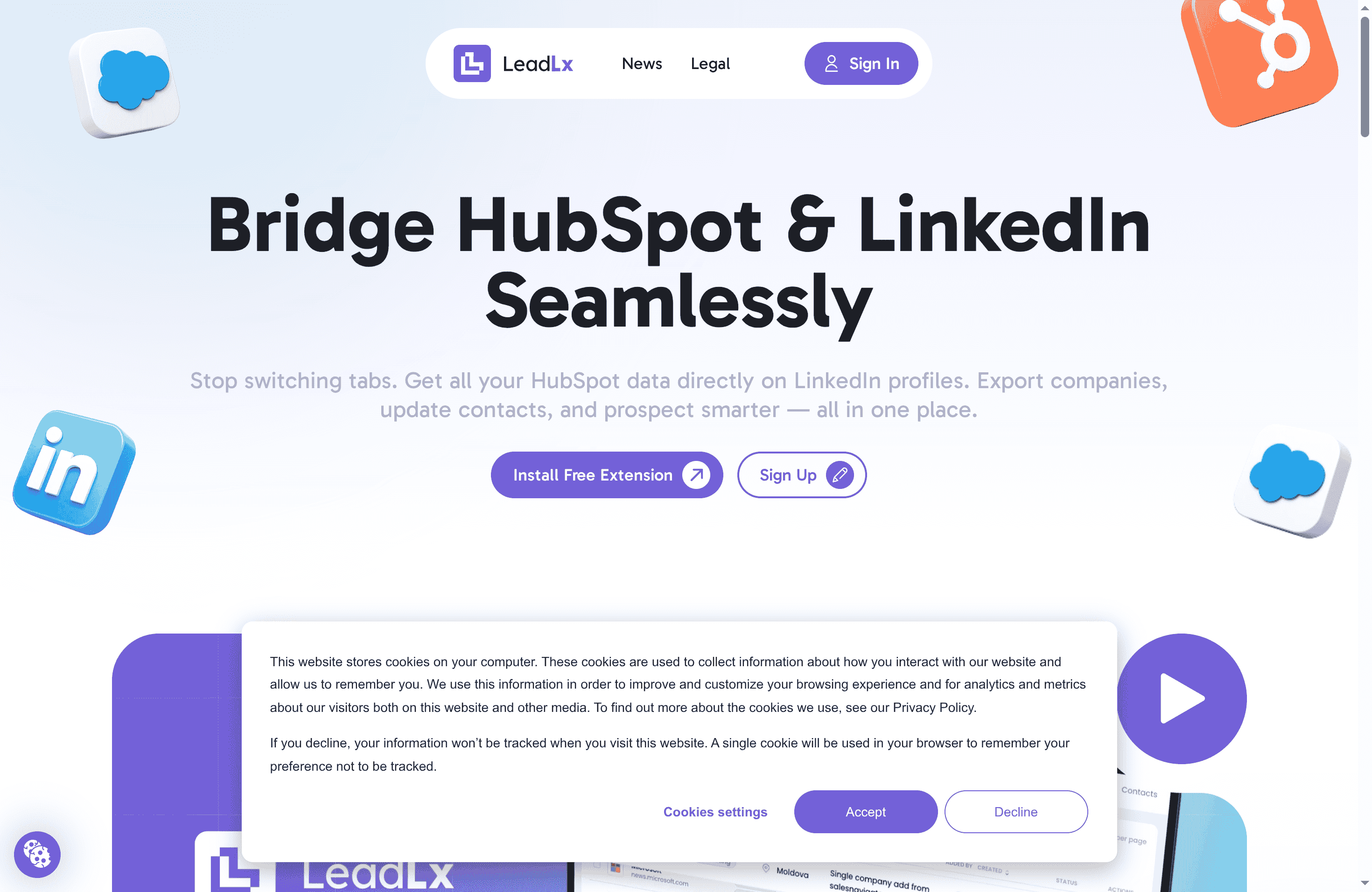
Start streamlining your LinkedIn prospecting today with LeadLx. Visit our website now to experience smarter CRM integration and watch your sales pipeline grow faster and more efficiently.
Frequently Asked Questions
How can I optimize my LinkedIn profile for lead generation?
To optimize your LinkedIn profile for lead generation, focus on creating a compelling narrative about your professional expertise. Use a professional headshot, craft a targeted headline, and write a clear summary that articulates your unique value and the problems you can solve for potential leads.
What search filters should I use on LinkedIn to find targeted prospects?
Use LinkedIn’s search filters such as location, company size, job title, and industry to identify targeted prospects effectively. Combine multiple filters, for instance, searching for “Marketing Manager” in the “Healthcare” industry within a specific region to hone in on ideal clients.
How can I engage with content on LinkedIn to increase visibility?
Engage with content on LinkedIn by making thoughtful comments on posts and sharing original insights regularly. Aim to post 2-3 times a week, mixing text, articles, and multimedia to maintain interest and encourage interaction from your connections.
What are the benefits of integrating LinkedIn with my CRM?
Integrating LinkedIn with your CRM can automate contact synchronization, capture real-time updates, and enhance lead scoring. This streamlining allows you to focus on engaging with prospects rather than managing data entry, reducing time spent on manual tasks by approximately 30%.
How can I automate follow-ups on LinkedIn?
Automate follow-ups on LinkedIn by using dynamic message templates that adjust based on prospect characteristics and interactions. Set up sequences triggered by actions like profile views or connection requests, allowing you to maintain personalized communication without extensive manual effort.
What metrics should I track to measure my LinkedIn marketing success?
Track key metrics such as profile view rate, connection request acceptance, and content engagement rates to measure your LinkedIn marketing success. Establish a quarterly review process to analyze these metrics and adjust your strategy based on performance trends.
Recommended
- LinkedIn Data Management Guide | LeadLx
- LeadLx Blog: LinkedIn Outreach, CRM Efficiency & Insights
- LeadLx – Bridge HubSpot & LinkedIn Seamlessly for free
- Time-Saving Prospecting Methods for Efficient Lead Capture
- Understanding the Importance of Customer Communication – My WordPress
- Create a Social Media Marketing Plan Template for Success – Jarrod Harman