
Most American sales leaders are rapidly adopting technologies that were once limited to science fiction. With over 80 percent of United States sales teams now leveraging artificial intelligence for prospecting, the traditional cold call is quickly fading. Understanding these advancements is crucial, since the way businesses find and connect with potential customers has never changed so quickly. This guide shows you how new tools are redefining prospecting success and what every modern American professional should know moving into 2025.
Key Takeaways
| Point | Details |
|---|---|
| Advanced AI Integration | Sales prospecting in 2025 leverages AI to enhance lead identification and engagement, using data-driven insights for personalized outreach. |
| Automation in Workflow | Automation reduces manual tasks, enabling sales teams to focus on high-value interactions while AI handles initial contacts and lead qualification. |
| Data Integration Importance | The collaboration between CRM systems and LinkedIn allows for real-time updates and improved lead management, enhancing prospect engagement. |
| Focus on Ethical Practices | Organizations must prioritize data ethics, implementing transparent policies and robust security measures to maintain customer trust in sales processes. |
Defining Sales Prospecting in 2025
Sales prospecting in 2025 represents a radical transformation from traditional lead generation methods, powered by advanced artificial intelligence and data-driven strategies. Autonomous AI agents are reshaping how businesses identify and engage potential customers, moving beyond simple task automation to independently perceive, reason, and act in complex sales environments.
The modern sales prospecting landscape now encompasses sophisticated technologies that dramatically enhance lead identification and conversion processes. Artificial Intelligence has become a core component, enabling sales teams to analyze vast datasets, predict customer behaviors, and personalize outreach with unprecedented precision. Unlike previous approaches that relied heavily on manual research and intuition, AI-powered prospecting tools can simultaneously process multiple data signals, identifying high-potential leads with remarkable accuracy.
Key characteristics of sales prospecting in 2025 include:
- Hyper-personalized engagement strategies
- Real-time data integration across multiple platforms
- Predictive lead scoring using machine learning algorithms
- Automated initial contact and qualification processes
AI integration in B2B sales prospecting has fundamentally reimagined how companies approach potential customer interactions. Sales professionals now leverage intelligent systems that can conduct initial outreach, assess lead quality, and even recommend optimal communication strategies based on historical performance data. This shift represents more than technological advancement – it’s a complete reimagining of the sales engagement model, where human expertise is augmented by machine intelligence to create more effective, efficient prospecting workflows.
AI and Automation Shaping Prospecting Workflows
AI and automation are fundamentally redesigning sales prospecting workflows, transforming how businesses identify, engage, and convert potential customers. Seven core AI-powered workflows are revolutionizing sales prospecting automation, enabling teams to streamline complex processes that traditionally consumed significant time and resources.

Sales Automation represents a strategic shift from manual, intuition-based approaches to data-driven, intelligent system interactions. Modern prospecting workflows leverage advanced algorithms capable of deep prospect research, personalized outreach generation, and predictive lead scoring. These intelligent systems analyze multiple data signals simultaneously, identifying high-potential leads with precision that human researchers simply cannot match.
Key automation strategies emerging in 2025 include:
- Intelligent lead list generation
- Automated initial contact and qualification processes
- Dynamic lead scoring using machine learning
- Real-time prospect behavior tracking
- Personalized communication routing
Comprehensive AI insights are revealing dramatic transformations in sales funnels that extend far beyond simple task automation. Sales professionals now have access to tools that can conduct initial research, assess lead quality, recommend communication strategies, and even predict potential conversion probabilities with remarkable accuracy. This technological evolution means sales teams can focus on high-value interactions while AI handles repetitive, time-consuming prospecting tasks, ultimately driving more efficient and effective outreach strategies.
CRM and LinkedIn Integration for Data Accuracy
Data Integration has become the cornerstone of modern sales prospecting, with CRM and LinkedIn collaboration transforming how businesses capture and utilize professional contact information. Outbound prospecting trends are rapidly evolving to orchestrate seamless engagement across multiple touchpoints, ensuring sales teams maintain consistent and credible interactions with potential customers.
The integration between CRM systems and LinkedIn represents a sophisticated approach to data management that goes far beyond simple contact collection. Advanced platforms now enable real-time synchronization of professional profiles, allowing sales teams to capture dynamic information about prospects instantly. This integration minimizes manual data entry, reduces human error, and provides a comprehensive view of potential customer landscapes that was previously impossible to achieve.
Key benefits of CRM and LinkedIn integration include:
- Automatic profile data updates
- Elimination of duplicate contact entries
- Real-time tracking of professional transitions
- Enhanced lead qualification processes
- Comprehensive prospect research capabilities
Sales professionals can now leverage intelligent systems that not only capture information but also provide contextual insights about potential customers. By combining the professional networking depth of LinkedIn with the structured data management of CRM platforms, teams can develop more targeted, personalized outreach strategies. This technological convergence represents a fundamental shift from traditional prospecting methods, enabling more strategic, data-driven customer engagement approaches that prioritize quality and precision over volume.
Evolving Buyer Expectations and Outreach Strategies
Buyer Engagement has transformed dramatically, demanding sophisticated, intelligent approaches to sales prospecting that prioritize personalization and strategic communication. Sales professionals must build intricate outreach cadences that balance persistence with nuanced, data-driven interactions, moving far beyond traditional spray-and-pray marketing techniques.
The contemporary buyer expects hyper-personalized experiences that demonstrate genuine understanding of their specific business challenges. Modern sales strategies now require multi-channel approaches that integrate insights from various data sources, enabling representatives to craft messaging that resonates on a deeply individual level. This shift means sales teams must leverage advanced technologies and analytical capabilities to decode complex buyer signals and preferences.
Key characteristics of next-generation outreach strategies include:
- Intelligent communication timing
- Contextually relevant messaging
- Predictive engagement modeling
- Dynamic interaction adaptation
- Personalization at scale
Artificial intelligence is playing a pivotal role in optimizing lead generation and enhancing prospecting processes by providing unprecedented insights into customer behavior and preferences. Sales professionals can now utilize sophisticated algorithms that analyze interaction patterns, predict optimal engagement windows, and recommend precisely tailored communication strategies. This technological evolution represents a fundamental reimagining of customer relationships, where data-driven empathy replaces generic outreach, creating more meaningful and productive sales interactions.
Data Privacy, Compliance, and Ethical Prospecting
Data Ethics have emerged as a critical consideration in modern sales prospecting, transforming how organizations approach customer information and technological engagement. The impact of artificial intelligence on organizational practices demands rigorous examination of data privacy and ethical considerations, requiring sales teams to develop sophisticated frameworks that balance technological innovation with fundamental human rights.
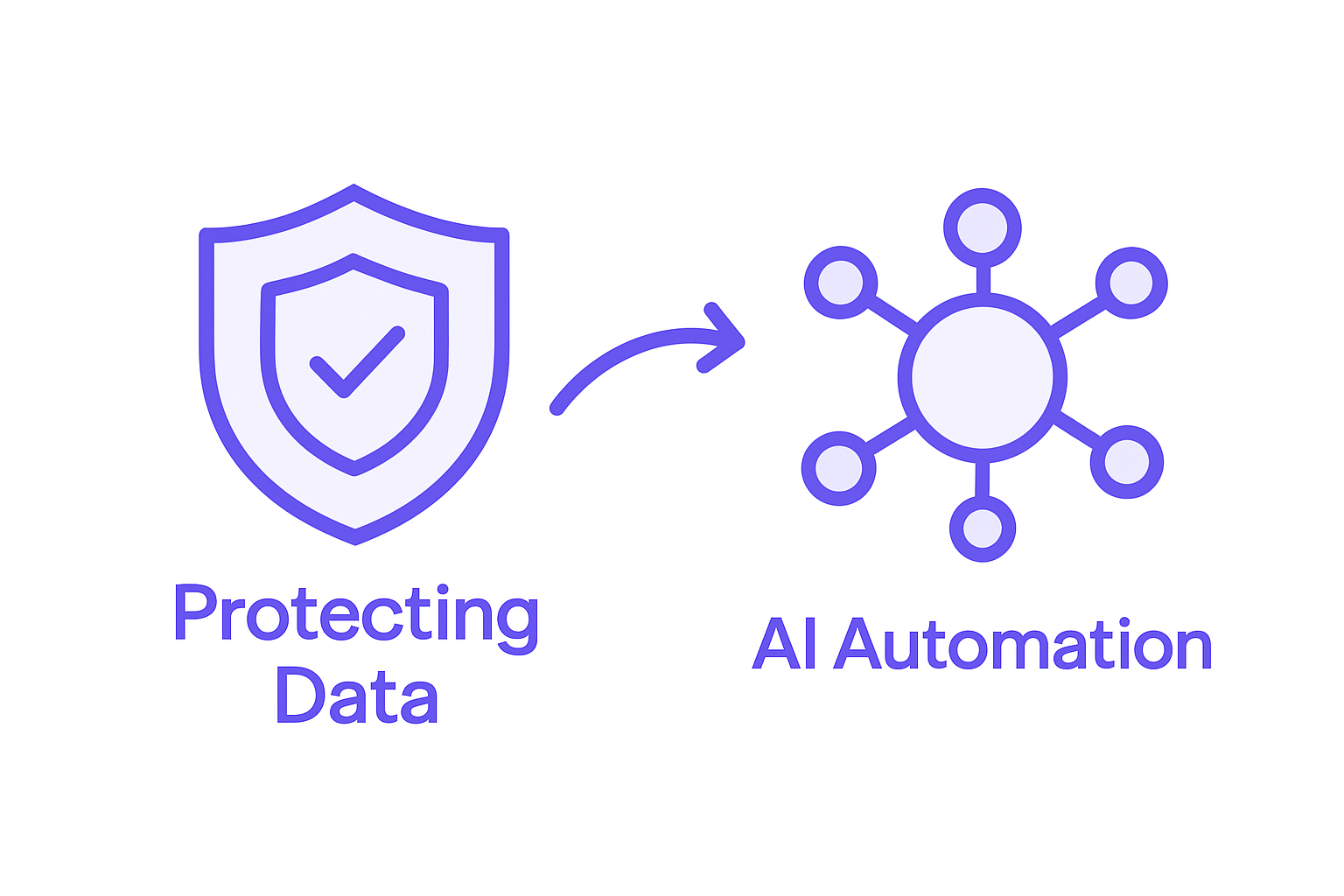
The landscape of ethical prospecting now requires a comprehensive approach that goes beyond traditional compliance checklist mentalities. Sales professionals must implement robust data protection strategies that respect individual privacy, secure sensitive information, and maintain transparent communication practices. This means developing intelligent systems that can navigate complex regulatory environments while preserving the fundamental trust between businesses and potential customers.
Key principles of ethical prospecting in 2025 include:
- Explicit consent for data collection
- Transparent data usage policies
- Granular privacy control mechanisms
- Regular security audits
- Proactive risk mitigation strategies
AI-driven automation presents unique challenges and opportunities for maintaining business integrity and customer trust, necessitating a nuanced approach to technological implementation. Sales organizations must create adaptive frameworks that not only comply with existing regulations but anticipate evolving legal and ethical standards. This requires a holistic view of data management that treats customer information as a sacred trust, prioritizing individual autonomy and protection over mere transactional efficiency.
Avoiding Common Pitfalls in Automated Prospecting
Automated Prospecting requires a sophisticated approach that goes beyond simple technological deployment, demanding nuanced strategies to maintain human connection and engagement. AI-powered sales systems must be designed to act autonomously while maintaining sophisticated coordination and personalization capabilities, avoiding the mechanical, impersonal interactions that can alienate potential customers.
The most critical challenge in automated prospecting lies in striking a delicate balance between technological efficiency and genuine human interaction. Sales teams must develop intelligent systems that can dynamically adapt messaging, understand contextual nuances, and respond with appropriate sophistication. This means moving beyond basic template-driven approaches and creating AI frameworks capable of understanding subtle communication signals and adjusting outreach strategies in real time.
Key strategies for preventing automated prospecting failures include:
- Implementing advanced behavioral analysis algorithms
- Creating multi-layered personalization models
- Developing contextual response mechanisms
- Establishing robust human oversight protocols
- Continuously training AI systems on interaction quality
AI-driven workflow automation requires comprehensive sequence orchestration that leverages detailed prospect engagement signals to deliver precisely targeted content. Successful automated prospecting demands a holistic approach that treats each interaction as a unique opportunity for meaningful connection, rather than a transactional data point. By prioritizing adaptive intelligence and genuine personalization, sales teams can transform automated outreach from a potential liability into a powerful engagement strategy.
Boost Your Sales Prospecting Efficiency with LeadLx
The article highlights the crucial challenge of managing complex, data-driven prospecting workflows while maintaining personalized, human connections in 2025. Sales professionals face the need to integrate AI-powered automation with real-time, accurate data to avoid repetitive manual tasks and ensure high-quality outreach. Common pain points include the inefficiency of switching between LinkedIn and CRM tools, risks of duplicate contacts, and difficulty in maintaining up-to-date prospect information.
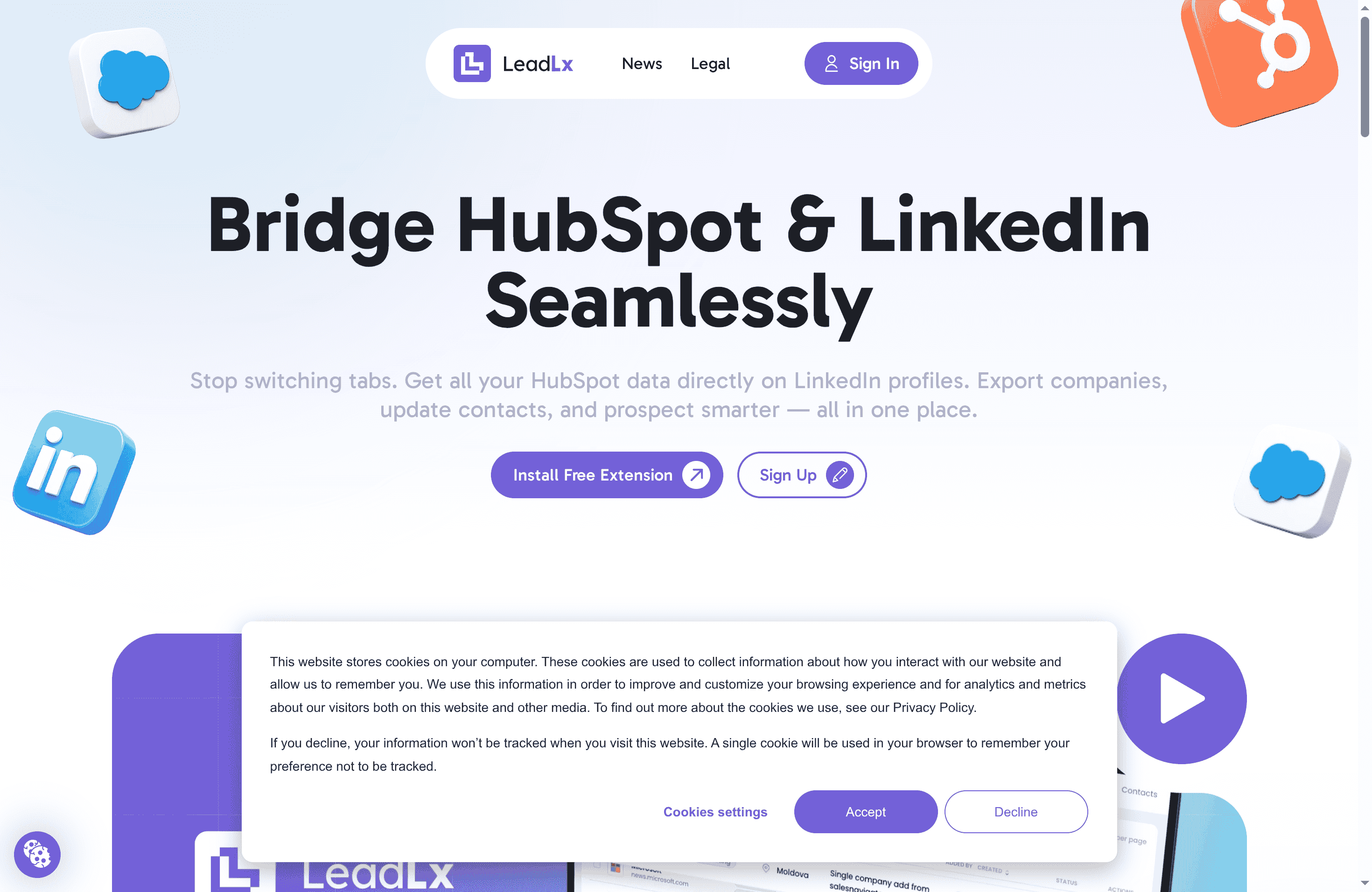
LeadLx directly addresses these challenges by seamlessly integrating LinkedIn with leading CRM platforms like HubSpot and Salesforce. Our browser extension overlays CRM data directly onto LinkedIn profiles, enabling instant access to contact and company information without switching tabs. This not only saves time—up to 10 hours per week—but also improves data precision and team collaboration by automatically preventing duplicate entries. Features like bulk data extraction and one-click CRM updates empower sales teams to build hyper-personalized outreach strategies, perfectly aligning with the article’s emphasis on data accuracy and intelligent automation.
Take the next step to transform your sales prospecting and see how effortless managing your leads can be with LeadLx. Experience smarter prospect engagement, avoid common automation pitfalls, and elevate your outreach ROI today.
Explore LeadLx Solutions
Learn How to Streamline Your Data Management
Start Optimizing Your LinkedIn Outreach Now
Frequently Asked Questions
What are the key characteristics of sales prospecting in 2025?
Sales prospecting in 2025 features hyper-personalized engagement strategies, real-time data integration across platforms, predictive lead scoring using machine learning, and automated initial contact processes.
How is AI transforming sales prospecting workflows?
AI is redesigning sales prospecting by enabling intelligent lead list generation, automated contact processes, dynamic lead scoring, and real-time prospect behavior tracking, enhancing efficiency and effectiveness in converting leads.
What role does CRM and LinkedIn integration play in modern sales prospecting?
The integration of CRM systems with LinkedIn allows for real-time updates of professional profiles, enhancing data accuracy, improving lead qualification, and minimizing manual entry errors, thereby increasing the effectiveness of outreach strategies.
How can organizations ensure ethical prospecting while utilizing AI?
Organizations can ensure ethical prospecting by implementing explicit consent for data collection, maintaining transparent data usage policies, conducting regular security audits, and developing strategies that prioritize individual privacy and trust.