
More than 80 percent of American sales teams now rely on advanced data-driven strategies to identify new business, reshaping how lead generation works in global enterprise settings. With LinkedIn and CRM platforms like HubSpot and Salesforce evolving rapidly, integrating real-time insights and AI-driven prospecting has become vital for sales and marketing professionals. This overview reveals why keeping pace with technology trends and smarter data privacy practices will separate high-performing teams from the rest in 2026.
Key Takeaways
| Point | Details |
|---|---|
| Technology-Driven Lead Generation | Lead generation in 2026 utilizes AI and data-driven strategies for hyper-targeted outreach and engagement. This approach focuses on understanding customer behaviors to foster valuable relationships. |
| Collaborative Integration | Modern lead generation involves collaboration across marketing, technology, and customer experience teams, enhancing the integration of various skills and insights. |
| Data Privacy Awareness | Sales professionals must prioritize compliance with evolving data privacy regulations while designing prospecting workflows to build trust with potential customers. |
| Focus on Quality Over Quantity | Effective lead generation strategies are shifting from volume-based methods to quality-driven approaches, emphasizing personalized engagement and predictive insights. |
Defining Lead Generation in 2026
Lead generation in 2026 represents a sophisticated, technology-driven approach to identifying and engaging potential business prospects through advanced digital strategies. The landscape has transformed dramatically, moving beyond traditional cold-calling methods to data-driven prospecting techniques powered by artificial intelligence and precise targeting mechanisms.
Modern lead generation now integrates multiple technological platforms, emphasizing personalization and strategic engagement. Sales professionals leverage sophisticated tools that combine machine learning algorithms, predictive analytics, and real-time data insights to understand potential customer behaviors and preferences. This approach allows for hyper-targeted outreach that resonates with individual decision makers across complex organizational hierarchies.
The European University Association’s innovation framework highlights that lead generation has become increasingly collaborative and interdisciplinary. Organizations are no longer viewing lead generation as a siloed sales function, but as an integrated process involving marketing, technology, data science, and customer experience teams. This holistic approach enables more nuanced, intelligent interactions that transform potential contacts into high-value business relationships.
Pro tip: Invest in continuous learning about emerging AI and data analytics technologies to stay ahead of lead generation trends and maintain a competitive edge in your prospecting strategies.
Emerging Technologies Shaping Prospecting
The future of prospecting is being radically transformed by cutting-edge technologies that are redefining how businesses identify, engage, and convert potential leads. Emerging technological innovations are creating unprecedented opportunities for more intelligent, efficient, and personalized sales interactions.
Artificial intelligence stands at the forefront of this technological revolution, enabling sales teams to leverage sophisticated predictive analytics and machine learning algorithms. These advanced tools can analyze vast datasets, identifying nuanced patterns in customer behavior, preferences, and potential buying signals that were previously invisible. By integrating generative AI technologies, businesses can now create hyper-personalized outreach strategies that adapt in real-time to individual prospect characteristics and engagement patterns.
Beyond AI, collaborative sensing technologies and autonomous biochemical sensing are expanding the boundaries of prospecting capabilities. These innovations allow businesses to gather deeper contextual insights, understand complex organizational dynamics, and create more meaningful connection strategies. The integration of these technologies transforms prospecting from a transactional process to an intelligent, data-driven engagement ecosystem that prioritizes genuine relationship building and precise targeting.
Here’s a summary of how emerging technologies are transforming prospecting in 2026:
| Technology | Key Function | Impact on Prospecting |
|---|---|---|
| Artificial Intelligence | Predicts buying signals and behaviors | Enables hyper-personalized outreach |
| Collaborative Sensing | Collects deeper contextual insights | Improves lead qualification accuracy |
| Autonomous Biochemical Sensing | Assesses organizational dynamics | Enhances relationship-building tactics |
| Generative AI | Creates dynamic outreach strategies | Adapts messaging in real time |
Pro tip: Invest in continuous AI and machine learning training to ensure your sales team can effectively leverage and interpret advanced prospecting technologies.
LinkedIn and CRM Integration Breakthroughs
The landscape of sales technology is undergoing a remarkable transformation, with LinkedIn CRM integration tools revolutionizing how businesses capture, track, and engage potential leads. These advanced solutions are eliminating the traditional barriers between professional networking platforms and customer relationship management systems, creating a seamless ecosystem for sales professionals.
Modern integration technologies now enable unprecedented levels of data synchronization and workflow automation. Sales teams can now automatically capture LinkedIn profile information, track engagement activities, and instantly update CRM records without manual intervention. These breakthroughs significantly reduce administrative overhead, allowing sales professionals to focus on building meaningful relationships rather than spending hours on data entry and cross-platform management.

The most sophisticated LinkedIn CRM integrations go beyond simple data transfer, providing intelligent insights that transform lead qualification processes. By combining real-time social data with comprehensive CRM analytics, businesses can develop more nuanced understanding of potential customers, their professional trajectories, and precise engagement opportunities. This holistic approach enables more personalized, contextually informed outreach strategies that dramatically improve conversion potential and sales efficiency.
Pro tip: Implement a quarterly review of your LinkedIn CRM integration settings to ensure you’re leveraging the most current automation and data synchronization features.
Navigating Data Privacy and Compliance
The evolving landscape of data privacy demands unprecedented attention from sales and marketing professionals, particularly as legal frameworks become increasingly complex. Organizations must now navigate a sophisticated ecosystem of regulations that prioritize individual data rights while enabling effective business intelligence gathering.
Modern compliance strategies require a multifaceted approach that balances technological innovation with stringent privacy protections. This means implementing robust consent mechanisms, developing transparent data collection processes, and ensuring that every interaction with potential leads adheres to global privacy standards. Advanced technologies like homomorphic encryption and anonymization techniques are becoming critical tools for businesses seeking to maintain both regulatory compliance and effective lead generation capabilities.
The intersection of artificial intelligence and data privacy presents both challenges and opportunities for sales teams. Companies must now design their prospecting workflows with privacy as a core consideration, not an afterthought. This involves creating comprehensive governance frameworks that provide clear guidelines for data usage, implement granular consent management, and maintain comprehensive audit trails of all data interactions. Proactive compliance is no longer just a legal requirement but a fundamental aspect of building trust with potential customers.
Pro tip: Conduct a quarterly comprehensive review of your data collection and processing practices to ensure ongoing alignment with the latest privacy regulations and technological standards.
Overcoming Common Lead Generation Pitfalls
Navigating the complex landscape of lead generation requires a strategic approach that goes beyond traditional prospecting methods. Lead generation strategies must evolve to address the nuanced challenges of modern sales ecosystems, moving far beyond simplistic volume-based approaches.
One of the most critical challenges sales teams face is the tendency to prioritize quantity over quality. Successful lead generation in 2026 demands a more sophisticated methodology that focuses on understanding buyer intent, analyzing deep behavioral signals, and creating highly personalized engagement strategies. This means developing robust qualification frameworks that assess lead potential through multiple dimensions, including technological readiness, organizational alignment, and genuine interest indicators.
Technology plays a pivotal role in transforming lead generation from a numbers game to a precision-driven process. Advanced analytics, machine learning algorithms, and intent data platforms enable sales professionals to segment leads more effectively, predict potential conversion probabilities, and design targeted outreach campaigns. By implementing intelligent data hygiene practices and real-time engagement tracking, organizations can dramatically improve their lead conversion rates and reduce wasted resources on low-potential prospects.
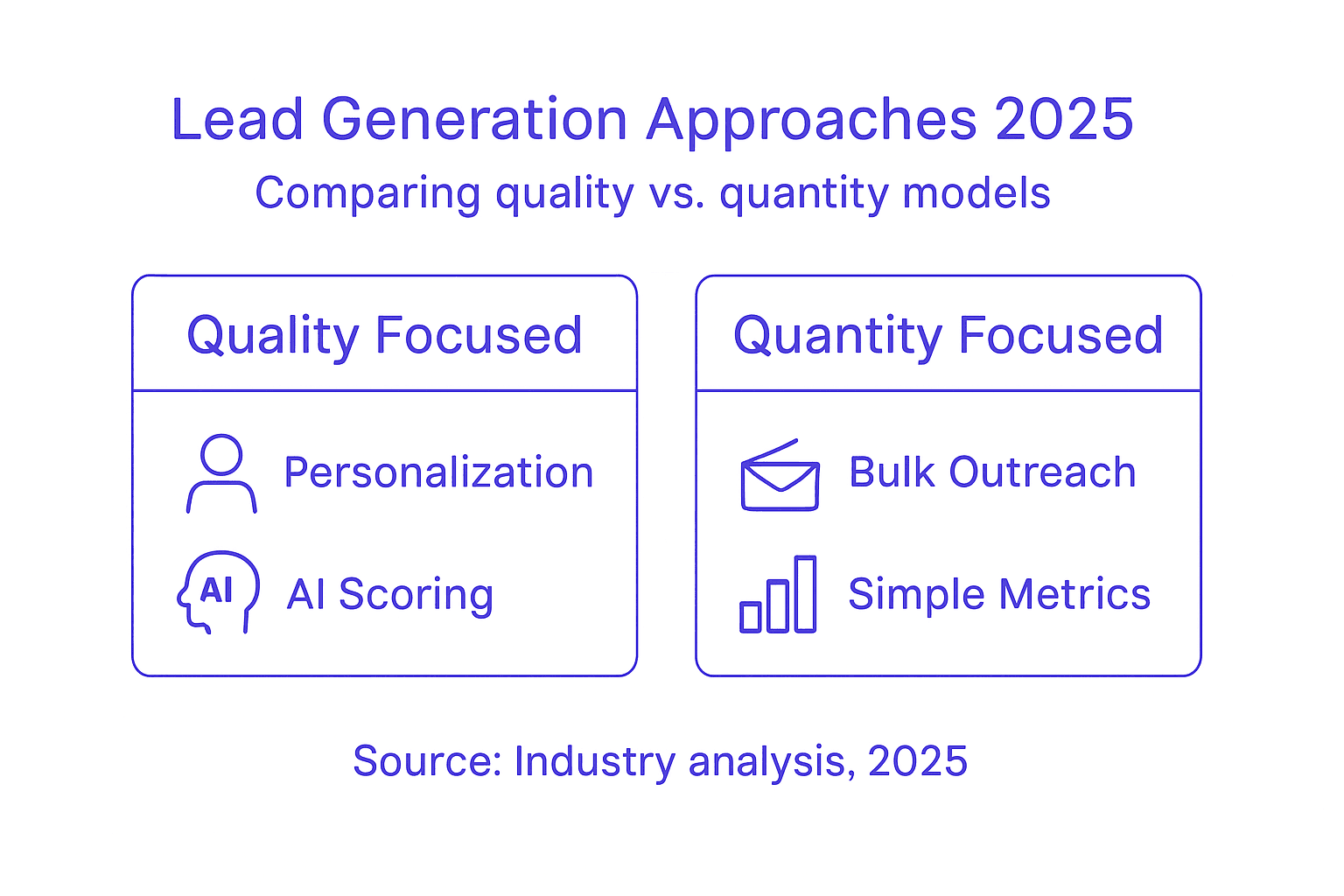
Compare traditional lead generation with modern data-driven approaches:
| Approach | Methods Used | Strengths | Weaknesses |
|---|---|---|---|
| Traditional | Cold-calling, mass emailing | Quick outreach, broad reach | Low personalization, limited data use |
| Data-driven | AI analytics, CRM integration | Personalized targeting, predictive insights | Requires advanced tools, data privacy concerns |
Pro tip: Develop a comprehensive lead scoring model that integrates multiple data points and continuously refines its predictive accuracy through machine learning and regular performance reviews.
Unlock Seamless LinkedIn Prospecting with LeadLx
The article highlights key challenges sales teams face like cumbersome manual data entry, fragmented workflows, and maintaining data accuracy while leveraging LinkedIn and CRM systems. These pain points reduce valuable selling time and hinder your ability to create hyper-personalized outreach that truly resonates with your prospects. LeadLx understands that modern lead generation demands integration, precision, and efficiency to stay competitive in 2026’s data-driven landscape.
LeadLx is designed to eliminate repetitive tasks by overlaying CRM insights directly on LinkedIn profiles, instantly capturing and syncing contact and company details with CRM tools like HubSpot and Salesforce. Save approximately 10 hours every week by avoiding constant tab switching and manual updates while preventing duplicate entries through shared CRM visibility. Experience smoother, smarter lead generation workflows that empower your sales and marketing teams to focus solely on building genuine relationships.
Ready to revolutionize your LinkedIn prospecting and keep pace with evolving lead generation trends? Discover how LeadLx can streamline your process and boost your conversion rates now.
Take control of your prospecting efficiency today by visiting LeadLx. Learn more about our CRM integration capabilities and how our platform transforms your LinkedIn outreach. Don’t let manual tasks hold you back from closing more deals—start your upgrade at LeadLx now.
Frequently Asked Questions
What are the key emerging technologies shaping lead generation in 2026?
Emerging technologies impacting lead generation in 2026 include artificial intelligence, collaborative sensing, autonomous biochemical sensing, and generative AI. These innovations enable businesses to analyze data effectively, personalize outreach, and enhance relationship-building strategies.
How can LinkedIn CRM integration improve lead generation efforts?
LinkedIn CRM integration allows seamless data synchronization, automates tasks, and provides intelligent insights about leads. This streamlining removes manual data entry, enabling sales teams to focus on relationship building and improving the efficiency of lead qualification processes.
What are some common pitfalls in lead generation that should be avoided?
Common pitfalls in lead generation include prioritizing quantity over quality, failing to leverage data analytics, and lacking personalized engagement strategies. To succeed, businesses should focus on understanding buyer intent and utilizing advanced analytics for more targeted outreach.
Why is data privacy important in lead generation strategies?
Data privacy is crucial in lead generation as it ensures compliance with legal frameworks and builds trust with potential customers. Organizations must create processes that protect individual data rights while still effectively gathering business intelligence to support lead generation.
Recommended
- LinkedIn Prospecting: Everything You Need to Know
- Sales Prospecting Trends in 2025: Transforming Outreach ROI
- 7 Key Advantages of LinkedIn Prospecting for Sales Teams
- The Essential Guide to Why Sales Teams Use LinkedIn
- LinkedIn Ads vs. Other Social Media Platforms: Which Is Best?
- LinkedIn Ads Metrics: Boosting Mobile Game Growth – playablemaker.com LinkedIn Ads Metrics: Boosting Mobile Game Growth
- Lead Generation Explained: Complete Guide For UK SMEs – Bamsh Digital Marketing