
A multithreading sales strategy means talking to several people on the buying committee at once instead of routing a B2B deal through one contact. Gong's analysis of its own win rate data found that deals with at least four contacts involved close 58% of the time, against a fraction of that for deals that never move past one. One good relationship is not a deal. It is a rumor about one.
Reps keep running deals through a single contact because it feels efficient. One inbox, one thread, one person who already likes you. It is also the single most common reason a deal that looked safe in the pipeline review dies without warning two weeks before the close date.
What Multithreading Actually Means
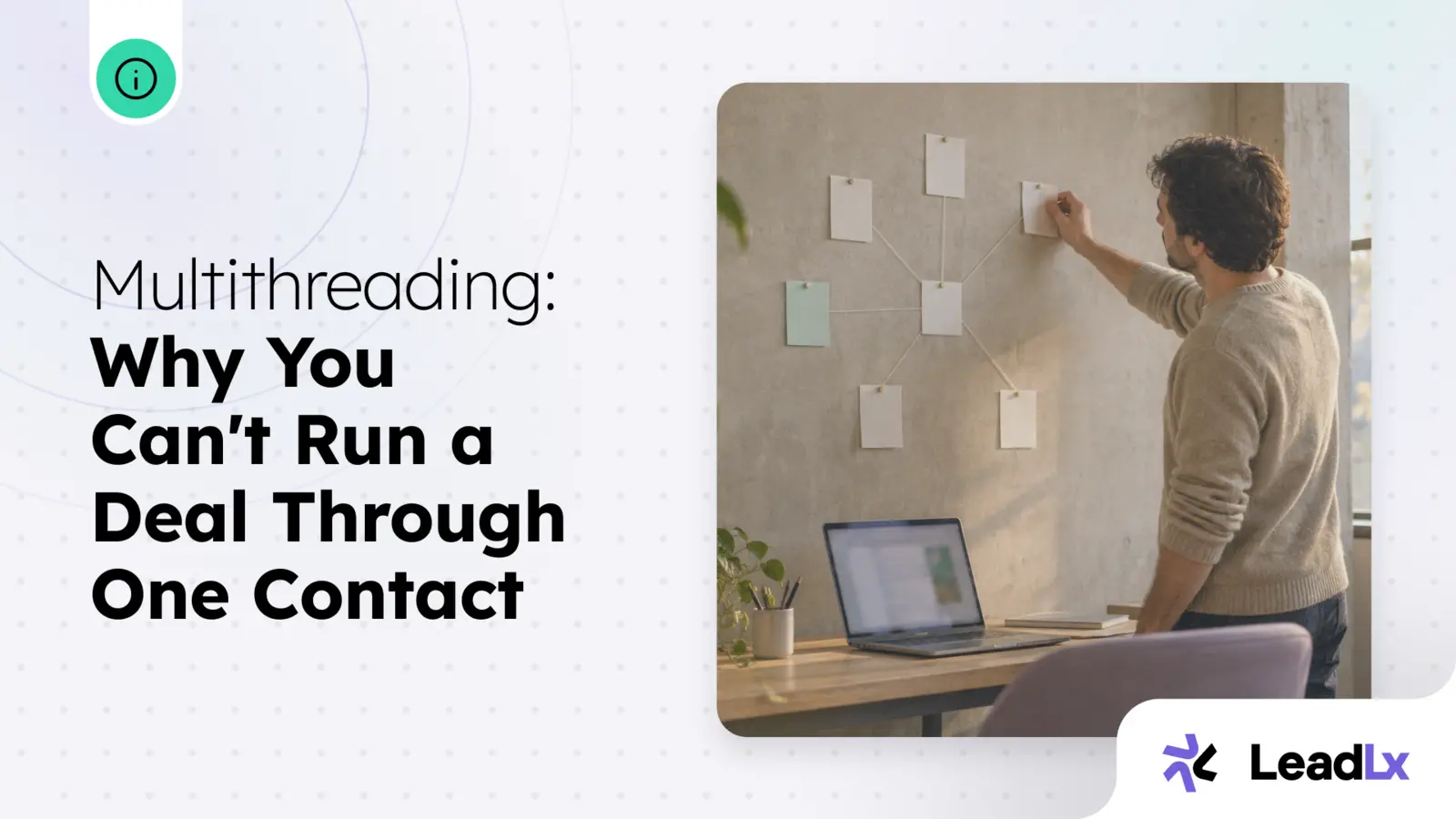
Multithreading is the practice of building separate relationships with multiple people inside the same account, instead of funneling every conversation through one champion. Each "thread" is a different person with a different stake in the outcome, and the deal gets stronger as more of them are engaged directly rather than secondhand.
It is not the same as being on a group email. A sales rep can be copied on a thread with five names and still be single threaded in practice, if only one of those five has ever replied to a question or taken a call. Multithreading means you can describe, without checking your notes, what the financial ratifier cares about and what the end user actually wants, because you have spoken to both.
The opposite, a single threaded deal, is a deal where one person is the entire source of information. Gartner research puts 87% of B2B buying groups at four or more stakeholders, so a single threaded deal is, almost by definition, a deal where most of the room has not been met.
Why a Single Threaded Deal Feels Safe Until It Isn't
A single contact who replies fast and agrees with everything is a comfortable deal to manage. Every signal a rep can see is positive, because the only person generating signals is the one person who already wants the deal to happen.
What that comfort hides is simple. The champion does not control the budget, cannot speak for IT or security, and often does not know what their own VP will ask for before signing. A rep managing one relationship is managing one opinion, and reporting it to their manager as if it were the whole committee's.
A champion tells you what they hope will happen. The rest of the committee decides what actually happens. A single threaded deal only has access to the first one.
This is also why single threaded deals tend to fail suddenly instead of gradually. Nothing in the visible relationship degrades. The deal simply goes quiet, or comes back with a no from a person the rep never spoke to.
A few signs give it away before the deal actually dies. The opportunity is marked qualified with one contact listed on it. Your champion cannot name who signs the contract once the two of you agree. Every reply comes from the same inbox, on the same thread, regardless of what was asked. None of these are fatal on their own, but together they describe a deal with one source of truth, which is a deal built on a guess about what the rest of the room thinks.
What the Data Says About Multithreaded Deals
The gap between single threaded and multithreaded deals shows up consistently once a sales team actually measures it. Gong's own research, built from its analysis of closed-won and closed-lost opportunities, found that closed-won deals carry 67% more contacts than closed-lost deals. The pattern repeats in Gong's win rate research specifically: sales leader Sarah Brazier reports that deals with at least four contacts involved close 58% of the time, a figure that keeps climbing the more of the committee a rep has actually reached.
None of this is a coincidence of correlation. A buying group that averages ten or more people on a typical purchase was never going to be decided by one conversation. The rep who only has one thread is not competing on persuasion. They are working with a fraction of the information the deal actually requires.
A Multithreading Sales Strategy You Can Run on Every Deal
Multithreading does not mean contacting everyone with the same pitch. Each role on the committee cares about a different risk, so a workable strategy gives each one a different reason to talk to you.
The practical start is identifying who is missing before adding anyone new. LeadLx classifies each contact on a deal into a committee role with a confidence score, so the gap in the room shows up as an empty role instead of a feeling a rep has to justify in a pipeline review. For the full breakdown of each role and how to tell them apart on a live account, see buying committee roles: economic buyer, champion, and blocker.
How to Multithread Without Going Around Your Champion
The objection to multithreading is rarely that reps disagree with it. It is that reaching past a champion feels like a risk to the one relationship already working. The fix is not to go around the champion, it is to go through them with a specific, useful ask.
"I can put together the security answers now so it does not hold up your timeline, who should I send them to" gets a name. "Can you introduce me to your VP" gets a maybe. The difference is that the first request is framed as removing friction from the champion's own timeline, not as the rep angling for a bigger meeting.
Mapping the account before the ask matters here, because a rep who already knows the likely roles can ask for a specific person instead of a vague "who else is involved." That groundwork is covered in detail in how to find every stakeholder at a company before your call, and it turns multithreading from a cold reach into a request the champion can say yes to without feeling bypassed.
Going around a champion without telling them is the one move that reliably backfires, since it reads as going behind their back on a deal they thought they controlled. Going wide with their knowledge, framed as removing work from their plate, almost never does. The difference is not who you contact. It is whether your champion feels looped in or sidestepped.
Where to Start This Week
Pull your five largest open opportunities and count the distinct people you have actually spoken with on each one, not the people copied on an email thread. Any deal above three qualified stakeholders with only one is a deal running on a single thread, whatever stage it shows in the CRM.
For each one, name the role that has nobody attached to it, and make that the next outbound move instead of another check-in with the same contact. The empty role is usually the one holding the budget, and finding the person who owns it is covered end to end in the B2B buying committee guide, the starting point for mapping any account before you multithread it.