

A B2B sales cycle shortens when internal buy-in on the buyer's side stops depending on one contact relaying your pitch correctly, not when a rep pushes harder on that same contact. The average B2B deal now takes 6.5 months to close, up from 4.9 months in 2019, and most of that added time sits inside the buyer's own building, not in your pipeline stages.
A slipping close date usually gets answered with more urgency or a bigger discount, and neither one touches the actual cause. The deal is not slow because the buyer is unconvinced. It is slow because the person convinced of your pitch has to go convince four or five other people who never heard it from you directly, on their own schedule, in meetings you are not in.
How to Measure Your Actual Sales Cycle Length
Before shortening anything, get the number right. Sales cycle length is the time from a deal's first qualified touch, the point a rep confirmed real budget and a real problem, to a closed-won or closed-lost date. Measuring from first contact instead inflates the number with weeks a lead spent unqualified, and measuring only from a demo onward hides where the real delay sits.
Pull this per deal size instead of as one company-wide average. A $15,000 deal and a $150,000 deal do not share a sales cycle, and blending them produces a number nobody can act on. Once you have a real baseline split by deal size, you can see which stage is actually stretching, instead of guessing that the whole process is just slow.
Why B2B Sales Cycles Keep Getting Longer
Cycles are not lengthening because buyers got slower at their jobs. They are lengthening because the group that has to agree before anyone signs keeps growing, and every added person is another round of internal alignment that has to happen before your deal moves. Gradient Works tracked the average B2B sales cycle at 6.5 months in 2025, up from 4.9 months in 2019, and the gap tracks almost exactly with how many stakeholders now sit on a typical purchase.
That growth in committee size is also why a cycle can drag without a single red flag showing up in your CRM. A champion who loves the product still has to walk it past a VP, a budget owner, and a security reviewer, and if a rep is not in any of those conversations, the deal just goes quiet for a few weeks at a time, repeatedly, until someone remembers to reply.
A large share of that silence never turns into a loss to a competitor at all. Harvard Business Review's analysis of 2.5 million recorded sales conversations found that 40 to 60 percent of deals end in no decision, lost to buyer indecision rather than a chosen alternative. A long cycle and a dead cycle often look identical from the outside, right up until the quarter closes.
Where the Time Actually Goes Once a Deal Stalls
Almost none of the delay happens while a rep and a buyer are talking. It happens between conversations, while your champion schedules an internal review, waits for a budget sign-off, or tries to answer a security question a rep could have answered in a day. Each of those is a real step, but each one also adds a week or more purely because the person handling it is not the person who understands your pitch best.
The visible symptom is a deal that stays "in proposal" for two months with nothing obviously wrong. The real cause is usually that the only person who can move it forward internally is busy, out of office, or waiting on someone else a rep has never spoken to and does not even have a name for.
None of this shows up as a lost deal in the pipeline report, which is part of why it is so easy to miss. The stage field still says "proposal," the close date just keeps moving a week at a time, and a rep reads that as a buyer taking their time rather than as a buyer stuck without the internal ammunition to move the deal forward on their own.
The Fastest Lever to Shorten a B2B Sales Cycle: Multithread the Committee Early
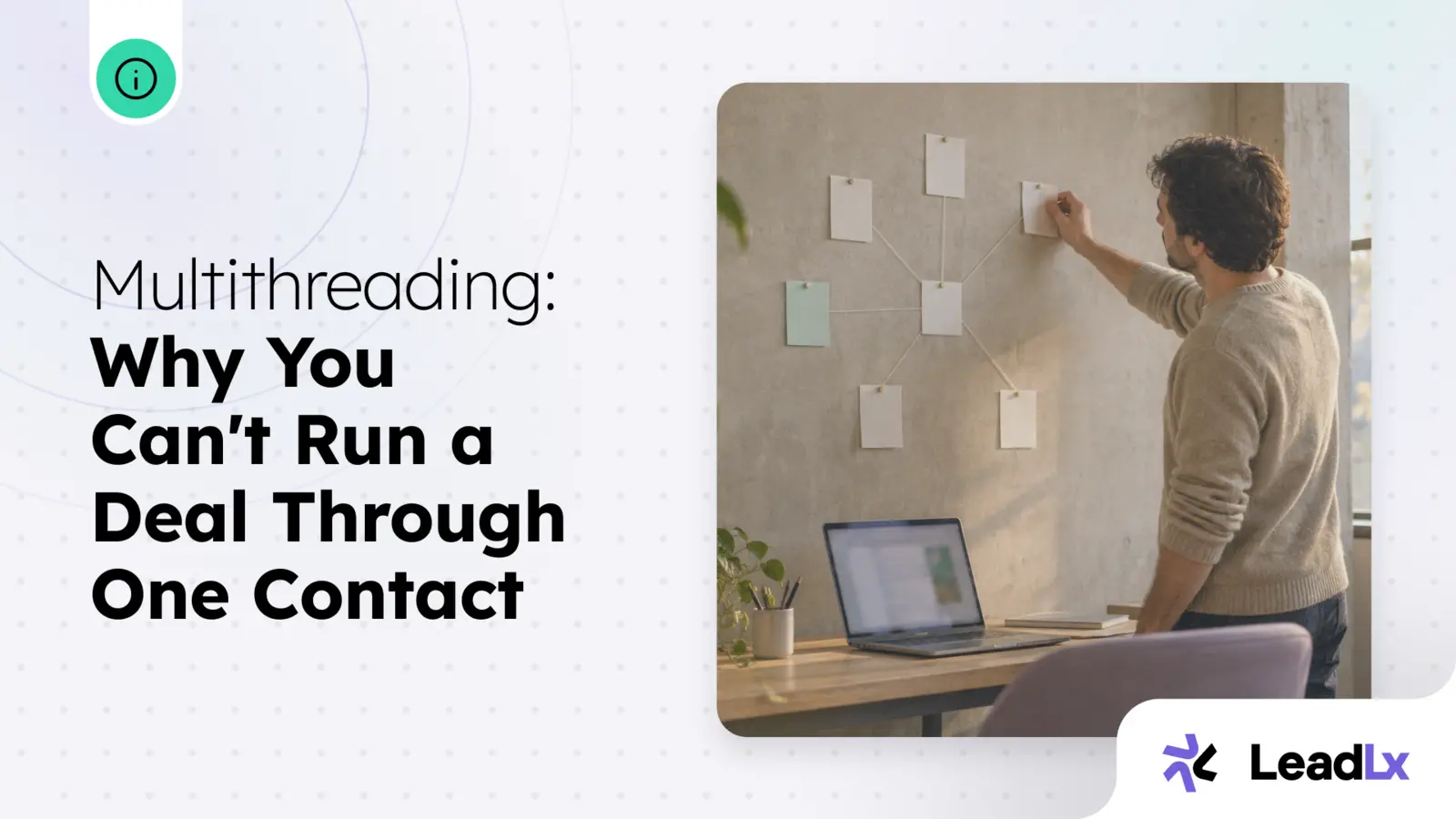
The single change with the clearest effect on cycle length is reaching the rest of the buying committee directly, instead of routing everything through one champion. UserGems found that deals involving more than five people closed 17% faster and converted at five times the rate of deals that stayed single threaded, with 31% higher win rates and deal sizes 25% bigger on top of the speed gain.
The mechanism is simple even if the discipline to run it is not. Every stakeholder a rep has spoken to directly is a question that gets answered in minutes instead of a week, and a round of internal alignment the buyer's side does not have to run blind. Gradient Works found closed-won deals carry roughly twice the buyer contacts of closed-lost ones, and that getting a decision-maker involved early lifts win rate by 55%.
The practical blocker is that most reps cannot see who else needs to be looped in until the deal is already stuck. LeadLx classifies each contact on a deal into a committee role with a confidence score, so the missing budget owner or security reviewer shows up as an empty role weeks before the deal would otherwise have gone quiet waiting on them. The full playbook for running this on every open deal is in multithreading: why you can't run a deal through one contact.
Other Moves That Cut Weeks Off a Cycle Without Discounting
None of these moves require a discount, and none of them depend on the buyer simply moving faster out of goodwill. Each one removes a specific wait, the wait for a question to reach the right person, the wait for a date nobody actually committed to, the wait for a budget conversation that should have happened before the proposal went out. A cycle shortens one removed wait at a time, not in one dramatic push at the end.
Where to Start This Week
Pull your ten largest open deals and check two things on each: how long it has sat in its current stage against your real baseline for that deal size, and how many people on the account a rep has actually spoken to, not just copied on an email. A deal running long with one contact is not an unconvinced buyer. It is a buyer who cannot convince the rest of the room without your help.
Start the next outbound move on each stalled deal by naming the missing role instead of checking in with the same contact again. You can see how LeadLx supports mapping that committee and multithreading it on the pricing page, starting with a free plan.